Skip to content


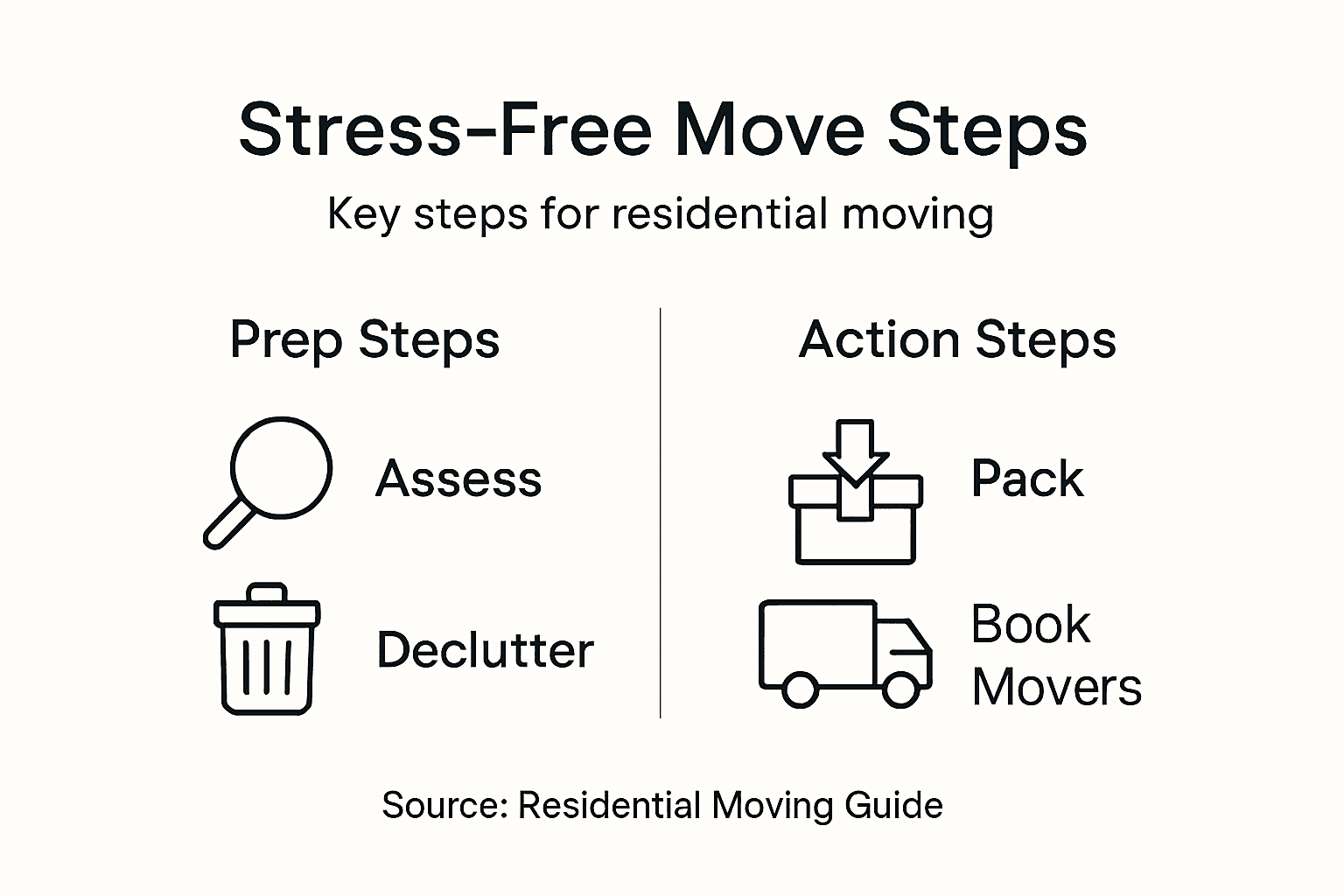
Facing a local move in Ontario can be stressful and overwhelming when you try to manage every detail on your own. Whether you own your home or rent, making a solid plan is the key to reducing risk and costs. A comprehensive initial assessment can significantly lower moving day stress and help you anticipate challenges before they arise. This guide gives you expert steps to tackle your move efficiently—from assessment and decluttering to packing, booking movers, and settling comfortably into your new home.
Table of Contents
- Step 1: Assess And Plan Your Move
- Step 2: Declutter And Organize Belongings
- Step 3: Pack And Label All Items Carefully
- Step 4: Coordinate Logistics And Book Movers
- Step 5: Inspect And Settle Into Your New Home
Quick Summary
| Key Point | Explanation |
|---|---|
| 1. Assess and plan early | Conduct a thorough assessment of your current living situation to establish a realistic moving plan and budget before the move. |
| 2. Declutter systematically | Use dedicated time to sort items into keep, donate, or discard piles, reducing moving costs and stress during the transition. |
| 3. Pack and label effectively | Gather quality packing materials and create a systematic inventory to ensure organization and ease during unpacking at your new home. |
| 4. Research moving companies | Obtain multiple quotes, verify credentials, and communicate your specific needs to find a reliable moving partner for your relocation. |
| 5. Inspect your new home | Perform a detailed inspection upon arrival to document existing damages and confirm the functionality of essential systems before settling in. |
Step 1: Assess and Plan Your Move
Planning a residential move requires strategic thinking and careful organization. Your initial assessment will set the foundation for a smooth transition, helping you anticipate challenges and create a comprehensive moving strategy.
Starting your move preparation involves several critical steps that will help streamline the entire process. Planning your move timeline becomes crucial in managing potential complexities. Key aspects of your initial assessment should include:
- Evaluate your current living situation
- Determine your moving budget
- Create an inventory of belongings
- Research potential moving service requirements
- Establish a realistic moving date
To effectively assess your move, begin by conducting a thorough walkthrough of your home. Take detailed notes about the volume of items you’ll be transporting, identifying potential challenges like large furniture pieces or specialized equipment that might require professional handling. This inventory will help you estimate moving costs and determine the level of support you’ll need.
A comprehensive initial assessment can reduce moving day stress by up to 60% and help you anticipate potential logistical challenges.
Next, consider your specific moving requirements. Will you need full-service packing, or do you plan to handle some tasks independently? Understanding these details early allows you to make informed decisions and potentially save money.
Pro tip: Create a dedicated moving folder to store all important documents, estimates, and contact information, keeping your planning process organized and stress-free.
Step 2: Declutter and Organize Belongings
Preparing for your move involves more than just packing boxes—it’s an opportunity to streamline your belongings and start fresh. Systematic decluttering strategies can transform a potentially overwhelming process into an empowering experience of simplification.
Begin your decluttering journey by approaching the task methodically. Set aside dedicated time for each room, creating sorting piles that clearly distinguish between items to keep, donate, and discard. This approach not only reduces moving costs but also minimizes the emotional and physical burden of transporting unnecessary items.
- Start with less emotionally charged spaces like storage areas
- Use the “one-year rule” for clothing and household items
- Digitize important documents to reduce physical clutter
- Consider selling valuable items you no longer need
- Donate gently used items to local charities
Organizing your belongings requires honest self-assessment and intentional decision-making. Some items might hold sentimental value, but ask yourself whether they truly enhance your life or simply occupy space. By mindfully approaching decluttering, you create mental clarity and reduce stress associated with excess possessions.
Effective decluttering is not about getting rid of things, but about creating space for what truly matters in your life.
As you progress, maintain momentum by celebrating small victories. Each item you decide to release represents a step towards a more intentional and organized living environment.
Pro tip: Create designated sorting boxes with clear labels to streamline your decluttering process and maintain organization throughout your move.
Step 3: Pack and Label All Items Carefully
Careful packing and labelling are the cornerstones of a successful move, transforming a potentially chaotic process into a well-organized transition. Creating a systematic moving inventory will help you track and protect your belongings throughout the entire moving journey.
Begin by gathering high-quality packing materials that will safeguard your possessions. Invest in sturdy boxes, quality packing tape, and protective wrapping materials like bubble wrap and packing paper. Categorize your items strategically, focusing on room-specific packing to maintain organization.
- Pack similar items together
- Use colour-coded labels for different rooms
- Mark boxes with contents and destination room
- Create a detailed inventory list
- Pack fragile items with extra cushioning
Labelling is more than just writing on a box—it’s about creating a comprehensive system that ensures smooth unpacking. Box labelling techniques can dramatically simplify your moving process by providing clear instructions for movers and helping you locate items quickly.
Effective labelling is your roadmap to an organized move—each box tells a story of where it came from and where it needs to go.
Consider using a digital or physical tracking system to monitor your packed items. Number each box, create a corresponding inventory list, and keep a backup copy in a safe place.
Below is a comparison of physical versus digital moving inventories:
| Inventory Type | Advantages | Potential Drawbacks |
|---|---|---|
| Physical (paper) | Easily referenced on moving day | Can be lost or damaged |
| Digital (app or doc) | Accessible from any device | Requires tech access and backup |
Pro tip: Pack a “first-night” box with essential items you’ll need immediately upon arrival, and keep it separately marked for easy access.
Step 4: Coordinate Logistics and Book Movers
Successful moving requires strategic planning and careful coordination of logistics. Protecting your move through informed decisions helps ensure a smooth transition and prevents potential complications during your relocation.
Begin by researching and vetting potential moving companies thoroughly. Request multiple quotes, check company credentials, and verify professional certifications. Your goal is to find a reliable moving partner who understands your specific requirements and can deliver a professional service.
- Obtain at least three competitive quotes
- Check company licensing and insurance status
- Read customer reviews and testimonials
- Verify the moving company’s professional credentials
- Ask about their specific moving procedures
Detailed communication is key to a successful move. Discuss your specific needs, including special items, potential challenges, and any unique requirements with your chosen moving company. Finding reliable movers involves understanding their capabilities and ensuring they can handle your specific moving situation.
The right moving company transforms a potentially stressful experience into a seamless, well-coordinated transition.
Schedule an in-home or virtual consultation to get the most accurate estimate and discuss logistical details. This allows movers to assess your belongings and provide a more precise moving plan.
Pro tip: Request a written estimate and ensure all potential fees are transparently discussed before signing any agreements.
Here is a summary of key factors to consider when choosing a moving company:
| Factor | Why It Matters | How to Assess |
|---|---|---|
| Licensing and Insurance | Protects against potential loss | Request documentation and verify |
| Reputation and Reviews | Indicates service reliability | Read recent customer testimonials |
| Quote Transparency | Helps budget accurately | Compare written estimates, discuss fees |
| Service Range | Aligns with your specific needs | Ask about packing, storage options |
| Communication Quality | Prevents misunderstandings | Evaluate responsiveness and clarity |
Step 5: Inspect and Settle Into Your New Home
The final phase of moving involves careful inspection and strategic settling to transform an empty space into your comfortable new home. Conducting a thorough home inspection ensures you identify and address any potential issues before fully unpacking.
Begin by performing a comprehensive walkthrough of your new residence. Document any existing damages, test all electrical and plumbing systems, and verify the functionality of major appliances. This initial assessment protects your interests and provides a clear baseline of your home’s condition.
- Check all windows and doors for proper operation
- Test electrical outlets and light switches
- Inspect walls and floors for existing damage
- Verify heating and cooling systems work correctly
- Confirm water pressure and drainage functionality
After your initial inspection, start setting up essential living spaces. Develop a strategic move-in checklist to prioritize your unpacking and setup, focusing first on bedrooms, bathroom, and kitchen to establish basic living functionality.
A methodical approach to settling in transforms a house into a home, one carefully unpacked box at a time.
Take time to familiarize yourself with the neighbourhood, locate essential services, and start creating your new routine. Meet neighbours, explore local amenities, and begin making this space truly feel like home.
Pro tip: Create a digital folder with photos of your initial home inspection to maintain a record of the property’s condition upon move-in.
Simplify Your Residential Move with Expert Support from Aleks Moving
Moving can feel overwhelming when faced with assessing belongings, decluttering, careful packing, and coordinating logistics. The detailed steps in “Residential Moving Step by Step for a Stress-Free Move” highlight challenges such as creating inventories, labelling boxes properly, and booking reliable movers to prevent stress and delays. If managing all these tasks sounds exhausting, you are not alone. Many homeowners and renters wish for transparent, professional help that takes the pressure off and protects their possessions.

Aleks Moving understands your goals of a smooth, organized, and affordable relocation. With over 18 years of experience serving Ontario and beyond, we specialize in residential moves with flat-rate pricing and no hidden fees so you can plan your budget confidently. From expert packing and fragile item handling to seamless logistics and timely delivery, our trusted team is committed to turning your moving journey into a stress-free experience. Take the first step now by requesting a free quote or learning about our comprehensive moving solutions at Aleks Moving. Let us help you create the smooth, organized move you deserve with professional care and transparent service.
Explore how our Local Moving services align perfectly with your relocation timeline and needs. Trust Aleks Moving to be your reliable partner in transforming moving challenges into a confident new beginning.
Frequently Asked Questions
How do I assess my moving needs effectively?
Start by conducting a thorough walkthrough of your current home. Take notes on the volume of items and any special requirements, which will help you create a comprehensive moving plan and potentially reduce your moving costs by up to 20%.
What steps should I take to declutter before my move?
Approach decluttering systematically by setting aside dedicated time for each room. Create three sorting piles: Keep, Donate, and Discard to streamline your belongings and reduce the emotional burden of unnecessary items.
How can I label my moving boxes for easier unpacking?
Use colour-coded labels by room and mark each box with its contents and destination. This clear system will help you unpack efficiently and find essentials quickly, minimizing chaos on moving day.
What should I include in a moving inventory list?
Create a detailed inventory list that includes the items packed in each box and their corresponding numbers. This organised list will make it easier to track your belongings and ensure nothing gets lost during the move.
How can I ensure the moving company is reliable?
Research potential moving companies by obtaining multiple quotes and checking customer reviews. Verify their licensing and insurance status to ensure you choose a reliable partner who can meet your specific moving needs.
What should I do immediately after moving into my new home?
Perform a comprehensive inspection of your new residence to identify any existing damages and ensure all systems work properly. Following the inspection, focus on setting up essential living spaces first, like the kitchen and bedrooms, to establish a functional home environment.