Skip to content


Facing a sudden move across Ontario can make storage decisions feel overwhelming, especially when sorting through myths about cost and complexity. The truth is, moving storage offers a range of secure and adaptable choices designed to fit every timeline and budget—from portable containers dropped at your door to climate-controlled units for sensitive belongings. Understanding these flexible options empowers Ontario homeowners to find reliable storage that keeps expenses clear and stress levels low, even on tight notice.
Table of Contents
- Defining Moving Storage And Common Myths
- Types Of Moving Storage Solutions Available
- How Moving Storage Works Step By Step
- Cost Factors And Pricing Transparency In Ontario
- Key Safety, Security, And Accessibility Considerations
Key Takeaways
| Point | Details |
|---|---|
| Understanding Moving Storage | Moving storage offers flexible solutions for individuals and businesses, emphasising secure temporary housing tailored to varying needs. |
| Types of Storage Solutions | Options include indoor, outdoor, and mobile storage units, each suited for specific items and circumstances. |
| Cost Influencers | Pricing is affected by factors like unit size, location, and additional features; transparency in pricing is essential for consumers. |
| Safety and Security Measures | Comprehensive safety regulations and security features are in place, ensuring the protection of stored goods and consumer rights. |
Defining Moving Storage and Common Myths
Moving storage represents a flexible solution for Ontarians navigating residential or commercial transitions, offering secure temporary housing for household and business belongings. Moving storage options provide adaptive strategies for individuals experiencing relocations, renovations, or downsizing scenarios.
Contrary to popular misconceptions, moving storage isn’t a one-size-fits-all service but a nuanced approach with multiple configurations. Key characteristics include:
- Flexible rental periods
- Secure, climate-controlled facilities
- Options for short and long-term storage
- Customizable space requirements
- Professional inventory management
Many Ontarians mistakenly believe moving storage is prohibitively expensive or complicated. Warehouse storage regulations actually provide robust consumer protections, ensuring transparent practices and safeguarding stored goods through standardized provincial guidelines.
The complexity of moving storage stems from its adaptable nature. Residents can select solutions ranging from portable containers to warehouse units, each designed to accommodate unique logistical challenges. Understanding these variations helps demystify storage services and empowers consumers to make informed decisions.
Pro tip: Always request detailed inventory documentation and verify insurance coverage before storing your belongings to ensure comprehensive protection.
Types of Moving Storage Solutions Available
Ontario residents have access to a diverse range of moving storage solutions designed to accommodate various residential and commercial storage requirements. Moving storage options span multiple categories, ensuring flexibility for different logistical needs and personal preferences.
The primary types of moving storage solutions include:
- Indoor Storage Units
- Climate-controlled environments
- Ideal for sensitive items like electronics, artwork, and documents
- Protection from temperature fluctuations and humidity
- Outdoor Storage Units
- Cost-effective options for larger items
- Suitable for furniture, seasonal equipment, and vehicles
- Generally more affordable than indoor alternatives
- Mobile Storage Containers
- Delivered directly to your location
- Allow convenient loading and unloading
- Flexible transportation and storage options
Portable storage solutions offer tremendous adaptability for Ontarians, enabling residents to choose between on-site storage or secure off-site facilities. These containers provide scalable capacity suitable for both household and business storage needs, allowing individuals to customize their storage experience.
Each storage type presents unique advantages, making it crucial to assess individual requirements, budget constraints, and specific item characteristics when selecting a storage solution. Factors like duration of storage, item sensitivity, accessibility needs, and transportation logistics play significant roles in determining the most appropriate storage approach.
Here’s a quick comparison of Ontario moving storage solution types for easier decision-making:
| Storage Type | Best For | Average Accessibility | Common Price Range (monthly) |
|---|---|---|---|
| Indoor Storage Units | Art, electronics, documents | Extended daily hours | $80 – $220 |
| Outdoor Storage Units | Furniture, vehicles, equipment | Limited, weather dependent | $60 – $150 |
| Mobile Storage Containers | Renovations, flexible moves | On-demand, location dependent | $120 – $320 |
Pro tip: Photograph and document valuable items before storage, ensuring comprehensive insurance coverage and maintaining a detailed personal inventory.
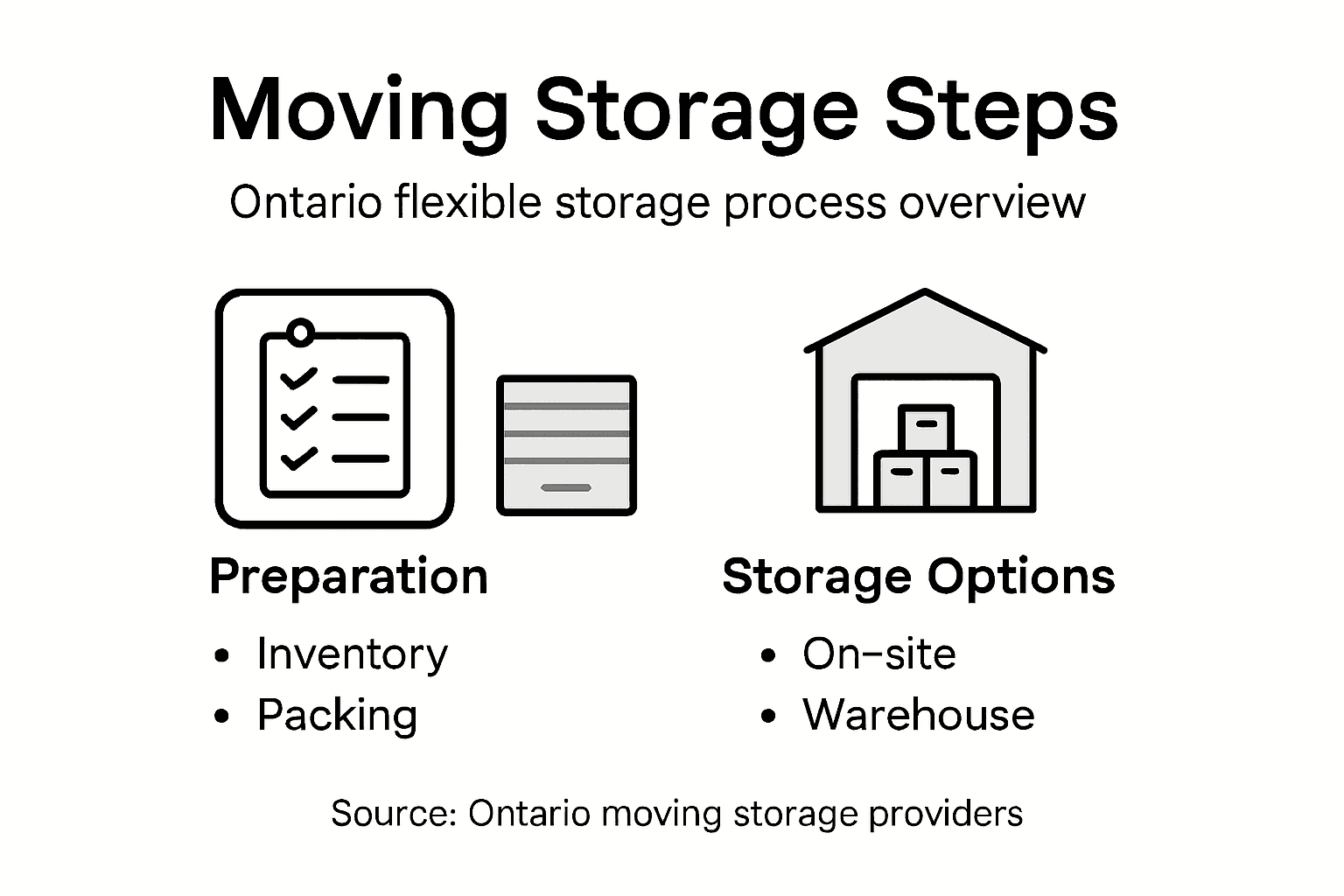
How Moving Storage Works Step by Step
Moving storage involves a systematic process designed to ensure the safe, efficient handling of personal and business belongings during transitions. Ontario tenants follow specific protocols when utilizing storage solutions, requiring careful planning and execution.
The comprehensive moving storage process typically includes the following key stages:
- Initial Assessment and Inventory
- Evaluate total volume of items to be stored
- Categorize belongings by fragility and storage requirements
- Determine appropriate storage unit size and type
- Packing and Preparation
- Select appropriate packing materials
- Carefully wrap and protect sensitive items
- Label boxes with detailed contents and handling instructions
- Transportation and Storage
- Coordinate professional moving services
- Transfer items to selected storage facility
- Ensure proper loading and secure placement
- Storage Management
- Monitor storage unit conditions
- Maintain periodic inventory checks
- Implement climate control for sensitive items
The storage process requires meticulous attention to detail, with each step designed to protect your belongings and provide maximum convenience. Different storage solutions offer varying levels of accessibility, security, and flexibility, allowing Ontarians to customize their storage experience based on specific needs.
Proper documentation and careful planning are essential for a smooth and stress-free storage experience.
Pro tip: Create a comprehensive digital inventory with photographs of stored items, enabling easy tracking and simplifying insurance claims if needed.
Cost Factors and Pricing Transparency in Ontario
Moving storage costs in Ontario represent a nuanced landscape influenced by multiple critical variables. Storage pricing dynamics demonstrate significant variation based on geographic location, service complexity, and seasonal demand.
Key cost factors impacting moving storage pricing include:
- Unit Size
- Smaller units (5×5 ft): Most affordable
- Medium units (10×10 ft): Standard residential option
- Large units (10×20 ft): Commercial or extensive personal storage
- Location Considerations
- Urban centres like Toronto: Higher pricing
- Suburban areas: More competitive rates
- Rural regions: Potentially lowest storage costs
- Additional Price Influencers
- Climate-controlled units: Premium pricing
- Advanced security features: Increased monthly rates
- Accessibility and convenience: Cost multipliers
The Ontario storage market prioritizes transparent pricing, with most providers offering detailed rate breakdowns and flexible rental options. Seasonal fluctuations can significantly impact pricing, with peak moving periods during summer months typically commanding higher rates.
Use this table to understand how cost factors influence your total storage spend:
| Cost Factor | Typical Impact on Price | Potential Savings Approach |
|---|---|---|
| Urban Location | Raises monthly rent | Choose suburban or rural providers |
| Climate Control | Adds a premium | Store only sensitive items |
| Unit Size | Larger = higher cost | Declutter and select smaller units |
| Security Features | Moderate price increase | Balance needs with actual risk level |
Comprehensive price comparisons and understanding contract terms are essential for securing the most cost-effective storage solution.
Pro tip: Request price quotes from multiple storage providers and negotiate longer-term rental discounts to maximize your storage budget.
Key Safety, Security, and Accessibility Considerations
Moving storage safety in Ontario is governed by comprehensive regulatory frameworks designed to protect consumers and ensure high-quality service standards. Moving storage regulations provide critical safeguards for residents seeking secure storage solutions.
Key safety and security considerations include:
- Physical Security Measures
- 24/7 video surveillance
- Gated access with digital entry systems
- On-site security personnel
- Individual unit alarms
- Legal Protection Mechanisms
- Mandatory operator certifications
- Transparent consent requirements
- Standardized pricing documentation
- Consumer rights enforcement
- Accessibility Features
- Extended access hours
- Climate-controlled environments
- Disability-friendly facility design
- Multiple access points
Ontario’s safety regulations emphasize comprehensive oversight, ensuring that storage providers maintain rigorous standards of security, transparency, and consumer protection. The Moving Ontarians More Safely Act, 2021, introduces enhanced training requirements and strengthened regulatory frameworks to promote user safety.
Consumers should always verify a storage provider’s certifications and understand their rights before signing any storage agreements.
Pro tip: Request a comprehensive security walkthrough and detailed documentation of a facility’s safety protocols before committing to a storage solution.
Simplify Your Move with Expert Moving Storage Solutions from Aleks Moving
Navigating the complexities of moving storage in Ontario can feel overwhelming with so many options and important factors like security, climate control, and cost transparency to consider. The article highlights the challenges of selecting the right storage type and managing sensitive items safely during transitions. If you want to avoid confusion and unexpected fees while ensuring your belongings are protected in climate-controlled or mobile storage containers, trust Aleks Moving to deliver professional solutions designed for your unique needs.
Key benefits include:
- Transparent flat-rate pricing with no hidden fees
- Over 18 years of experience handling residential and commercial moves
- Expertise in storage management that safeguards your valuables throughout the process
Take the stress out of your next move by partnering with Aleks Moving. Visit Aleks Moving Homepage to request your free quote today. Learn more about how our packing and storage services protect your belongings every step of the way. Secure your peace of mind with trusted movers familiar with Ontario’s moving storage landscape now.
Frequently Asked Questions
What is moving storage?
Moving storage is a flexible solution that provides secure temporary housing for personal or business belongings during transitions, such as relocations, renovations, or downsizing.
What types of moving storage solutions are available?
There are several types of moving storage solutions, including indoor storage units for sensitive items, outdoor storage units for larger belongings, and mobile storage containers that are delivered directly to your location for convenient loading and unloading.
How does the moving storage process work?
The moving storage process typically involves an initial assessment and inventory of items, packing and preparation for transport, coordination with moving services, and ongoing storage management to ensure the safety and security of belongings.
What factors influence the cost of moving storage?
The cost of moving storage is influenced by factors such as unit size, location, climate control requirements, and additional security features. Understanding these factors can help consumers make informed decisions and manage their storage budget.