Skip to content


Moving your home within Ontario can feel overwhelming when you are facing decisions about everything from legal rights to finding the right price. With factors such as housing needs, family changes, or job opportunities shaping your next step, understanding residential mobility becomes essential. This guide helps Ontario homeowners and renters uncover the key concepts, types of moves, and expert steps for a seamless move while highlighting where to find trusted, transparent, flat-rate service for peace of mind.
Table of Contents
- Defining Residential Moving And Key Concepts
- Types Of Residential Moves In Ontario
- Step-By-Step Residential Moving Process
- Costs, Quotes, And Pricing Transparency
- Common Mistakes And How To Avoid Them
Key Takeaways
| Point | Details |
|---|---|
| Understanding Types of Moves | Familiarise yourself with different types of residential moves, as each carries unique considerations and legal requirements in Ontario. |
| Effective Planning is Crucial | Engage in thorough planning, including timelines and checklists, to facilitate a smoother transition and mitigate stress during your move. |
| Budget for Hidden Costs | Anticipate additional moving expenses, such as packing services and fuel surcharges, by including a contingency fund of 15-20% in your budget. |
| Avoid Common Mistakes | Prevent common moving errors by conducting thorough research on moving services and ensuring proper packing techniques to protect your belongings. |
Defining Residential Moving and Key Concepts
Residential moving represents a complex process of changing one’s primary living space from one dwelling to another within Ontario or beyond. This transition involves more than simply transporting belongings; it encompasses significant personal, logistical, and emotional dimensions.
Moving can be categorized into several key types:
- Local moves: Relocations within the same city or region
- Long-distance moves: Transitions between different provinces or across Canadian territories
- Temporary moves: Short-term relocations for work, education, or personal reasons
- Permanent moves: Comprehensive residential transitions with intent to establish a new permanent home
Understanding residential mobility requires recognizing the diverse factors influencing population movement. These factors range from professional opportunities and housing market dynamics to family considerations and lifestyle preferences. Most residential moves in Canada are motivated by practical needs such as:
- Job opportunities in new regions
- Housing affordability
- Family expansions or changes
- Educational pursuits
- Lifestyle transformations
Mobility patterns reveal that residential moves are not random events but strategic decisions reflecting broader social and economic trends. Ontarians, in particular, experience unique moving dynamics influenced by the province’s diverse urban and rural landscapes.
Residential moving is more than a physical transition – it represents a significant life chapter involving personal growth, adaptation, and new opportunities.
Pro tip: Before planning your move, create a comprehensive checklist that accounts for emotional, logistical, and financial aspects of residential relocation.
Types of Residential Moves in Ontario
Residential moves in Ontario encompass a diverse range of transitions, each with unique characteristics and legal considerations. From urban centres like Toronto to rural communities, Ontarians experience various types of residential relocations that reflect their changing life circumstances.
The primary categories of residential moves in Ontario include:
- Rental moves: Transitioning between rental units, including apartments, houses, and shared accommodations
- Homeownership moves: Purchasing and relocating to a new owned property
- Subsidized housing moves: Transitions within public or community housing systems
- Interprovincial moves: Relocations across different Canadian provinces
Understanding residential tenancy regulations is crucial for navigating these moves. The Residential Tenancies Act provides a comprehensive framework that protects both tenants and landlords during residential transitions.
Ontario’s housing landscape offers multiple move types with distinct characteristics:
Here’s a comparison of the main residential move types found in Ontario:
| Move Type | Typical Reason | Legal/Logistical Consideration |
|---|---|---|
| Rental Move | Changing rental accommodations | Lease termination, security deposit |
| Homeownership Move | Buying a new property | Title transfer, property insurance |
| Subsidized Housing | Moving within public housing | Qualification criteria, waitlists |
| Interprovincial Move | Relocating to another province | Interprovincial contracts, regulations |
- Local moves within the same city or region
- Long-distance moves across Ontario
- Interprovincial relocations
- Temporary moves for work or education
- Permanent residential transitions
Each residential move represents a unique journey, reflecting personal growth, professional opportunities, and evolving life circumstances.
Pro tip: Research local tenancy laws and document all agreements in writing to protect your rights during residential moves.
Step-by-Step Residential Moving Process
Relocating within Ontario requires careful planning and strategic execution. Residential moves demand comprehensive preparation to ensure a smooth transition from one home to another, minimizing stress and potential complications.
The comprehensive moving process involves several critical stages:
- Planning stage: Initial research and preparation
- Logistics stage: Coordinating transportation and resources
- Packing stage: Organizing and securing personal belongings
- Transition stage: Physical move and initial settlement
- Post-move stage: Finalizing administrative details
Settlement services provide crucial support for navigating the complexities of residential relocation. These resources offer guidance on everything from utility transfers to community integration.
A detailed residential moving process typically includes these numbered steps:
- Create a comprehensive moving timeline
- Research and select a moving service
- Begin systematic packing and decluttering
- Arrange utility transfers and address changes
- Conduct a final property walkthrough
- Coordinate transportation and moving logistics
- Complete final cleaning and property handover
Successful residential moves are not about perfect execution, but about adaptable planning and maintaining a positive mindset.
Pro tip: Create a digital and physical moving folder to track all important documents, contracts, and checklists throughout your relocation journey.
Costs, Quotes, and Pricing Transparency
Moving expenses in Ontario represent a significant financial consideration for residents planning residential relocations. Understanding the complex landscape of pricing structures, quote mechanisms, and potential cost variables is crucial for effective budget planning and avoiding unexpected financial surprises.
Key factors influencing moving costs include:
- Distance of the move
- Volume and weight of belongings
- Complexity of the move (stairs, elevator access)
- Additional services like packing and unpacking
- Timing and seasonality of the move
Residential tenancy regulations indirectly impact moving cost transparency by establishing frameworks that protect consumers from potential financial exploitation.
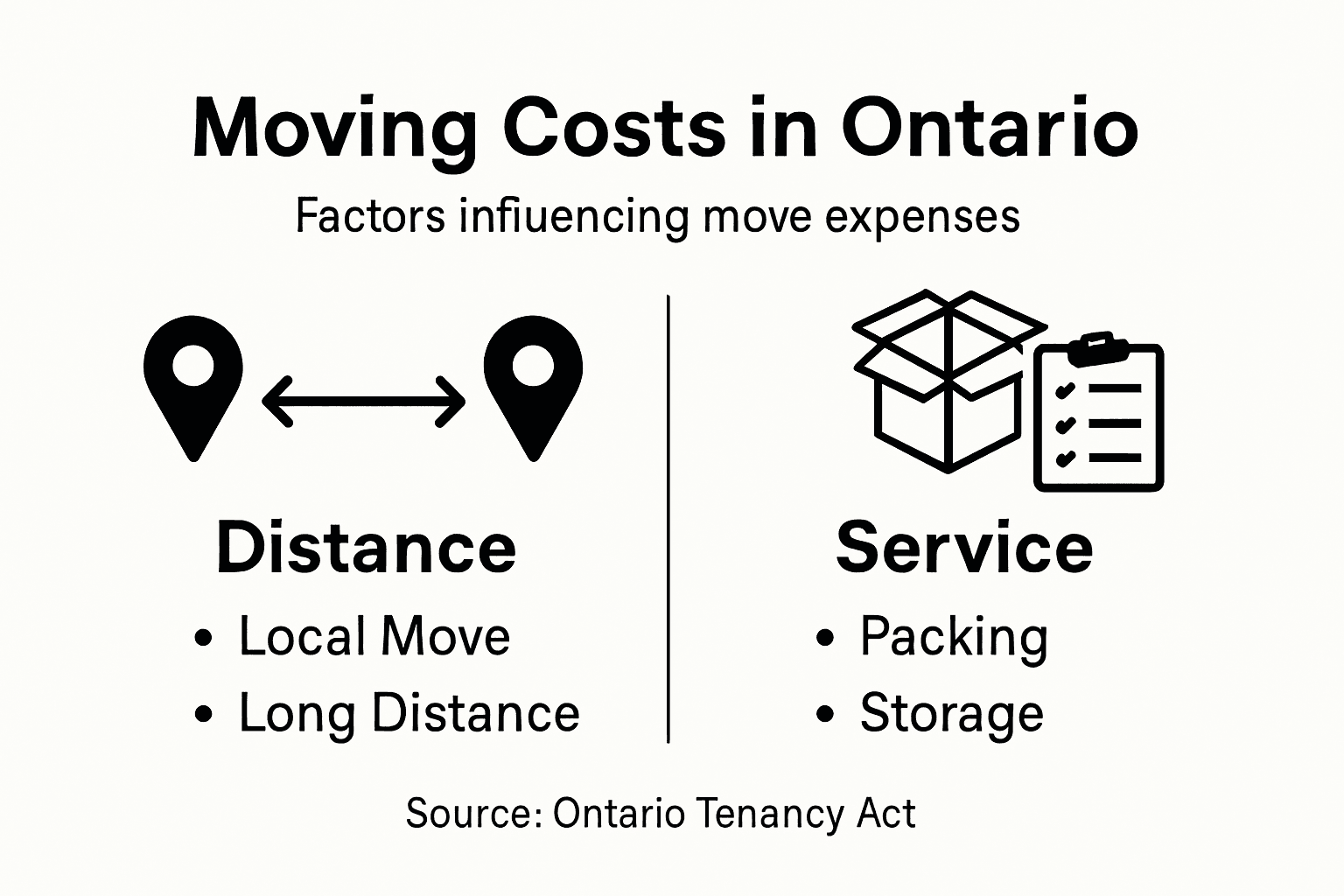
This table outlines common cost variables and their typical impact:
| Cost Factor | How It Affects Price | Often Overlooked Details |
|---|---|---|
| Distance | Longer moves cost more | Fuel surcharges may apply |
| Volume/Weight | More items increase costs | Furniture disassembly charges |
| Time of Year | Peak seasons cost extra | Weekends are more expensive |
| Additional Services | Packing increases total bill | Unpacking fees may surprise |
Moving cost estimates typically involve several critical components:
- Base transportation fee
- Labour costs
- Packing material expenses
- Insurance and valuation coverage
- Potential additional service charges
- Potential storage fees
- Fuel and transportation surcharges
Transparent pricing is not just about the numbers, but about building trust between moving service providers and customers.
Pro tip: Always request detailed, written quotes from multiple moving companies and carefully compare the included services to ensure comprehensive understanding of potential expenses.
Common Mistakes and How to Avoid Them
Residential moving involves numerous potential pitfalls that can transform an exciting transition into a stressful experience. Understanding and anticipating these common errors can significantly streamline your relocation process and protect your belongings, finances, and peace of mind.
The most frequent mistakes Ontarians encounter during residential moves include:
- Inadequate planning and preparation
- Underestimating total moving costs
- Failing to properly inventory belongings
- Overlooking important administrative notifications
- Improper packing techniques
- Not researching moving service providers thoroughly
Settlement support services can help movers navigate potential challenges by providing critical guidance on addressing change-related complexities. New residents and long-time Ontarians alike benefit from understanding these potential moving missteps.
Preventing moving mistakes requires strategic approach and proactive planning:
- Create comprehensive moving documentation
- Budget with a 15-20% contingency fund
- Conduct thorough research on moving companies
- Start packing early and systematically
- Notify all relevant institutions about address changes
- Consider professional packing services
- Maintain detailed inventory of valuable items
Successful moves are not about perfection, but about intelligent preparation and adaptable problem-solving.
Pro tip: Photograph and document the condition of valuable items before moving to create a reliable record for potential insurance claims.
Simplify Your Residential Moving Process with Aleks Moving
Residential moving in Ontario can be overwhelming with its many steps from planning to packing and managing costs. If you want to avoid common pitfalls like underestimating expenses or inadequate preparation, Aleks Moving offers the professional support you need. With over 18 years of experience, our team understands the challenges of local and long-distance moves and ensures transparency with flat-rate pricing and no hidden fees.

Take control of your relocation today by choosing a trusted partner who prioritizes your peace of mind. Discover how Aleks Moving can streamline your move and provide tailored solutions by visiting our official website. Get your free quote now and move forward confidently with expert guidance every step of the way. Learn more about our comprehensive services designed to meet your unique moving needs at Aleks Moving.
Frequently Asked Questions
What are the different types of residential moves?
Residential moves can be categorized into local moves, long-distance moves, temporary moves, and permanent moves. Each type has unique characteristics and considerations.
What factors influence the cost of moving in Ontario?
Moving costs are influenced by factors such as the distance of the move, the volume and weight of belongings, the complexity of the move, and additional services like packing and unpacking.
How can I avoid common mistakes during a residential move?
To avoid mistakes, create comprehensive moving documentation, budget with a contingency fund, research moving companies thoroughly, and start packing early and systematically.
What steps should I follow for a successful residential moving process?
Follow these steps: create a moving timeline, select a moving service, pack and declutter, arrange utility transfers, conduct a final property walkthrough, coordinate logistics, and finalize cleaning and property handover.