

Sudden job transfers, unexpected lease terminations, and family emergencies are more common in Ontario than most homeowners and renters expect. The pressure to relocate quickly leaves many racing the clock, worried that last-minute moving means chaos and high costs. In reality, last-minute moving refers to relocations happening with minimal advance notice, and with the right moving team, quality and affordability do not have to be sacrificed. Discover how professional movers in Ontario turn urgent moves into manageable experiences with clear pricing and proven expertise.
Table of Contents
- Last-Minute Moving Defined and Debunked
- Common Misconceptions About Last-Minute Moves
- What Actually Defines a Last-Minute Move
- The Real Reason Last-Minute Moves Cost More
- Debunking the Quality Myth
- Types of Urgent Move Scenarios in Canada
- Personal and Health-Related Emergency Relocations
- Government-Coordinated Emergency Relocations
- Business and Commercial Urgent Relocations
- Why Professional Movers Are Essential for Urgent Scenarios
- Key Steps in a Last-Minute Relocation
- Cost Factors and Common Mistakes
- Creating a Realistic Budget
- Choosing a Reliable Last-Minute Moving Service
- The Critical Evaluation Checklist
- Red Flags That Signal Unreliable Movers
- Making Your Final Decision
Key Takeaways
| Point | Details |
|---|---|
| Understanding Last-Minute Moves | Last-minute moving involves relocating on short notice due to unexpected circumstances and can be efficiently managed with the right approach. |
| Cost Drivers of Last-Minute Moves | Last-minute moves generally cost more due to scheduling disruptions and less planning time, not due to overcharging by movers. |
| Choosing Professional Movers | Selecting experienced movers is crucial to navigate the complexities of urgent relocations smoothly and minimise risks. |
| Actionable Steps for Last-Minute Moves | First, contact professional movers for guidance and establish a clear timeline while prioritising sorting and packing efficiently. |
Last-Minute Moving Defined and Debunked
Last-minute moving sounds chaotic. It sounds stressful. It sounds like something that happens to people who didn’t plan properly. But the reality is far different from what most people imagine. Last-minute moving refers to relocations that occur with minimal advance notice, typically triggered by unexpected life circumstances like job transfers, family emergencies, or lease terminations. The Ontario homeowners and renters facing these situations often believe they’re trapped between impossible choices: rush into a bad move or delay solving an urgent problem.
Here’s what actually matters: the quality of your move depends on who handles it, not when it happens. Research shows that last-minute moves often cost more primarily because planning efficiency deteriorates under tight time constraints rather than because movers are deliberately overcharging you. Rush fees and expedited packing add costs, yes, but the deeper issue is lost opportunities to find cost-saving options during proper planning. This is why working with experienced movers who understand tight timelines matters so much—they know how to navigate these constraints without letting costs spiral out of control.
Common Misconceptions About Last-Minute Moves
The myths around last-minute moving have real consequences. People delay calling professional movers because they believe:
- Last-minute moves are inherently chaotic and unmanageable
- Professional movers won’t take urgent jobs or charge excessive premiums
- Quality packing and care are impossible on short notice
- Last-minute moves always result in damaged belongings or lost items
- Only expensive or unprofessional companies accept rush jobs
None of these beliefs hold water. With proper strategy and the right moving team, last-minute relocations can be executed smoothly and efficiently. The key difference between a stressful move and a successful one often comes down to one factor: clear communication and adequate preparation in whatever time you have available.
A last-minute move is not a chaotic move—it’s simply a move with different constraints that require experienced problem-solvers, not panic.
What Actually Defines a Last-Minute Move
Last-minute moves typically fall into specific timeframes. A move announced with less than two weeks’ notice is generally considered last-minute, though some movers classify anything under three weeks this way. The specific definition matters less than understanding what it means practically: you have limited time to coordinate logistics, pack belongings, arrange utilities, and handle all the administrative details.
The triggers for last-minute moves are usually legitimate:
- Job offers or transfers requiring immediate relocation
- Family emergencies or health situations
- Lease terminations or unexpected housing changes
- Relationship changes requiring rapid separation
- Financial circumstances forcing urgent moves
- Property sales that close unexpectedly fast
What separates a successful last-minute move from a disaster is preparation within your available timeframe. Ontario residents facing urgent relocations often underestimate what’s possible when they partner with movers who specialize in exactly these situations. Many of the common mistakes people make when moving last minute stem from handling the move alone rather than getting professional help early.
The Real Reason Last-Minute Moves Cost More
Understanding pricing helps debunk another major misconception. Yes, last-minute moves typically cost more than moves planned months in advance. But this isn’t penalty pricing—it’s efficiency pricing. When movers plan a standard relocation, they coordinate multiple moves on the same day, optimize truck routes, and schedule teams efficiently. Last-minute moves disrupt these carefully balanced schedules.
The actual cost drivers include:
- Reduced scheduling flexibility for the moving company
- Potential need for expedited packing services
- Less time to identify the most cost-effective shipping or packing methods
- Possible rush fees if the timeline is extremely tight
- Higher likelihood of needing specialty services on short notice
What’s important for Ontario homeowners to understand: transparent movers like Aleks Moving disclose these factors upfront with flat-rate pricing and no hidden fees. You know exactly what you’re paying and why. This transparency eliminates the anxiety that often accompanies last-minute moving quotes.
Debunking the Quality Myth
Perhaps the most damaging misconception is that last-minute moves sacrifice quality. This simply isn’t true. Professional movers handle rushed relocations regularly and have systems specifically designed for tight timelines. The difference between a last-minute move handled by professionals versus one you attempt solo is night and day.
Experienced movers debunk this myth by:
- Assigning experienced crews rather than inexperienced staff
- Using proven packing techniques that protect belongings regardless of timeline
- Maintaining quality control processes even under time pressure
- Providing clear communication about realistic timelines and expectations
- Documenting inventory carefully despite the urgency
The moving industry understands that a reputation built over 18+ years of service depends on quality execution every single time, regardless of how much notice they received. Your belongings matter just as much whether you booked three months ago or three days ago.
Pro tip: When calling for a last-minute move, be completely honest about your timeline and specific constraints—experienced movers can then tell you exactly what’s possible and what adjustments might be necessary, rather than discovering problems mid-move.
Types of Urgent Move Scenarios in Canada
Canada’s vast geography and unpredictable weather create situations where relocation isn’t optional—it’s necessary. Urgent moves happen across the country for reasons far beyond the typical job transfer or lease change. Understanding these scenarios helps Ontario residents recognize when they need to act quickly and how professional movers can provide critical support during genuinely stressful times.
The most common urgent move triggers in Canada fall into three broad categories: natural disasters, employment crises, and personal emergencies. Natural disasters like floods and wildfires force sudden relocations in communities from British Columbia’s interior to Atlantic Canada’s coastal regions. Wildfires across Alberta and British Columbia have displaced thousands of families with little warning. Flooding in Manitoba, Ontario, and Quebec has destroyed homes and forced rapid evacuations. These aren’t hypothetical scenarios—they happen every fire season and spring melt cycle.
Employment-related urgent moves represent another significant category. A job offer with a start date three weeks away. A corporate restructuring that eliminates your position and requires relocation to another city. A work contract that ends unexpectedly, forcing a return home. These employment changes create time pressure that doesn’t allow for months of planning. Many Ontario professionals face these scenarios annually, particularly those in industries like technology, finance, and healthcare where rapid transitions are common.
Personal and Health-Related Emergency Relocations
Personal circumstances generate some of the most pressing urgent moves. Health crises—a parent’s illness requiring care, an elderly relative needing support, a medical emergency affecting housing stability—demand immediate relocation decisions. Relationship changes like separation or divorce often require one partner to leave quickly while legal matters unfold. Financial difficulties like foreclosure or eviction notices with 30-day timelines create situations where moving isn’t voluntary.
These personal scenarios share a common thread: emotional stress accompanies the logistical pressure. You’re not just coordinating movers and utilities. You’re processing difficult life changes while managing the relocation itself. This is precisely why choosing experienced movers matters most during these times. Having professionals who handle the moving logistics allows you to focus on the personal challenges requiring your attention.
Below is a comparison of urgent move scenarios in Canada and the professional moving services that best address each challenge:
| Urgent Scenario | Common Challenge | Recommended Service | Typical Timeframe |
|---|---|---|---|
| Natural disaster | Rapid evacuation, property loss | Emergency relocation crew | 24–72 hours notice |
| Job relocation | Tight start dates, minimal prep | Corporate moving package | 1–3 weeks notice |
| Health/personal emergency | High stress, sudden decision | End-to-end move support | 48 hours–2 weeks |
| Lease termination | Short notice, access issues | Flexible scheduling crew | 1–2 weeks |
| Commercial displacement | Operations continuity | Business moving services | Weekend to 1 week |
Government-Coordinated Emergency Relocations
Emergency management frameworks in Canada address major urgent relocations through rapid response programs. During large-scale disasters, government agencies coordinate evacuation efforts and provide support to affected populations. These coordinated moves involve:
- Evacuation orders issued with hours or days’ notice
- Government-provided transportation and temporary shelter
- Resource allocation for displaced persons
- Logistical coordination across multiple agencies
- Support for vulnerable populations (elderly, children, those with medical needs)
While government programs handle evacuation logistics, personal belongings and residential relocations often require private moving companies. Many residents discover they need professional moving services quickly after evacuation orders are lifted and they can return home—or need to relocate permanently if their homes are destroyed. The gap between emergency evacuation and actual household relocation is where experienced movers provide essential services.
Business and Commercial Urgent Relocations
Businesses face their own urgent move scenarios. A retail location loses its lease unexpectedly. An office building becomes unsafe or unusable. A company needs to relocate its operations to meet a deadline or capitalize on a new opportunity. These commercial moves require moving specialists who understand the complexity of relocating equipment, inventory, technology infrastructure, and documents while minimizing business disruption.
Ontario small business owners often underestimate how quickly they can relocate. With the right moving partner, a complete office relocation can happen over a weekend, allowing operations to resume Monday morning.
Urgent move scenarios span natural disasters, employment changes, personal emergencies, and business relocations—each requires different expertise but all demand professional moving support.
Why Professional Movers Are Essential for Urgent Scenarios
Attempting any of these urgent moves alone creates unnecessary risk. Trying to pack, coordinate logistics, arrange transportation, and manage utilities while processing a crisis is a recipe for mistakes, damaged belongings, and increased stress. Professional movers provide:
- Immediate availability or rapid scheduling
- Experienced crews who work efficiently under time pressure
- Proper equipment and materials for safe packing
- Transparent pricing without surprise fees
- Liability coverage and accountability
- Coordination of logistics while you handle personal matters
The cost difference between a professional move and attempting it yourself often proves insignificant when you factor in potential damage, lost items, and the emotional toll of mismanaging the relocation during an already stressful time.
Pro tip: When calling about an urgent move, provide movers with exact dates, specific triggers for your urgency, and any access or building restrictions so they can assess feasibility immediately and quote accurately without follow-up delays.
Key Steps in a Last-Minute Relocation
When you’re facing a last-minute move, panic is the default response. You have two weeks—or fewer—and suddenly everything feels impossible. But it’s not. Success in a last-minute relocation comes down to one thing: structured action taken immediately. The difference between a chaotic move and a controlled one isn’t luck. It’s following a clear sequence of steps that prioritise what matters most.
The first step is always the same: call professional movers before you do anything else. This isn’t optional. Contacting experienced moving companies immediately gives you realistic timelines, accurate pricing, and availability confirmation. Many Ontario residents waste days packing and planning only to discover that their preferred movers are booked. Call first. Once you’ve secured movers and locked in dates, everything else becomes manageable because you have a deadline to work backwards from.
After confirming your moving date, create a clear timeline that breaks your remaining days into actionable chunks. If you have 10 days, that’s drastically different from 3 days, and your plan needs to reflect that. A structured approach to last-minute relocations involves establishing clear timelines that identify which tasks must happen first, second, and third. Don’t try to do everything simultaneously. Instead, focus on completing these core phases in order.
The First 48 Hours: Critical Foundation Work
Your first two days determine everything that follows. During this window, complete these essential tasks:
- Contact and confirm your moving company
- Notify your current landlord or property manager about your departure date
- Arrange utilities disconnect at your current address and connect at your new one
- Inform your employer or relevant parties about your move
- Update your address with your bank, insurance, and critical service providers
- Take photos of your current space (for security deposit purposes)
- Begin sorting belongings into keep, donate, and discard categories
Don’t pack yet. Sorting comes before packing because you can’t pack efficiently when you’re deciding simultaneously what stays and what goes. The emotional decision-making happens first. Then the physical packing follows.
Days 3-7: Strategic Packing and Labelling
Once you’ve sorted, packing becomes your primary focus. Professional movers recommend labelling everything clearly because in the chaos of a fast move, unlabelled boxes disappear into the unknown. Write the room destination and contents on every box. This matters more in a rushed move than in a planned one because you won’t have time to hunt for items or sort boxes before unpacking.
Pack strategically by prioritising:
- Items you won’t need before moving day (seasonal clothing, books, decorative items)
- Items needed immediately at your new place (toiletries, medications, important documents, a change of clothes)
- Essential furniture and daily-use items (last)
Don’t pack your entire life into boxes randomly. Movers work faster when they understand what’s going into the truck and where it needs to go. If you’re using professional packing services, communicate clearly about what absolutely must be packed yourself versus what movers can handle.
Final Week: Logistics and Contingency Planning
With packing underway, shift focus to the logistics puzzle. Confirm all utility switch dates with your service providers. Organise your new address access (keys, security codes, parking information) and communicate these details to your movers. If you’re moving to a building with restricted access or limited loading areas, tell your movers now rather than surprising them on moving day.
Plan for unexpected fees by budgeting 10-15% above your quoted moving cost. Last-minute moves sometimes involve surprises—stairs that require additional crew, elevator access restrictions, or items requiring specialty handling. Having contingency funds eliminates panic when costs exceed the original quote.
Structured last-minute moves follow a sequence: secure movers, establish timelines, sort belongings, pack strategically, confirm logistics, and plan for contingencies.
Moving Day and After
On the actual day, your job is simple: stay available, answer questions, and verify items are being loaded correctly. Don’t disappear. Your presence prevents misunderstandings and ensures the move runs smoothly. After movers depart, your priority is setting up utilities and basic services at your new place before you need them.
Unpack strategically. Bedroom first. Kitchen second. Everything else can wait. You need to sleep and eat before you worry about arranging books or hanging pictures. This prioritisation prevents exhaustion from derailing your entire week.
Pro tip: Create a spreadsheet the day before moving that lists your movers’ contact number, your new address, all utility company numbers, and a brief inventory of major items—if questions arise during the move, you’ll have answers immediately without scrambling through documents.
Cost Factors and Common Mistakes
Last-minute moves cost more. That’s not a surprise. What catches most Ontario homeowners off guard is how much more, and why the additional costs exist beyond the “rush fee” line item. Understanding the actual cost drivers helps you budget realistically and avoid the shock of receiving a final invoice significantly higher than your initial quote. The difference between an informed move and a blindsided one often comes down to knowing what questions to ask upfront.
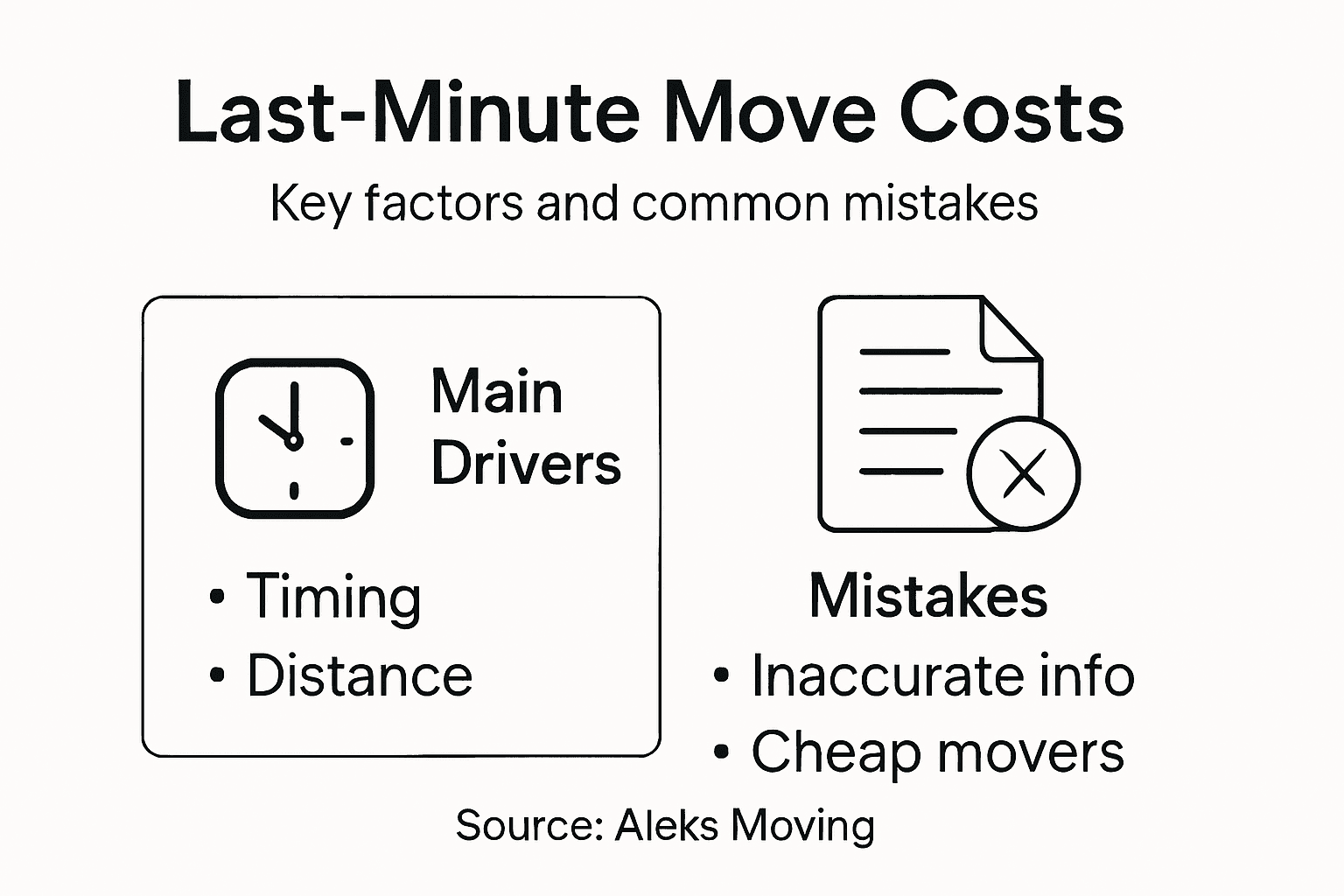
The core issue is simple: urgent bookings limit a moving company’s scheduling flexibility. When movers plan months ahead, they coordinate multiple relocations on the same day, optimise truck routes, and balance their workforce efficiently across different jobs. A last-minute call disrupts all of this. A truck that was scheduled to move three households now handles only one. A crew that was allocated elsewhere gets reassigned. Cost overruns in last-minute moves stem from inadequate planning and lack of information about your belongings’ volume and your current space’s access points. These planning gaps force movers to make reactive decisions that cost more money.
Ontario residents also overlook seasonal pricing. Moving during peak season (May through September) adds surcharges on top of rush pricing. A last-minute move in July costs significantly more than an identical move in February. Add to this the fact that last-minute moves often require additional manpower and specialised equipment to complete on schedule, and costs escalate quickly. Some movers charge premium rates for weekend or same-day services because these bookings force expensive operational adjustments.
Here’s a summary of the most impactful cost drivers for last-minute moves compared to standard moves:
| Cost Driver | Standard Move Impact | Last-Minute Move Impact |
|---|---|---|
| Scheduling flexibility | Optimised, low cost | Disrupted, higher premium |
| Crew and truck allocation | Efficient route planning | Dedicated resources needed |
| Packing time and materials | Adequate, lower cost | Expedited, premium pricing |
| Access planning and permits | Planned in advance | Often reactive, more costly |
| Seasonal surcharge | Rare outside peak months | Common if within peak season |
The Real Cost Drivers You Need to Know
Beyond rush fees, several factors secretly inflate your final bill:
- Poor packing decisions require movers to spend additional time protecting belongings, increasing labour costs
- Inadequate volume information forces movers to bring insufficient equipment, requiring return trips or overtime
- Building access complications like narrow stairwells, elevator restrictions, or limited parking create additional labour demands
- Specialty items requiring careful handling (pianos, artwork, antiques) demand experienced crews and extra time
- Distance uncertainty when your destination address isn’t confirmed forces movers to quote conservatively, padding estimates
- Damage liability from poor packing results in claims, disputes, and additional costs
Each of these factors multiplies when you’re moving under time pressure. You don’t have time to measure doorways carefully. You can’t arrange elevator access in advance. You haven’t decided what’s actually going to your new place. These uncertainties force movers to build larger contingency buffers into their pricing.
Common Mistakes That Destroy Your Budget
Mistake one: relying on inexperienced or unprofessional movers to save money. This backfires spectacularly. Inexperienced crews work slowly, damage belongings, and require supervisor oversight. Professional movers charge more upfront but complete moves faster and with fewer problems. Over the entire transaction, professional service costs less despite the higher hourly rate.
Mistake two: failing to provide accurate information about your belongings and space. When you tell movers “approximately 2 bedrooms,” they quote conservatively because they can’t risk underestimating. Provide detailed information: actual number of items, furniture dimensions, space measurements, and access restrictions. Accuracy reduces their contingency buffer and your final cost.
Mistake three: ignoring what actually needs to move. Many people pay to transport items they don’t want at their destination. Declutter ruthlessly before calling movers. Every item you eliminate reduces the move’s cost. This matters more in rushed moves because you don’t have time to sort later.
Mistake four: packing items yourself without proper materials or technique. Damaged belongings during the move create liability disputes and replacement costs. Professional packing services cost more upfront but prevent expensive damage claims. In a last-minute scenario, invest in professional packing rather than gambling with your possessions.
Last-minute moves cost more due to scheduling disruption, seasonal pricing, and inadequate planning—not because movers deliberately overcharge, but because efficiency vanishes under time pressure.
Creating a Realistic Budget
Start with your base quote from professional movers and add 15-20% contingency. This buffer accounts for unexpected complications rather than surprising you mid-move. Have your movers specifically itemise what rush fees include and what generates additional charges. Ask whether peak-season surcharges apply to your moving date.
Request written quotes from at least two movers. Compare not just price, but what’s included in each quote. A lower quote that excludes packing, supplies, or specialty handling isn’t actually lower once you factor in those costs. Aleks Moving provides flat-rate pricing with no hidden fees, meaning your quote remains accurate unless you change the scope of services.
Don’t cheap out on liability coverage. If movers damage your belongings, you want proper insurance covering replacement. Paying a small amount for comprehensive coverage prevents financial disaster if something goes wrong.
Pro tip: Request your moving quote 48 hours before your scheduled move date rather than the day before—this gives movers enough notice to adjust their schedule slightly without imposing rush surcharges, potentially saving 10-15% on your total cost.
Choosing a Reliable Last-Minute Moving Service
When you’re in crisis mode, the temptation is to book the first available mover. Stop. The mover you choose during urgency determines whether your move succeeds or spirals into disaster. A bad moving company doesn’t just damage your belongings—it compounds an already stressful situation. The good news: identifying reliable movers takes minutes if you know what to evaluate.
Start with credentials and online presence. Reputable moving companies maintain active websites, list their contact information clearly, and display licensing information. If a mover operates without an online presence or resists sharing credentials, that’s your signal to keep looking. A company confident in its service welcomes scrutiny. Ontario movers should be licensed through the provincial regulatory body. Avoid providers lacking verifiable credentials because they offer no recourse if something goes wrong.
Choosing a reliable last-minute moving service requires focusing on professionalism, transparent pricing, and insurance coverage. These three factors separate trustworthy movers from fly-by-night operations. A professional mover communicates clearly, answers your questions directly, and provides written quotes without pressure. They don’t pressure you into immediate decisions or demand large deposits. They explain their pricing structure and don’t hide fees in fine print.
Insurance coverage matters tremendously in last-minute moves when you’re stressed and less likely to document items carefully. Professional movers carry liability insurance that covers damage to your belongings during transport. Ask specifically what their coverage includes and what it excludes. If a mover refuses to discuss insurance or claims they don’t carry any, do not hire them. Insurance isn’t optional—it’s essential protection.
The Critical Evaluation Checklist
When comparing last-minute movers, evaluate these specific factors:
- Punctuality record: Do they show up on time for appointments and moves?
- Equipment quality: Do they use proper dollies, straps, and protective materials, or do they show up with just boxes?
- Staff professionalism: Are crews trained, polite, and careful with your belongings?
- Transparent communication: Do they explain processes clearly and answer questions honestly?
- BBB rating and reviews: What do verified customers actually say about their service?
- Flexibility with scheduling: Can they accommodate urgent timelines without astronomical premiums?
- No deposit requirements: Trustworthy movers don’t demand large upfront payments before service delivery
- Full-service options: Do they offer packing, loading, and storage if needed?
Call at least two movers and compare their responses. How quickly do they answer? Do they ask detailed questions about your move or give a generic quote? Do they listen to your concerns or rush the conversation? The mover that invests time in understanding your situation usually delivers better service than one treating you as just another booking.
Red Flags That Signal Unreliable Movers
Certain warning signs indicate you should keep searching. Avoid movers who:
- Quote dramatically lower prices than competitors without explanation
- Demand large cash deposits before the move
- Can’t provide verifiable references or customer reviews
- Refuse to provide written estimates or contracts
- Pressure you to decide immediately
- Don’t carry adequate liability insurance
- Operate without proper licensing or credentials
- Have consistently poor ratings across multiple review platforms
- Won’t discuss their pricing structure or what’s included
If a mover exhibits any of these behaviours, your instinct telling you something’s wrong is correct. Trust it. There are plenty of reliable movers in Ontario willing to earn your business through professionalism and transparency.
Reliable last-minute movers prioritise clear communication, transparent pricing, proper insurance, and professional conduct—not cutting corners to compete on price alone.
Making Your Final Decision
After evaluating multiple movers, choose based on a combination of factors, not just price. The cheapest option often becomes the most expensive when damage occurs or the mover fails to show. Consider the total value: reliability, professionalism, insurance, and proven track record matter more than saving 10% on moving costs.
Aleks Moving operates with over 18 years of industry experience, transparent flat-rate pricing with no hidden fees, and a commitment to professional service regardless of timeline pressure. When you call, you’re working with movers who specialise in urgent relocations and understand the stress you’re facing.
Once you’ve selected a mover, get everything in writing. Your written contract should specify the move date, pickup and delivery locations, services included, total cost, insurance coverage, and cancellation policies. Having a written agreement prevents misunderstandings and gives you recourse if something goes wrong.
Pro tip: Ask your chosen mover for three customer references from last-minute moves they’ve completed in the past month—calling actual customers takes five minutes and provides the most honest feedback about reliability and professionalism.
Expert Support for Your Last-Minute Move in Ontario
Facing a last-minute move can feel overwhelming with tight deadlines and unexpected challenges. Whether you are relocating due to a job transfer, family emergency, or sudden lease termination, you do not need to handle this alone. Aleks Moving specialises in urgent residential and commercial relocations across Ontario and Canada, offering transparent flat-rate pricing with no hidden fees so you can plan your budget with confidence. By partnering with experienced professionals who understand the pressure of last-minute moves, you gain peace of mind knowing your belongings are in safe hands and your relocation will be handled efficiently.

Take control of your urgent move today with a company that listens, adapts, and delivers. Visit Aleks Moving to request a free quote and book your move quickly. Learn more about our comprehensive local moving services and how we handle office and commercial relocations so you can focus on what matters most during your transition. Do not wait until the last minute drains your resources and adds stress. Connect with Aleks Moving now and experience a smoother, more reliable last-minute move.
Frequently Asked Questions
What is considered a last-minute move?
Last-minute moving refers to relocations that occur with minimal advance notice, typically less than two to three weeks, often due to unexpected circumstances like job transfers, family emergencies, or lease terminations.
Why do last-minute moves cost more than planned moves?
Last-minute moves typically have higher costs due to reduced scheduling flexibility for moving companies, the potential need for expedited packing services, and the increased likelihood of specialty services being required on short notice.
How can I prepare for a last-minute move?
To prepare for a last-minute move, contact professional movers first to confirm availability, create a clear timeline for packing and logistics, sort your belongings, and ensure utilities are connected at your new place before the move.
What are the benefits of hiring professional movers for a last-minute relocation?
Hiring professional movers for a last-minute relocation can streamline the process, reduce stress, ensure careful packing, and provide necessary equipment and experienced crews that can effectively manage time constraints without compromising quality.
Recommended
- 7 Types of Last-Minute Moving Services for Ontarians
- Last-Minute Moving Guide: Achieve Stress-Free Relocation Fast
- Trusted Moving Services | Aleks Moving
- Last Minute Moving Tips | Aleks Moving
- How Courts Decide Relocation Requests in NH Custody Cases
- Ambalarea expres pentru curierat – Impactul asupra livrărilor rapide