

TL;DR:
- Proper preparation, including gathering supplies and labeling, prevents moving chaos and damage.
- Packing room-by-room, sealing boxes, and verifying contents ensures a smoother move.
- Ontario-specific details like condo logistics and legal documentation are critical to avoid delays.
Packing up your home is often the part of moving that catches people off guard. You start with good intentions, but within hours the living room is buried in half-filled boxes, tape is missing, and you have no idea where your kitchen essentials ended up. For homeowners and renters across Ontario, this scene is far too familiar. The good news is that packing does not have to feel like organised chaos. With the right supplies, a clear plan, and a few practical strategies tailored to Ontario’s unique moving landscape, you can pack your home efficiently and arrive at your new place ready to settle in.
Table of Contents
- What to gather before packing
- Step-by-step packing strategy for homeowners and renters
- Solving common packing problems and mistakes
- Verifying your packed home before moving day
- Why most Ontario moves go wrong — and what actually works
- Stress-free packing starts with expert help
- Frequently asked questions
Key Takeaways
| Point | Details |
|---|---|
| Gather supplies early | Collect all required boxes, tape, labels, and protective wraps before starting your packing. |
| Use detailed labelling | Mark boxes with room, contents, and special handling notes for faster unpacking and safer transportation. |
| Pack hazardous items separately | Keep hazardous materials apart and properly labelled to avoid move-day dangers. |
| Document rental condition | Renters should use photos to prove room condition and protect deposit returns. |
| Final room checks matter | Verify all rooms are packed, labelled, and nothing is left behind for a stress-free moving day. |
What to gather before packing
Before you tape up a single box, getting your supplies sorted is the single most important thing you can do. Most people underestimate how much packing material they actually need, and running out halfway through is one of the most common moving frustrations we hear about.
Here is a solid list of packing supplies to gather before you begin:
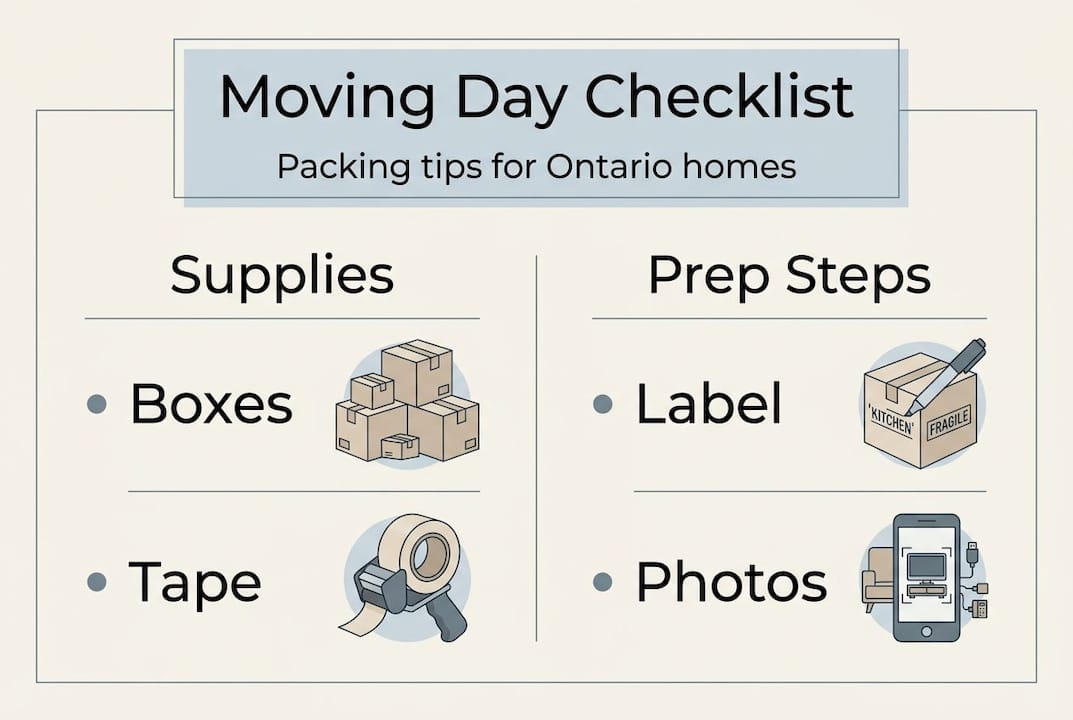
- Cardboard boxes in multiple sizes (small for books and heavy items, large for bedding and pillows)
- Packing tape and a tape gun for speed and clean application
- Permanent markers for labelling
- Pre-printed or blank labels for room assignments and handling instructions
- Bubble wrap and packing paper for fragile items
- Foam peanuts or crumpled newsprint for void fill inside boxes
- Stretch wrap or plastic film for wrapping furniture, mirrors, and odd-shaped items
- Wardrobe boxes for clothes on hangers
- Heavy-duty bags for soft goods like bedding and towels
- Colour-coded stickers for a visual room system
You can find moving boxes from grocery stores, hardware retailers, and professional suppliers. Free options exist, but new boxes are sturdier and less likely to collapse under weight.
One of the most practical steps you can take is to label boxes clearly with the room, contents, and fragility instructions such as FRAGILE or THIS SIDE UP. Colour-coding or numbering each box by room speeds up unpacking significantly, especially when you have a team of movers placing boxes quickly in your new home.
Here is a simple reference table to guide your labelling system:
| Colour | Room | Example label |
|---|---|---|
| Red | Kitchen | Kitchen, pots, FRAGILE |
| Blue | Bedroom 1 | Master bedroom, linens |
| Green | Living room | Living room, books, heavy |
| Yellow | Bathroom | Bathroom, toiletries |
| Orange | Kids’ room | Kids’ room, toys |
For renters in Ontario, it is also worth gathering any relevant tenancy documents at this stage, including your lease and any written communication with your landlord, so you have everything in one place as moving day approaches.
Pro Tip: Always buy 20 to 30 percent more boxes and tape than you think you need. Experienced movers consistently report that most people run out of supplies mid-pack, which causes delays and often leads to improvised packing choices that can result in damaged items.
Step-by-step packing strategy for homeowners and renters
With your supplies ready, it is time to put a smart plan into action. Packing room by room is the most reliable approach, and the order matters more than most people realise.
- Start with storage areas and rarely used rooms. Basements, attics, guest rooms, and storage closets should be packed first because they contain items you will not need before moving day. These rooms also tend to hold the most accumulated clutter, so starting here forces you to make decisions early.
- Move into less-used living spaces. Home offices, spare bathrooms, and dining rooms come next. Pack books, decorative items, and non-essential kitchenware during this phase.
- Pack bedrooms. Leave one set of bedding, a change of clothes, and your toiletries out. Everything else can be boxed up and clearly labelled moving boxes with the occupant’s name and contents.
- Pack the kitchen last among the major rooms. Keep a small set of dishes, a pot, and utensils available until moving day. Use towels and tea towels to cushion fragile glassware inside boxes.
- Seal every box properly. Proper taping of moving boxes prevents bottoms from giving way during loading. Apply tape in an H-pattern across the seams for maximum strength.
- Photograph box contents before sealing. This is a small habit that saves enormous frustration, especially for electronics and valuables.
Homeowners and renters face different pressures during this process, and it is worth understanding those differences clearly.
| Factor | Homeowners | Renters |
|---|---|---|
| Notice requirements | Sale closing date dictates timeline | 60 days notice via Form N9 required before rental period end |
| Move-out documentation | Less formal but advisable for disputes | Photos of every room required for deposit return |
| Key handover | Typically mid-afternoon on closing day | Coordinated with landlord, often end of month |
| Elevator bookings | Needed for condo moves | Needed for condo moves, often booked early |
Ontario-specific edge cases like condo elevator bookings and key handover timing for homeowners (mid-afternoon on closing day) and hazardous items should always be handled separately from regular household goods. These details are easy to overlook but frequently cause real delays on moving day.
Pro Tip: Photograph the contents of each box before sealing it, and photograph your valuables from multiple angles. If anything goes missing or gets damaged in transit, clear documentation makes resolution much faster and less stressful.
Reviewing our Ontario packing tips for additional guidance on local considerations is a smart next step once your room-by-room plan is set.
Solving common packing problems and mistakes
Now that you understand the steps, it is time to look at what actually goes wrong and how to handle it. Even well-prepared movers run into problems. Knowing the solutions in advance keeps things moving without panic.
Fragile items breaking in transit is one of the most common complaints. The fix is straightforward but requires discipline. Every fragile item needs to be individually wrapped in bubble wrap or packing paper. Boxes should be filled so items cannot shift. If a box feels light but contains glass or ceramics, add more padding. Mark the box FRAGILE on every side, not just the top.
Running out of packing supplies mid-move creates real pressure. Many hardware stores across Ontario carry basic packing supplies, and some moving companies offer same-day supply delivery. Buying extra upfront is always the better choice, but if you do run short, local options are available.
Mix-ups between rooms happen when labelling is inconsistent. If one person labels boxes and another does not, unpacking becomes a guessing game in your new home. Establish a single labelling standard at the start and stick to it across every box.
Safety notice: Never pack hazardous materials such as propane tanks, aerosol cans, paint, bleach, or flammable liquids with regular household items. These materials pose serious risks during transport and must be handled separately. Many moving companies, including professional services, are unable to transport them. Dispose of them responsibly before moving day or arrange separate transport.
Understanding appliance hazards is also important before you disconnect and pack major appliances. Gas connections, refrigerant, and water lines all require specific preparation to avoid damage or safety risks.
For renters, the most costly mistake is failing to document the condition of your unit before handing back the keys. Deposit disputes are common in Ontario, and without clear photo evidence, it becomes your word against your landlord’s. Walk through every room with your phone, film a video, and photograph every wall, floor, and fixture.
For packing liquids like cleaning products, shampoos, and cooking oils, seal every lid with plastic wrap before closing the bottle, then double-bag in zip-lock bags. Place these in an upright position in a clearly labelled box that stays accessible during loading and unloading.
Pro Tip: Pack a clearly labelled “Day One essentials” box or bag containing your phone charger, a change of clothes, basic toiletries, snacks, a kettle, and your important documents. This box travels in the front seat of your car, not the moving truck, so you can access everything you need immediately upon arrival without tearing through stacks of boxes.
Here is a quick list of things people most often forget to pack safely:
- Medications and supplements
- Jewellery and small valuables
- Important documents (passports, leases, insurance papers)
- Phone and device chargers
- Pet food and supplies
- Children’s comfort items
Verifying your packed home before moving day
With packing complete, a thorough final walkthrough is not optional. It is the step that separates smooth moves from chaotic ones. Most last-minute moving stress comes from discoveries made on moving day itself, when there is no time left to fix problems properly.
Follow these steps for your pre-move verification:
- Walk each room individually. Do not do a general sweep of the whole home. Move deliberately from room to room, checking every shelf, cupboard, closet, and drawer.
- Check all labels on packed boxes. Confirm that every box has a room label, a contents description, and handling instructions where needed. Unmarked boxes slow down unloading significantly.
- Verify all fragile and hazardous items are marked. Movers rely on these labels to handle boxes appropriately. An unlabelled box of glassware is a liability waiting to happen.
- Confirm all boxes are sealed. Loose flaps are a risk during loading. Run a final pass with tape over any box that does not feel secure.
- Check commonly missed spots. Attic hatches, garage shelves, bathroom medicine cabinets, the space under beds, and outdoor storage are areas that routinely get missed.
Studies suggest a significant proportion of Ontario movers experience avoidable last-minute stress simply because individual rooms were not checked systematically before the truck arrived. A 20-minute final walkthrough eliminates most of those surprises.
For renters, this walkthrough also serves a legal and financial purpose. Ontario tenant regulations require that you provide 60 days notice via Form N9 and document the condition of the unit thoroughly with photos at move-out to support a deposit return claim.
Here are the items most commonly forgotten during final checks:
- Small electronics (Bluetooth speakers, gaming devices, tablets)
- Keys, including mailbox and storage unit keys
- Chargers and cables tucked behind furniture
- Toiletries in medicine cabinets
- Items left in the dryer or dishwasher
- Artwork or mirrors hanging on walls
- Items in the fridge or freezer
When you pack specific items that need special care, such as Tupperware and food containers or how to pack clothes efficiently, planning ahead for each category saves real time. For home offices, knowing how to pack your printer properly prevents costly damage that standard bubble wrap alone cannot prevent.
Why most Ontario moves go wrong — and what actually works
After more than 18 years helping Ontarians relocate, we have seen the same patterns repeat. Most moving guides give you a generic list and call it done. What they miss are the realities specific to Ontario: condo elevator bookings that need to be arranged weeks in advance, key handover windows that narrow to a few hours, and deposit documentation that becomes your only protection in a dispute.
Speed is not the goal during packing. Preparation is. The movers who arrive on moving day with every box labelled, every fragile item wrapped, and a clearly packed “Day One” bag ready are the ones who settle in calmly. The ones who rush and skip the details spend their first week in a new home hunting for basics.
The uncomfortable truth is that most moving mistakes are not random. They are predictable. Our Ontario packing tips exist because we have seen what goes wrong at scale, and we want you to avoid those problems entirely. Preparation beats speed every single time.
Pro Tip: Before moving day, call your mover and ask specifically about edge cases in your building or neighbourhood. Elevator booking limits, parking restrictions, and key handover requirements vary significantly across Ontario buildings. A 10-minute conversation in advance can prevent a two-hour delay on the day.
Stress-free packing starts with expert help
Packing a home thoroughly and safely is genuinely hard work. Even with a solid plan, the details add up quickly, and professional expertise makes a real difference.
At Aleks Moving, our team brings over 18 years of experience supporting Ontario homeowners and renters through every stage of relocation. Our residential moving services are tailored to Ontario’s specific requirements, from condo elevator logistics to deposit-conscious move-outs. If you would rather leave the packing to us, our dedicated packing services use professional-grade materials and proven techniques to protect your belongings from first wrap to final delivery. For more guidance before you book, explore our stress-free moving tips and see how a little extra preparation pays off on moving day.
Frequently asked questions
How do I label moving boxes for best results?
Label each box clearly with its destination room, a brief contents description, and any handling instructions like FRAGILE or THIS SIDE UP; colour-code or number boxes by room for faster sorting during unloading.
What should renters in Ontario do before moving out?
Renters must submit Form N9 at least 60 days before the end of their rental period and photograph every room thoroughly to support a full deposit return.
How do I manage packing hazardous items?
Hazardous materials like aerosols, paints, and flammable liquids must be packed separately and clearly labelled, and they should never be mixed with regular household goods for safety during transport.
What is the best way to prevent moving day confusion?
Prepare written or digital checklists for each room, confirm all boxes are labelled and sealed the day before, and assign one person to manage the checklist so nothing gets missed in the activity of loading.
Are there Ontario-specific packing rules I should know?
Ontario renters must comply with notice periods and deposit documentation requirements as outlined under the Residential Tenancies Act, while condo homeowners often need to schedule elevator access and coordinate precise key handover timing, details that vary by building and municipality.