

TL;DR:
- Ontario moves require strict legal notices, timeline coordination, and thorough planning to avoid costly mistakes.
- Moving costs vary widely; booking mid-week and decluttering can significantly lower expenses.
- Professional movers offer timing discipline and accountability, making stress-free relocation achievable.
Moving in Ontario sounds straightforward until you miss a legal deadline or discover your closing day runs three hours late. Renters who skip the proper written notice can face extra rent charges, while homeowners who underestimate closing day logistics may find themselves waiting on a curb with a loaded truck. Whether you’re leaving a rented apartment in Toronto or selling a house in Hamilton, this guide walks you through the legal requirements, realistic costs, packing strategies, and move-out day essentials you need for a smooth, stress-free relocation.
Table of Contents
- Know your legal and timing requirements
- Budget your move: What’s typical and what to expect
- Choosing between professional movers and DIY: What works best?
- Packing, supplies, and timelines: Staying efficient and organised
- Move-out day: Checklists, key logistics, and avoiding last-minute stress
- Why moving in Ontario is trickier than you think—and what makes the difference
- Make your Ontario move stress-free with expert help
- Frequently asked questions
Key Takeaways
| Point | Details |
|---|---|
| Legal notice matters | Ontario renters need 60 days’ notice and the correct form to avoid penalties. |
| Budget realistically | Set a moving budget that accounts for extras and unexpected costs. |
| Declutter to cut costs | Downsizing before booking movers can reduce expenses by up to 30 percent. |
| Plan your timing | Move-out and move-in days rarely line up exactly, so coordination is key for a smooth transition. |
| Pro help makes it easier | Professional movers speed up the process and reduce risks if your budget allows. |
Know your legal and timing requirements
Before you book a single mover or buy a single box, get your legal obligations sorted. This step alone saves you from costly surprises that catch many Ontario residents off guard.
For renters, the rules are firm. Ontario renter requirements state that you must give 60 days written notice using Form N9 before the end of your rental period, and fixed-term leases end automatically unless renewed. You cannot opt out early without a mutual agreement using Form N11, signed by both you and your landlord. Ignoring this can mean paying rent on a place you’ve already vacated.
Homeowners face a different set of pressures. Closing day logistics typically see lawyers handling funds, title transfers, and key handovers in the afternoon, so plan your movers for the morning and arrange overlap if possible, including a final walkthrough. Expecting keys at noon often leads to disappointment and a scramble.
Start planning your move at least eight weeks out to give yourself room to handle these legal steps without rushing.
Key documents and notifications checklist:
- Form N9 (renters giving notice)
- Form N11 (mutual agreement to end tenancy early)
- Real estate lawyer contact and closing day schedule
- Canada Post mail redirect form
- Utility transfer or cancellation notices
- Updated address for CRA, Service Ontario, and your bank
| Situation | Required action | Timeline |
|---|---|---|
| Month-to-month rental | Submit Form N9 | 60 days before period end |
| Fixed-term lease ending | Confirm non-renewal in writing | Before lease expiry |
| Homeowner closing day | Coordinate with lawyer | Day of closing, afternoon |
| Utility transfers | Contact providers | 2-4 weeks before move |
Pro Tip: If you’re on a fixed-term lease and want to leave before it ends, speak to your landlord early. A signed Form N11 protects both parties and avoids a Landlord and Tenant Board dispute.
Budget your move: What’s typical and what to expect
With your legal foundation in place, it’s time to get realistic about money. Moving costs in Ontario vary widely, and underestimating them is one of the most common mistakes we see.
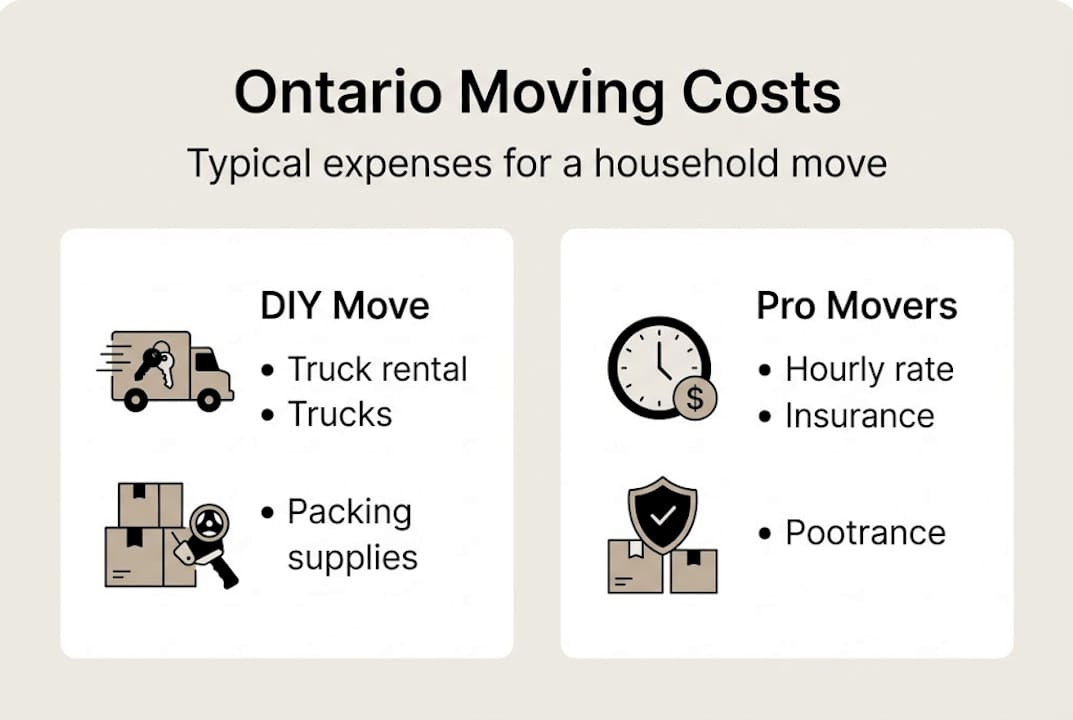
Local move costs for a three-bedroom home in the GTA typically run $1,000 to $3,000 at $120 to $220 per hour, while long-distance moves range from $3,000 to $6,000. Add packing services ($150 to $400), professional cleaning ($200 to $500), and insurance, and the bill climbs quickly. Always budget 15% contingency on top of your estimate, as local moves typically take 6 to 10 hours and unexpected delays happen.
For a clear picture, here’s how professional moving compares to doing it yourself:
| Factor | DIY move | Professional movers |
|---|---|---|
| Upfront cost | Lower (truck rental + fuel) | Higher (hourly or flat rate) |
| Time required | Full day or more | 6-10 hours typically |
| Damage risk | Higher | Lower (insured) |
| Physical effort | Very high | Minimal for you |
| Flexibility | High | Depends on booking |
For a detailed breakdown of Ontario moving costs by home size, our cost guide covers current rates.
What inflates your moving bill:
- Booking at the end of the month (highest demand period)
- Last-minute scheduling (less than two weeks out)
- Oversized or specialty items like pianos or safes
- Long carry distances from door to truck
- Stairs, narrow hallways, or elevator wait times
A mid-week, mid-month booking is almost always cheaper and easier to secure. Plan around that if your schedule allows.
Choosing between professional movers and DIY: What works best?
Once your budget is set, you need to decide who is actually doing the heavy lifting. Both options have real merit depending on your situation.
DIY moving gives you full control and can save on labour costs. You choose the truck size, the timeline, and who helps. But the downsides are significant. Rental trucks, fuel, packing supplies, and the time you spend add up fast. Basic mover insurance is $0.60 per pound, which means a 30-pound television is only covered for $18 if something goes wrong. Getting valuation protection and keeping an inventory list is essential regardless of who moves you.
Professional movers bring speed, experience, and accountability. When comparing hiring movers vs. DIY, the time savings alone often justify the cost for families with full households. Decluttering before booking can reduce your move volume by 20 to 30%, which directly lowers your cost whether you go DIY or professional.
Steps to hire smart:
- Get at least three written quotes from licensed, insured movers
- Confirm the company is not a broker reselling your job to unknown crews
- Ask specifically about their insurance coverage and claims process
- Check reviews on Google and the Better Business Bureau
- Confirm the quote includes all fees, stairs, and fuel charges
For guidance on finding reputable movers, look for companies with verifiable reviews and transparent pricing.
“Getting three written quotes is not just about price. It tells you how professional a company is before they ever touch your belongings.”
Pro Tip: Book your movers before you finalise your moving date if possible. The best crews fill up weeks in advance, especially around month-end in the GTA.
Packing, supplies, and timelines: Staying efficient and organised
Packing is where most moves fall apart. People underestimate how long it takes and run out of supplies at the worst moment. A structured approach changes everything.
Start gathering packing materials at least three weeks before your move date. You will need sturdy boxes in varied sizes, packing tape, bubble wrap, packing paper, permanent markers, and coloured labels. Buying more than you think you need is always the right call. Running out of tape at 11 p.m. the night before your move is a genuinely stressful experience.
Professional packing protects valuables and reduces the risk of damage during transit, which is worth considering for fragile or high-value items. For everything else, a room-by-room system keeps things manageable when you’re unpacking in your new home.
Week-by-week packing timeline:
- Four weeks out: Gather supplies, start decluttering, donate or sell unwanted items
- Three weeks out: Pack seasonal items, books, décor, and anything rarely used
- Two weeks out: Pack non-essential clothing, extra linens, and garage items
- One week out: Pack most of the kitchen (keep a few essentials), remaining rooms
- Two days out: Pack daily-use items, toiletries, and electronics
- Moving day: Load the essentials bin last so it comes off the truck first
What to include in your essentials bin:
- Phone charger and laptop
- One set of bedding per person
- Toiletries and a change of clothes
- Snacks, kettle, and a few mugs
- Important documents (lease, ID, insurance papers)
For more detail on preparing your house for movers and a full moving day preparation guide, we’ve covered both in depth.
Pro Tip: Colour-code your boxes by room using coloured tape or stickers. It takes five minutes to set up and saves hours of confusion when movers are unloading at your new place.
Move-out day: Checklists, key logistics, and avoiding last-minute stress
The final 24 to 48 hours before your move are where careful planning either pays off or falls apart. Execution matters as much as preparation.
Confirm everything the day before. Call your movers to verify arrival time, confirm key handover logistics with your landlord or real estate lawyer, and do a final walkthrough of every room, closet, and storage area. Closing day often sees key handovers happening in the afternoon, so coordinate your truck timing accordingly and arrange overlap if your new place is available earlier.
Document everything with photos before you leave. This protects you from deposit disputes as a renter and from post-closing claims as a homeowner. Keep all receipts, your inventory list, and mover contracts in one folder.
Move-out day checklist:
- Confirm mover arrival time and parking arrangements
- Complete a room-by-room walkthrough with photos
- Check all appliances, fixtures, and storage spaces are empty
- Ensure the property is clean to the standard required in your lease or sale agreement
- Hand over all keys, fobs, and parking passes
- Confirm utility shutoff or transfer dates
For unexpected delays, stay calm and communicate. Valuation protection and an inventory list give you recourse if something is damaged or lost. If your move-in is delayed, ask your mover about short-term storage options.
“The moves that go smoothly are almost always the ones where the client prepared a checklist and stuck to it.”
Our step-by-step moving guide and overview of what professional movers handle are useful resources for the final stretch.
Why moving in Ontario is trickier than you think—and what makes the difference
After years of helping Ontario families relocate, we’ve noticed something consistent. People who struggle most aren’t the ones who skipped packing early. They’re the ones who assumed the legal and timing side would sort itself out.
A missed Form N9 deadline or a closing day that runs two hours late can unravel an otherwise well-planned move. Ontario renter rules from Ontario.ca exist to protect both sides, but only if you follow them. Homeowners who don’t sync with their lawyer on key handover timing often end up waiting outside their new home with a full truck.
The practical truth is that professional movers in Ontario do more than carry boxes. They bring timing discipline, proper equipment, and accountability that reduces the chance of costly mistakes. Combine that with a solid legal checklist and a realistic budget, and your move stops feeling like a gamble and starts feeling manageable.
Make your Ontario move stress-free with expert help
Reading through this guide is a strong first step. But knowing the steps and executing them under real pressure are two different things.

At Aleks Moving, we’ve been helping Ontario homeowners and renters relocate for over 18 years. Our trusted Ontario moving services cover local and long-distance moves with flat-rate pricing and no hidden fees. Whether you need full-service packing or just a reliable crew on moving day, we tailor our approach to your situation. Want to know how to pack like a pro before we arrive? We’ve got that covered too. Reach out for a free quote and let our team take the stress out of your next move.
Frequently asked questions
What is the minimum notice period to end a rental agreement in Ontario?
You must provide at least 60 days written notice using Form N9 before the end of your rental period. Skipping this step can result in owing additional rent even after you’ve moved out.
How far in advance should I book movers in Ontario?
Book movers at least four to eight weeks ahead, particularly around month-end when demand peaks. Getting three written quotes early also ensures you’re comparing verified, insured companies.
How can I lower my moving costs in Ontario?
Choose a mid-week, mid-month date, declutter before booking, and compare multiple quotes. Decluttering reduces move volume by 20 to 30%, which directly cuts your hourly or flat-rate cost.
What if the move-out and move-in days don’t line up?
Arrange overlap with your buyer or new landlord if possible, or use short-term storage. Closing day key handovers typically happen in the afternoon, so plan your truck timing around that reality.
What type of insurance covers my items during a move?
Basic mover insurance in Ontario covers $0.60 per pound per item, which is rarely enough for valuables. Ask your mover about valuation protection and keep a detailed inventory list for any claims.
Recommended
- Packing Process for Local Moves: Cut Time by 20% & Save Stress
- Residential Moving Process: What Ontarians Need to Know
- Affordable Moving Guide 2026: Relocate Smoothly on a Budget
- What To Do When Moving Provinces Long Distance | Aleks Move
- Essential residential moving checklist: streamline your move