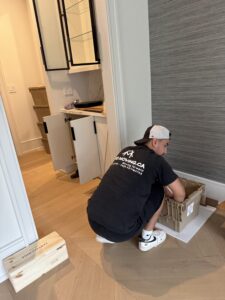

Packing for a local move overwhelms most homeowners and renters. Disorganized packing leads to wasted hours, damaged belongings, and preventable injuries. A clear, methodical packing process cuts packing time by 20% while protecting your items. This guide walks you through every step, from gathering materials to measuring success, helping you pack efficiently and move with confidence across Ontario.
Table of Contents
- Prerequisites: What You Need Before You Start Packing
- Step 1: Organize and Declutter Before Packing
- Step 2: Gather Materials and Pack Strategically
- Step 3: Labeling and Organizing for Easy Unpacking and Moving
- Step 4: Safety Considerations and Common Mistakes to Avoid
- Step 5: Alternative Packing Approaches and Tradeoffs
- Step 6: Expected Outcomes and How to Measure Your Packing Success
- Discover Expert Local Moving and Packing Services in Ontario
- Frequently Asked Questions
Key Takeaways
| Point | Details |
|---|---|
| Efficient packing saves time | A structured approach reduces packing time by up to 20% and minimizes stress. |
| Proper materials prevent damage | Double-walled boxes and bubble wrap reduce breakage risk by 30%. |
| Clear labeling speeds unpacking | Color-coded labels and detailed room markers cut unpacking time by 50%. |
| Weight limits ensure safety | Keeping boxes under 50 lbs prevents injuries and box breakage. |
| Choose your packing style | DIY saves money while professional packing cuts time by 35%. |
Prerequisites: What You Need Before You Start Packing
Starting with the right supplies transforms chaotic packing into a smooth process. You need sturdy double-walled boxes in various sizes, heavy-duty packing tape, bubble wrap, packing paper, and permanent markers. Having these materials ready prevents mid-packing runs to the store that waste precious time.
Timing matters as much as materials. A clear moving timeline starting at least two weeks before moving day lets you pace yourself and avoid exhausting marathon packing sessions. Breaking packing into daily tasks keeps you organized and reduces stress.
Your labeling system needs planning upfront. Gather color-coded labels, one color per room, and stock up on quality permanent markers. This simple system speeds up both loading and unpacking dramatically. Create a master inventory spreadsheet to track boxes and contents.
Safe lifting techniques protect your back and joints. Learn proper form now, before you start moving heavy boxes. Bend at the knees, keep loads close to your body, and ask for help with anything over 30 lbs. Your health matters more than speed.
Designate a clean, spacious packing station in your home. This central area lets you organize supplies, sort items, and pack methodically. A dedicated space prevents the scattered chaos that slows progress.
Essential Packing Supplies
- Double-walled boxes in small, medium, and large sizes
- Heavy-duty packing tape and dispenser
- Bubble wrap and packing paper for fragile items
- Color-coded labels and permanent markers
- Furniture blankets and stretch wrap
Consider whether you want to handle everything yourself or use packing services in Ontario for specific rooms or items. A moving checklist for Ontario locals helps you track progress and ensure nothing gets forgotten.
Pro Tip: Buy 20% more boxes than you think you need. Running out of boxes mid-pack creates frustrating delays and forces you to overpack remaining boxes.
Step 1: Organize and Declutter Before Packing
Decluttering before packing saves time and money. Every item you move costs time to pack, load, transport, unload, and unpack. Reducing your load by even 15% translates to hours saved and potentially lower moving costs.
Start with non-essential items you use rarely. Pack seasonal decorations, off-season clothes, and specialty kitchen gadgets first. Leave daily essentials like toiletries, work clothes, and cooking basics for last. Starting packing at least two weeks before moving gives you time to sort thoughtfully instead of throwing everything in boxes.
Create three sorting categories: keep and pack, donate or sell, and discard. Be honest about what you actually use. That bread maker collecting dust for three years probably won’t get more use in your new home. Donate usable items to local charities and responsibly recycle or dispose of broken items.
Use a detailed moving checklist customized for Ontario moves to track your progress room by room. Check off completed areas to maintain momentum and identify what still needs attention. Digital checklists let you update progress from your phone while packing.
Identify fragile and specialty items requiring extra care early. Make a separate list for artwork, electronics, antiques, and sentimental items. These pieces need premium packing materials and special handling. Knowing what you have helps you budget time and supplies appropriately.
Room-by-Room Decluttering Strategy
- Start with storage areas like basements, attics, and garages
- Move to guest rooms and less-used spaces
- Tackle main living areas like living rooms and dining rooms
- Save kitchen and bathrooms for last since you use them daily
- Keep bedrooms functional until moving week
Decluttering reduces your total packing time by eliminating unnecessary items from the process. You’ll also pay less if your moving company charges by volume or weight. Reference packing checklists designed for local Ontario moves to stay organized.
Step 2: Gather Materials and Pack Strategically
Box quality directly impacts item safety during your move. Using double-walled boxes for fragile or heavy items provides crucial structural support that prevents crushing and breakage. Single-walled boxes work fine for lightweight items like linens and pillows, but invest in quality boxes for everything else.
Weight limits matter more than you think. Keep each box under 50 lbs to prevent injuries when lifting and reduce the risk of bottom blowouts. Heavy items like books should go in small boxes, while bulky but light items like comforters can fill large boxes. This strategy balances weight distribution.
Fragile items demand extra protection. Wrap each piece individually in bubble wrap, creating at least two layers of cushioning. Place wrapped items in boxes with crumpled packing paper filling all gaps. For extremely fragile pieces, consider double-boxing: place the wrapped item in a smaller box, then nest that box inside a larger one with padding between.
Packing Order Priority
- Week 1-2: Storage areas, seasonal items, books, decorations
- Week 2-3: Guest rooms, formal dining, specialty items
- Final week: Kitchen non-essentials, most clothes, living areas
- Last 48 hours: Daily clothes, toiletries, essential kitchen items
- Moving day: Bedding, phone chargers, important documents
This sequence keeps your home functional while steadily reducing what needs packing. You avoid the stress of living among boxes for weeks while ensuring everything gets packed properly.
| Item Type | Box Size | Weight Limit | Protection Method |
|---|---|---|---|
| Books, tools | Small | 35-40 lbs | Standard box, no special wrap |
| Kitchen items | Medium | 40-45 lbs | Bubble wrap for fragile pieces |
| Linens, pillows | Large | 25-30 lbs | No wrap needed, fill gaps |
| Electronics | Original box or medium | 30-35 lbs | Bubble wrap, anti-static if available |
| Dishes, glassware | Medium | 40-45 lbs | Individual wrap, vertical stacking |
Follow guidance on packing fragile items safely to minimize damage risk. Strategic packing protects your belongings while maintaining an organized, efficient process.
Pro Tip: Pack a “first night” box for each family member containing clothes, toiletries, and essentials. Label it clearly and load it last so it’s first off the truck.
Step 3: Labeling and Organizing for Easy Unpacking and Moving
Labeling transforms unpacking from a frustrating treasure hunt into a smooth process. Clear labeling by room and content makes a massive difference in efficiency. Write the destination room in large letters on at least two sides of each box. Add a brief contents list underneath.
Color coding amplifies your labeling system’s effectiveness. Using color-coded labels tailored per room helps movers instantly identify where boxes belong. Assign one color per room: blue for master bedroom, green for kitchen, red for living room. Movers and helpers can work faster without constantly asking where things go.
Maintain a master inventory as you pack. Number each box sequentially and record the number, room, and detailed contents in a spreadsheet. This system lets you locate specific items quickly if you need something before fully unpacking. It also provides documentation if anything goes missing.
Avoid overpacking boxes beyond their weight capacity. About 40% of packing-related damages come from boxes breaking due to excessive weight. When a box feels heavy, stop adding items even if space remains. Better to use an extra box than risk everything tumbling out mid-move.
Effective Labeling Checklist
- Write destination room in large, clear letters
- Add brief contents description
- Mark “FRAGILE” prominently on delicate items
- Number boxes sequentially for inventory tracking
- Apply color-coded labels matching your room system
- Note “THIS SIDE UP” for items with orientation requirements
| Labeling Method | Speed Improvement | Implementation Cost | Best For |
|---|---|---|---|
| Room name only | 20% faster | Free | Small moves, simple layouts |
| Room + contents | 35% faster | Minimal | Most residential moves |
| Color-coded | 50% faster | Low ($20-40) | Multi-room homes, multiple movers |
| Numbered inventory | 45% faster | Moderate (time investment) | Organized households, valuable items |
Good organization extends beyond labeling. Group boxes by room in your packing area so they load together onto the truck. This clustering makes unloading more efficient since all kitchen boxes arrive together. Apply room-based packing tips to maintain organization throughout your move.
Step 4: Safety Considerations and Common Mistakes to Avoid
Safety often gets overlooked in the rush to pack everything. Never exceed 50 lbs per box, regardless of box size. This limit protects your back, prevents box failures, and ensures movers can handle boxes safely. Weigh questionable boxes on a bathroom scale and redistribute contents if needed.
Proper lifting technique prevents the majority of moving injuries. Improper lifting causes over 30% of moving-related injuries among people handling their own moves. Bend your knees, not your back. Keep the load close to your core. Pivot with your feet instead of twisting your torso. Take breaks every 20 minutes to avoid fatigue that leads to mistakes.
Overpacking ranks among the most common and costly errors. Cramming too much into boxes stresses seams and creates dangerous weight. Boxes should close easily without forcing flaps down. If you’re struggling to close a box, remove items until it closes naturally.
Fragile items need more than wishful thinking to survive a move. Single-layer bubble wrap isn’t enough for delicate items. Double-wrap anything breakable and ensure at least 2 inches of cushioning material surrounds items on all sides inside boxes. Glass and ceramics should never touch each other or box walls directly.
Rushing creates problems that slow you down more than taking time would have. Last-minute packing leads to poor organization, inadequate protection, and forgotten items. Spreading packing over two weeks eliminates this pressure and produces better results.
Safety First Guidelines
- Test box weight before lifting, use proper form every time
- Wear closed-toe shoes with good traction while packing and moving
- Keep walkways clear of boxes and packing materials
- Store packed boxes against walls, not in traffic paths
- Stay hydrated and take regular breaks to maintain focus
“The most common mistake I see is people waiting until the last minute and then rushing through packing. Taking time to pack properly saves money on replacements and prevents injuries. Start early and pace yourself.”
Learn from others’ experiences by reviewing common packing mistakes to avoid. Prevention costs nothing but saves you significant headaches and potential expenses.
Pro Tip: Keep a small toolkit accessible during packing for disassembling furniture and handling unexpected tasks. Include screwdrivers, pliers, utility knife, and furniture sliders.
Step 5: Alternative Packing Approaches and Tradeoffs
You have options beyond doing everything yourself. Understanding the tradeoffs between DIY packing, full professional service, and hybrid approaches helps you choose what fits your situation best.
DIY packing offers maximum cost savings but demands significant time and effort. You control the entire process, pack at your own pace, and save hundreds or thousands on professional packing fees. However, you shoulder all responsibility for proper packing, supply procurement, and protecting fragile items. Most people underestimate the time required.
Professional packers reduce packing time by 35% through experience and efficiency. They bring supplies, pack everything properly, and often provide insurance coverage for items they pack. The cost typically runs 20-30% higher than your base moving quote, but you gain peace of mind and free time. Professionals excel at packing fragile items, awkward objects, and full households quickly.
Hybrid approaches blend both methods strategically. Many people pack everyday items themselves but hire professionals for specialty rooms like kitchens with lots of fragile dishware, home offices with electronics, or collections requiring expertise. This middle ground balances cost control with professional skill where you need it most.
| Approach | Time Required | Cost Range | Best For | Stress Level |
|---|---|---|---|---|
| Full DIY | 15-25 hours | $150-300 supplies | Budget-focused, organized individuals | High |
| Hybrid | 8-15 hours | $400-800 total | Busy professionals, valuable items | Medium |
| Full professional | 4-8 hours | $800-1500+ | Time-pressed, stress-averse movers | Low |
Consider your personal factors when deciding. Do you have the time to pack properly over two weeks? Can you physically handle packing heavy or awkward items safely? Is your budget flexible enough for professional help? How valuable or fragile are your belongings?
Decision Factors
- Available time before moving day
- Physical capability to pack safely
- Budget flexibility for professional services
- Complexity and fragility of belongings
- Confidence in packing skills and organization
Explore local moving services in Ontario to understand what professional movers offer. Many companies provide customizable packages letting you choose exactly which services you need. Getting quotes for different service levels helps you make an informed financial decision.
Step 6: Expected Outcomes and How to Measure Your Packing Success
Knowing what successful packing looks like helps you gauge your progress and adjust your approach. Homeowners spend about 15 hours packing a 3-bedroom house for local moves on average. Your time may vary based on how much you own and your organizational skills, but this benchmark helps you plan realistically.
Well-executed packing produces measurable benefits. Properly labeled and color-coded boxes cut unpacking time dramatically, often by 50% compared to unmarked boxes. You spend less time searching for items and more time settling into your new home. The first few days in a new place feel less chaotic when you can find what you need quickly.
Weight management directly correlates with safety outcomes. Keeping every box under 50 lbs minimizes injury risk for everyone handling your belongings. You’ll also see fewer damaged items since lighter boxes place less stress on contents and are less likely to be dropped. Proper weight distribution prevents box failures that damage contents.
Following a structured packing sequence reduces stress by maintaining your home’s functionality throughout the process. You avoid living among chaos for weeks. The organized approach also catches potential problems early, giving you time to solve them instead of discovering issues on moving day.
Success Metrics to Track
- Total packing time from start to finish
- Number of damaged or broken items
- Time required to find specific items when unpacking
- Personal stress level throughout the process
- Any injuries or physical strain experienced
15-Hour Average Packing Time: A typical 3-bedroom home requires approximately 15 hours of focused packing time when following an organized system. This breaks down to about 2 hours daily over a week or concentrated weekend sessions.
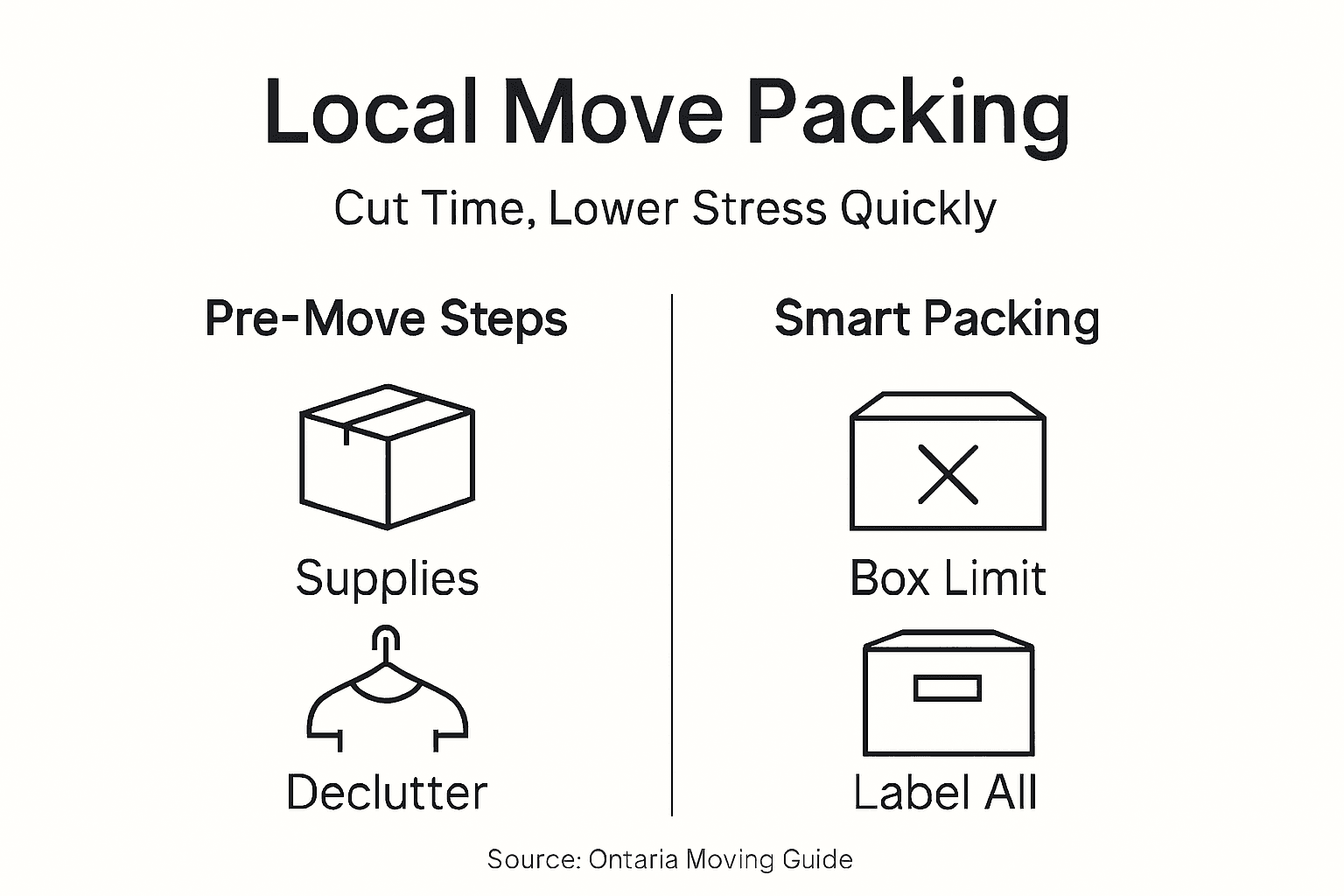
Measure success beyond just finishing. Did you complete packing without rushing? Are items properly protected? Can helpers quickly identify where boxes belong? Zero damage, minimal stress, and smooth unpacking indicate excellent packing execution.
Compare your results against these benchmarks to identify areas for improvement if you move again. Track your expected packing times for local moves and adjust your timeline for future moves based on your actual experience.
Discover Expert Local Moving and Packing Services in Ontario
You now have the knowledge to pack efficiently for your local move. However, even perfect packing benefits from professional moving expertise. Aleks Moving offers trusted moving services in Ontario with over 18 years of experience helping homeowners and renters relocate smoothly.
Our professional packing services handle everything from supplies to final box, letting you focus on other moving tasks. We provide flat-rate pricing with no hidden fees, ensuring transparency throughout your move. Whether you need full-service packing or just help with fragile items, we customize solutions to fit your needs and budget.
Explore our comprehensive residential moving guide to understand every phase of your relocation. From initial planning through final unpacking, we support Ontario movers with expertise and care. Contact Aleks Moving today for a free quote and discover how professional movers make local relocations stress-free.
Frequently Asked Questions
How long does it take to pack for a local move in Ontario?
Most homeowners need 15-20 hours to pack a 3-bedroom house when following an organized system. Starting two weeks early lets you pace yourself at 1-2 hours daily, reducing stress and improving packing quality.
Should I pack everything myself or hire professional packers?
DIY packing saves money but requires significant time and effort. Professional packers reduce packing time by 35% and ensure proper protection, costing 20-30% more. Consider a hybrid approach: pack everyday items yourself and hire pros for fragile or specialty items.
What’s the best way to label boxes for faster unpacking?
Use a color-coded system with one color per room, write the destination room and brief contents on at least two sides, and number boxes sequentially. This method speeds unpacking by up to 50% compared to minimal labeling.
How can I prevent items from breaking during my local move?
Use double-walled boxes for fragile items, wrap each piece individually in bubble wrap creating 2-inch cushioning on all sides, keep boxes under 50 lbs, and avoid overpacking. Double-boxing extremely delicate items provides extra protection.
What supplies do I need for packing a local move efficiently?
Gather double-walled boxes in multiple sizes, heavy-duty packing tape, bubble wrap, packing paper, permanent markers, and color-coded labels. Buy 20% more boxes than estimated and have furniture blankets for large items. Quality supplies prevent damage and speed up the process.
When should I start packing for a local move in Ontario?
Begin packing at least two weeks before your moving date. Start with storage areas and non-essential items, leaving daily necessities for the final days. This timeline prevents last-minute rushing that causes 30% more packing mistakes and injuries.