

TL;DR:
- A structured moving workflow reduces stress, damage, and delays during Ontario relocations.
- Extensive pre-move planning and organization ensure a smoother, more manageable moving day.
- Professional movers follow proven checklists and coordination strategies to deliver stress-free service.
Lost boxes, missed utility transfers, and a truck that shows up two hours late. These are the moments that turn an exciting new chapter into an exhausting ordeal. Moving in Ontario does not have to go that way. A clear, step-by-step workflow transforms the chaos into something manageable, even satisfying. Whether you are relocating across town or across the province, the right process keeps you calm, organised, and in control from the very first box packed to the last piece of furniture placed in your new home.
Table of Contents
- Essential pre-move preparation: Setting the foundation
- Step-by-step moving day workflow
- Troubleshooting and handling common moving day challenges
- Settling in: Post-move workflow for a smooth transition
- Our perspective: The hidden benefits of embracing a structured moving workflow
- Take the stress out of your Ontario move—let the experts handle your workflow
- Frequently asked questions
Key Takeaways
| Point | Details |
|---|---|
| Early planning | Preparing weeks in advance lays the foundation for a stress-free move. |
| Step-by-step workflow | Following clear, sequential steps transforms moving chaos into an organized process. |
| Troubleshooting strategies | Knowing how to address common issues prevents most relocation headaches. |
| Pro support advantage | Relying on trusted professionals means fewer surprises and a smoother experience. |
Essential pre-move preparation: Setting the foundation
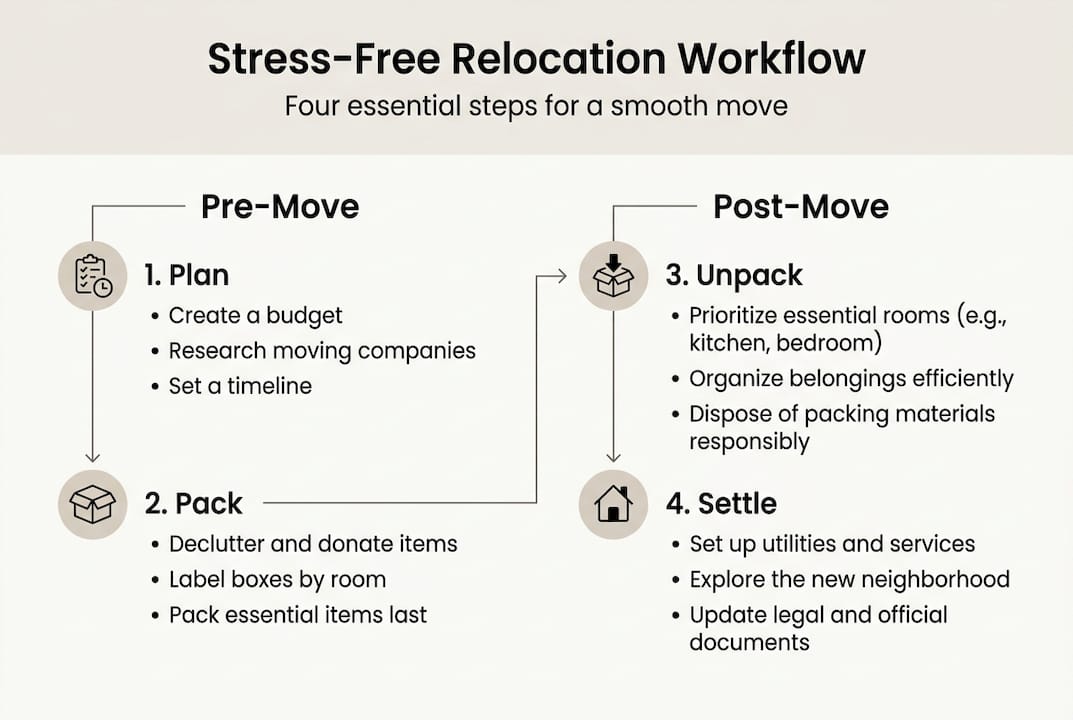
Having acknowledged the stress that can come with moving, let us begin with how to lay the groundwork for an organised move. The decisions you make four weeks before moving day shape everything that follows. Rushing this phase is one of the most common mistakes Ontario families make, and it leads to preventable headaches.
Here are the five most important things to do at least four weeks out:
- Declutter first. Sort every room and donate, sell, or discard what you no longer need. Fewer items means lower costs and a faster move.
- Research and book your movers. Reading reviews, confirming insurance, and locking in your date early prevents last-minute scrambling. Early planning and checklist preparation greatly reduce move-related stress.
- Take a full supplies inventory. Count how many boxes, rolls of tape, and specialty wraps you will need before you start buying.
- Notify schools, employers, banks, and utilities. Schedule disconnections and reconnections in advance so nothing falls through the cracks.
- Set a firm moving date. Align it with your lease or closing date, and build in a one-day buffer if possible.
Once those priorities are in place, gathering the right supplies becomes straightforward. Here is a quick reference table:
| Supply | Purpose |
|---|---|
| Small, medium, and large boxes | Organise items by weight and size |
| Packing tape | Seal and reinforce box bottoms and tops |
| Permanent markers | Label every box clearly by room and content |
| Bubble wrap and specialty wrap | Protect fragile items and artwork |
| Donation bags | Streamline the decluttering process |
| Mattress covers | Keep bedding clean during transport |
Another underrated tool is a moving binder, or a digital equivalent on your phone. Keep all your notes, receipts, contact numbers, and checklists in one place. You will thank yourself on moving day when questions come up fast. Use this binder to track your moving timeline and confirm each task as it is completed.
Pro Tip: Create a room-by-room inventory list for your household. Note the number of boxes, any fragile pieces, and the destination room at your new address. This takes about an hour but saves enormous time when directing movers on arrival.
Step-by-step moving day workflow
With your preparations in place, it is time to clarify the best workflow for the actual day of your move. Professional movers use a standard workflow to keep moves on track and stress-free, and you can mirror this structure even if you are coordinating your own team.
Follow these steps in order for a smooth moving day:
- Wake up early and do a final walk-through. Check every room, cupboard, and closet before anyone arrives.
- Confirm arrival time with your moving team. A quick call or message in the morning prevents costly miscommunications.
- Protect floors and doorways. Lay down floor runners and corner guards before the first item is carried out.
- Load heaviest items first. Furniture and appliances go into the truck before boxes, with proper padding between pieces.
- Label every box as it is loaded. Mark the destination room and contents, and note any boxes that are fragile.
- Conduct a final walk-through before leaving. Check every room, the attic, the garage, and any outdoor spaces.
- Inspect the truck before departure. Confirm nothing is unsecured and all doors are locked.
- Direct unloading at your new home. Point movers to the correct rooms using your inventory list.
Here is how a self-move compares to a professional move across key factors:
| Factor | Self-move | Professional move |
|---|---|---|
| Coordination | You manage everything | Movers follow a set workflow |
| Physical effort | High, risk of injury | Handled by trained professionals |
| Time required | Often full day or longer | Typically several hours |
| Risk of damage | Higher without proper equipment | Minimised with professional tools |
| Cost | Lower upfront, higher in surprises | Flat rate with no hidden fees |
Reviewing movers’ responsibilities ahead of time helps you understand what to expect, and reviewing a step-by-step move guide gives you confidence heading into the day.
Pro Tip: Designate one room or corner of your home as the moving command centre. Keep your phone, keys, moving binder, and essentials bag in that spot. Everyone on your team knows where to find you, and nothing critical gets packed by accident.

Troubleshooting and handling common moving day challenges
Even with a solid plan, relocations can encounter surprises. Here is how to tackle challenges head-on.
Some of the most frequent problems Ontario movers face include:
- Late movers or truck delays. Stay calm and contact your moving company directly. Ask for an updated arrival window and use that time to complete last-minute tasks.
- Lost or misplaced keys. Always keep a labelled set of keys for your old and new property in your essentials bag, not packed in a box.
- Unexpected weather. Rain, snow, and ice are realities in Ontario. Have floor protection, plastic covers for furniture, and waterproof bags ready the night before.
- Traffic delays. If you are coordinating multiple vehicles, use a group chat and share live location updates so everyone stays aligned.
- Missing paperwork. Store your lease, closing documents, and mover contract in a clearly marked folder in your moving binder. Never pack these items.
“Following tips and checklists reduces unforeseen moving day disasters and keeps your relocation on schedule.”
When something goes wrong, the fastest way to recover is through clear communication. Call your moving team, not to complain, but to problem-solve together. Knowing how to reduce moving day stress in the moment is just as important as the pre-move planning you did. If you find yourself in a true last-minute situation, reviewing last-minute relocation tips can provide fast, practical guidance.
Keep your key contacts, including the moving company dispatcher, your real estate agent, and your building superintendent, saved and easily accessible on your phone. Delays are temporary. Staying organised and solution-focused means they rarely become serious problems.
Settling in: Post-move workflow for a smooth transition
Successfully arriving at your new home is just the beginning. Here is how to ensure a smooth and stress-free landing.
The first 48 hours after your move set the tone for how comfortable and settled you will feel in the weeks ahead. A structured approach to unpacking prevents the overwhelm that many families experience when surrounded by dozens of boxes.
Follow these steps in your first two days:
- Confirm all utilities are active. Check electricity, water, heat, and internet before the movers leave if possible.
- Do a safety check. Locate your circuit breaker, shut-off valves, smoke detectors, and carbon monoxide detectors.
- Set up the kitchen and bathrooms first. These are the highest-use rooms and getting them functional quickly reduces daily friction.
- Unpack bedrooms next. A good night’s sleep matters more than organised shelves on day one.
- Update your address. Notify Canada Post, your bank, employer, and any subscription services within the first 48 hours.
- Introduce yourself to neighbours. A simple hello builds community and can make the new place feel like home faster.
Reviewing post-move tips can also guide your unpacking strategy room by room. A systematic unpacking and set-up process is as much a part of a successful workflow as the move itself.
Pro Tip: Prepare a “first-night box” before moving day. Include toiletries, medications, phone chargers, a few snacks, bedding for each person, and any items children or pets need for comfort. Load this box last so it comes off the truck first, and never let it leave your sight.
Finally, give yourself permission to take breaks. Unpacking everything in 24 hours is rarely realistic or necessary. Celebrate each room as you complete it, and recognise that settling in is a process, not a single event.
Our perspective: The hidden benefits of embracing a structured moving workflow
Now that you know the essential steps, let us reflect on why a workflow is far more than a checklist.
After 18 years of helping Ontario families relocate, we have noticed something consistent. The clients who arrive at their new homes feeling good are almost always the ones who followed a structured process, not necessarily the ones with the most time or the biggest budgets. A detailed workflow does more than prevent disasters. It protects your relationships by reducing the arguments that come from confusion and fatigue. It protects your valuables because nothing gets rushed or improvised. And it builds genuine confidence.
There is a reason we encourage every client to invest time upfront in planning. That investment is repaid many times over in emotional energy saved and practical problems avoided. Exploring low-stress move strategies shows that even small process improvements create measurable differences in how people feel after their move. A relocation handled with care and structure is not just less stressful. It is actually a confidence-building milestone worth being proud of.
Take the stress out of your Ontario move—let the experts handle your workflow
Ready for less moving stress and more peace of mind? Here is your next step.
At Aleks Moving, we have built our entire process around the workflow principles covered in this guide. Our professional moving services are designed to take the coordination, heavy lifting, and logistical pressure off your shoulders, from the first box to the final furniture placement.

Whether you need full-service support from our residential moving team, or you need secure storage options to bridge a gap between your old and new home, we have solutions tailored to your situation. With flat-rate pricing, no hidden fees, and over 18 years of experience across Ontario, Aleks Moving is the dependable partner your relocation deserves. Contact us today for a free upfront quotation and let our family move yours.
Frequently asked questions
How early should I start planning my Ontario move?
Start preparing at least 4 to 6 weeks in advance to secure reputable movers and complete all pre-move tasks without rushing. Earlier is always better, particularly for summer moves when demand is high.
What should I include in my moving day essentials kit?
Pack toiletries, medications, chargers, important paperwork, and a change of clothes for each family member in a clearly labelled bag. Your essentials kit helps you manage the critical first hours in your new home comfortably.
How do professional movers ensure a stress-free workflow?
Professional movers use checklists, schedule management, and expert packing techniques to keep every stage of your move organised and on time. This structured approach minimises the chance of damage or delays.
What is the main cause of moving stress?
Last-minute changes, poor coordination, and underestimated logistics cause the most disruption during a relocation. Preparation reduces relocation stress significantly, and working with experienced professionals reduces it even further.