Skip to content


Expect roughly $450 to $1,800 for a local senior move, depending on home size and how much needs packing. Long-distance or full-service senior relocations run into several thousand dollars once distance, storage, and move-management fees are added. The single best step before booking anything: get three written, itemized quotes and compare them line by line, not just by the bottom number.
TL;DR:
- Most local senior moves cost between $450 and $1,800, with costs increasing significantly for larger or longer-distance relocations.
- Long-distance moves over 500 kilometers frequently range from $3,500 to over $12,000, depending on size and specialty items.
- Accurate estimates require three written, itemized quotes with consistent inventory and access details, especially to compare move and packing fees.
- Movers’ pricing is primarily affected by crew size, access challenges, seasonal demand, and valuation coverage, all of which should be clarified beforehand.
- Booking mid-week and outside peak seasons, plus downsizing or phased moves, can substantially reduce overall expenses without sacrificing service quality.
Table of Contents
- What is the senior moving cost across Canada?
- What drives the price on your invoice?
- How do you get accurate, comparable moving quotes?
- Are moving expenses tax-deductible for seniors?
- How can families reduce senior moving costs without cutting corners?
- What Aleksmoving crews see on senior moves, and a day-of checklist
- Aleks Moving: senior moving services and how to request a quote
- Sources
- FAQ
What is the senior moving cost across Canada?
A senior moving cost in Canada varies more by home size and distance than by age or service type. Local moves for a studio or one-bedroom apartment typically fall between $450 and $700, while a two-bedroom condo or bungalow lands closer to $800. Three-bedroom homes average around $1,200, and larger four-bedroom-plus properties with full basements can push past $1,800, according to Boxly’s moving cost benchmarks.
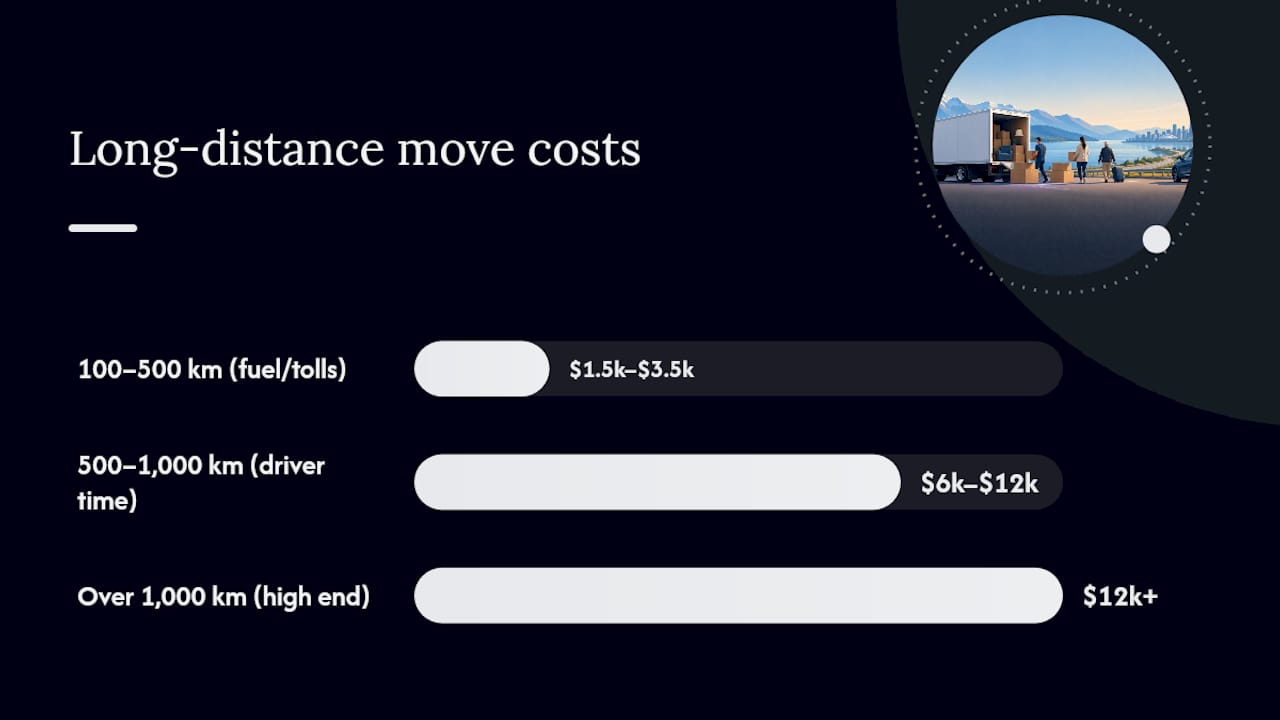
Long-distance senior relocations behave differently because fuel, tolls, and driver time replace hourly crew labour as the main cost driver. A move of 100 to 500 kilometres, say from Ottawa to Toronto, often costs somewhere between $1,500 and $3,500 for a modest two-bedroom household. Push that to 500 to 1,000 kilometres, and a three-bedroom consolidated shipment can climb toward the $6,000 to $12,000 range Boxly documents for cross-country moves. Anything over 1,000 kilometres, particularly coast-to-coast relocations, sits at the high end of that band or beyond, especially with specialty items involved.
Senior move managers are a separate line item families often overlook. These coordinators handle floor planning, downsizing decisions, and vendor scheduling, and their fees run roughly $1,500 to $5,000 for common project scopes, with large estate clearances costing more. Their invoice does not include the actual mover’s truck and crew, so budget for both separately.
Add-on charges catch a lot of families off guard:
- Piano or organ handling: often a flat surcharge on top of the hourly rate
- Appliance disconnection and reconnection, particularly for gas ranges or built-in dishwashers
- Storage fees when a new home isn’t ready on moving day
- Packing supplies, boxes, and specialty crating for art or china
Pro Tip: Ask every quote to separate the “move fee” from the “packing materials fee.” Bundled invoices make it nearly impossible to compare movers apples to apples.
What drives the price on your invoice?
Movers price jobs one of two ways: hourly or flat-rate. Hourly pricing suits smaller local moves where the scope is predictable, while flat-rate quotes work better for long-distance or complex moves where surprises would otherwise inflate an hourly bill. Most reputable Ontario movers will tell you upfront which model applies to your situation and why.
Several factors shape the final number:
- Crew size and minimums. Two movers with a truck typically run $120 to $200 per hour in 2026, while three-mover crews cost $160 to $260 per hour but often finish faster on larger jobs. Most companies enforce a minimum charge for a few hours plus a travel-time charge to and from the depot.
- Access conditions. Stairs, narrow hallways, and elevators with restricted booking windows all add labour time. Ontario’s consumer guidance flags precise stair counts and elevator rules as details that materially change an estimate’s accuracy, which matters enormously for retirement-community moves.
- Season and day of week. Summer weekends command premium pricing, and Quebec’s Moving Day on July 1 creates a nationwide crunch on trucks and crews, even outside Quebec. Mid-week, mid-month moves in fall or winter tend to be cheaper and easier to schedule.
- Valuation and insurance. Basic carrier liability rarely covers full replacement value. Replacement-value protection typically costs 1 to 2% of your declared inventory value, a worthwhile add-on for anyone moving inherited furniture or art.
Learn more about what drives moving costs in Ontario if you want a deeper breakdown of regional pricing quirks.
How do you get accurate, comparable moving quotes?
Collect three written estimates minimum, and standardize what you ask each company to quote: same inventory list, same access details, same target dates. Comparing a phone-quoted flat rate against an in-home hourly estimate tells you almost nothing useful.
Ontario law requires written contracts for consumer moves over $50, and those contracts must include specific details movers can’t legally leave out:
- Itemized pricing for labour, materials, and any surcharges
- Confirmed crew size and vehicle size
- Insurance or valuation coverage terms
- Payment terms and accepted methods
- A cap preventing movers from charging more than 10% above the original estimate without your agreement
During a site visit or virtual walkthrough, ask movers to document stair counts, elevator booking windows, parking distance from the building entrance, and any items requiring special handling. For retirement-community moves specifically, confirm delivery-dock restrictions and room dimensions in writing beforehand. Unknowns on the day of the move are the single biggest source of labour overruns and unexpected charges.
Keep a written inventory as items are loaded, and verify it against the delivery paperwork before signing off and paying the final invoice. The Canadian Association of Movers explains how the bill of lading should reflect this inventory, along with how fuel surcharges and packing charges typically appear on your paperwork. For a structured walkthrough of comparing multiple companies, see this guide to estimating moving costs accurately in Ontario.
Are moving expenses tax-deductible for seniors?
Rarely, and this trips up a lot of families. The Canada Revenue Agency allows moving-expense deductions under Line 21900 mainly for moves tied to employment or full-time study, and the new home must be at least 40 kilometres closer to the new work or school location. A routine retirement or downsizing move almost never qualifies under this test.
Keep every invoice, contract, storage receipt, and packing-supply receipt anyway. If any part of your move connects to continued employment or education, you’ll need that documentation. Our guide on whether seniors can claim moving expenses in Canada walks through the scenarios where eligibility genuinely applies versus the ones families mistakenly assume qualify.
How can families reduce senior moving costs without cutting corners?
Timing saves more money than almost any other lever. Booking mid-month, mid-week, and outside the June to September peak season can meaningfully lower hourly rates and give you far more scheduling flexibility. Avoid the days surrounding Quebec’s July 1 Moving Day if your route touches that province at all.
A few other tactics worth considering:
- Phase the move. Handle low-value or non-urgent items yourself over several weeks, and let professionals focus on furniture and fragile items.
- Sell or donate before you pack. Estate-sale proceeds or simple resale of furniture that won’t fit a smaller space can offset a real portion of moving costs.
- Rent bins instead of buying boxes. Reusable bin rental reduces packing-supply spend and cuts down on cardboard clutter during unpacking.
- Choose the right service tier. Full-service packing costs more but saves physical strain; a hybrid approach, where you pack clothing and personal items while movers handle furniture, often balances cost and effort well.
Pro Tip: If you’re downsizing into a smaller space, book a storage unit for a month rather than rushing every decision on moving day. It’s cheaper than a second move later.
On tipping: there’s no fixed rule in Canada, but $20 to $40 per mover for a half-day job, or 5 to 10% of the total bill for longer moves, is the general norm.
What Aleksmoving crews see on senior moves, and a day-of checklist
Hidden costs on senior moves almost always trace back to unverified access details. Crews arrive expecting a ground-floor unit and find a walk-up with a tight stairwell, or an elevator booking window that closes an hour into the job. Confirming these details in writing beforehand is the difference between a flat-rate quote holding and an invoice creeping upward.
A short checklist for moving day: verify the elevator or loading-dock booking window on arrival, confirm the crew size matches your contract, walk through the inventory list with the lead mover before anything leaves the truck, and review the final invoice line by line before payment, checking it against the original written estimate.
— Ali
Aleks Moving: senior moving services and how to request a quote
Aleksmoving offers a flat-rate alternative to the hourly-billing model that makes so many senior moves unpredictable. Where hourly crews can run long on access issues or packing delays, our Seniors Moving service is quoted upfront, so families know the number before the truck arrives.

Our senior moving support covers full coordination from packing through delivery, backed by over 18 years of experience across Ontario and wider Canada. Families can add bin rental for a phased downsize, or pair a move with short or long-term storage when the new home isn’t quite ready. For households with inherited furniture or fragile pieces, our antiques and art moving service handles the extra care those items need without a separate specialty invoice.
To get an accurate quote, have your home size, target move date, access details (stairs, elevator, parking), and a rough inventory ready. Request a free estimate through our residential moving page, by phone, or through WhatsApp, and we’ll confirm pricing in writing before you commit to anything.
Sources
Verify contract rules through Ontario’s hiring-a-mover guidance, tax questions through CRA’s Line 21900, and industry standards through the Canadian Association of Movers. For finding well-reviewed movers generally, resources like moving company reputation guides can help families vet options beyond price alone.
- Ontario
- Canada
- Moving Cost Index 2025 | Boxly
- Moving Cost Calculator Canada 2026 (CAD Rates) | CalcCorp
- Contracts | Canadian Association of Movers
FAQ
What is the cheapest way to move within Canada?
The cheapest approach combines off-peak timing (mid-week, mid-month, outside summer) with a hybrid service tier where you pack non-fragile items yourself and hire movers only for furniture and heavy lifting. Renting reusable bins instead of buying cardboard boxes also trims packing costs.
Is $100 each a good tip for movers?
$100 each would be generous for most jobs unless the crew handled an exceptionally difficult or lengthy move.
What is the cheapest day to hire movers?
Weekdays, particularly mid-week and mid-month, are consistently cheaper than weekends and month-end dates, when demand and hourly rates both rise. Avoiding the days around Quebec’s July 1 Moving Day also helps, since that week strains truck and crew availability nationwide.
What is the most expensive part of moving?
Labour hours tied to poor access, such as multiple flights of stairs, tight elevator windows, or long carry distances from parking, tend to drive costs up more than any single item. Long-distance moves add fuel and travel-time charges as the dominant expense instead of hourly labour.
How much does Aleksmoving charge for a senior move?
Aleksmoving prices senior moves with flat-rate quotes rather than open-ended hourly billing, but exact pricing depends on home size, distance, and access conditions. Current estimates are available directly through Aleksmoving’s senior moving page after a short intake call or online request.