

In Mississauga, you book the condo elevator with your building’s property management or concierge, not with your movers. Do it as soon as you know your move date, expect to sign a reservation agreement and leave a refundable deposit, and confirm the slot in writing. Each condo corporation sets its own rules, so there is no single city-wide timetable. This guide covers what to ask, when to ask it, and what can go wrong on the day.
TL;DR
- Book the service elevator through building management or the concierge as soon as your date is set. Property managers often advise a month to two months ahead, and at the very least one to two weeks.
- Expect a refundable damage deposit. One Ontario property manager’s agreement lists $200 to $250 per move. Your building may differ.
- Walk the elevator and hallway with the concierge before and after the move, and get the inspection report signed. Otherwise you risk losing the deposit.
- Buying? Book for the day after closing, not closing day itself.
- Tell your movers the date, time window, loading area and any building rules before they quote.
Table of Contents
- Why condos make you book the elevator
- How to book the elevator, step by step
- How early should you book?
- What the reservation agreement usually says
- Moving into a new condo: closing day timing
- Loading docks, hallways and what movers need to know
- A worked example: a Saturday move out of a one-bedroom
- Our perspective: the elevator slot decides the day
- What to do when the elevator slot falls through
- Choosing movers for a Mississauga condo
- Moving a condo with Aleks Moving
- A short checklist for the week before
- FAQ
- Sources
Why condos make you book the elevator
A condo tower has one or two service elevators for hundreds of residents. If several moves ran at once, hallways would clog, other residents would wait, and carpets and elevator walls would take a beating. Booking is how the building keeps that orderly.
The Condominium Authority of Ontario explains that condo rules exist to prevent unreasonable interference with the use of common elements. A move-in schedule is a practical example. It is not red tape aimed at you.
One point trips up many people: the rules come from the individual corporation. The same CAO page explains that owners can request their corporation’s rules and by-laws using the Request for Records process if they were not given them. A tower near Square One and a townhouse-style complex in Erin Mills can have very different move rules. Always ask your own building.
How to book the elevator, step by step
- Get the move-in or move-out guide. Ask the concierge, property manager or customer care team for the building’s Moving Day Guide. Tridel suggests picking one up when you plan your move, since it sets out where the loading areas are and what is allowed.
- Ask for the reservation form. Many buildings use a written form, such as the Service Elevator Reservation Agreement that one Toronto property manager publishes. Others use an online portal or a resident manual with an elevator reservation form.
- Pick a slot and a backup. Offer two or three options. Weekends and month-end are the busiest.
- Pay the deposit and sign. Read what the agreement says about damage, time limits and fees for running over.
- Get written confirmation. Keep the email or signed form where you can show it to the concierge on the day.
- Pass the details to your movers. Give them the time window, the loading area, the elevator size and any insurance certificate the building wants.
- Reconfirm two days before. A short call to the concierge catches double bookings.
How early should you book?
There is no official number, and buildings vary. These are the figures we can point to:
| Source | Suggested notice |
|---|---|
| Tridel (condo builder) | Arrange your move a month to two months ahead |
| DASH Property Management tenant FAQ | At least 7 days’ notice |
| Andrin Homes condo guide | Contact property management well in advance, since several move-ins are generally scheduled each day |
Our advice: treat seven days as the bare minimum and book as soon as your lease or closing date is firm. If your move falls on a Saturday, or on the 30th or 1st of the month, when many leases turn over, do not wait.
What the reservation agreement usually says
An elevator booking is often more than a calendar entry. In the published examples we reviewed, the reservation is a signed agreement. It typically makes the resident or owner responsible for damage to common areas.
The damage deposit
Condo corporations commonly hold a refundable deposit for elevator use. One Toronto property manager’s elevator booking agreement puts it at $200 to $250 per move as of 2025/2026, held against damage to elevator doors, wallpaper, carpets and similar common elements. It is returned after a satisfactory inspection. Mississauga buildings set their own amounts, so ask for yours.
The inspection
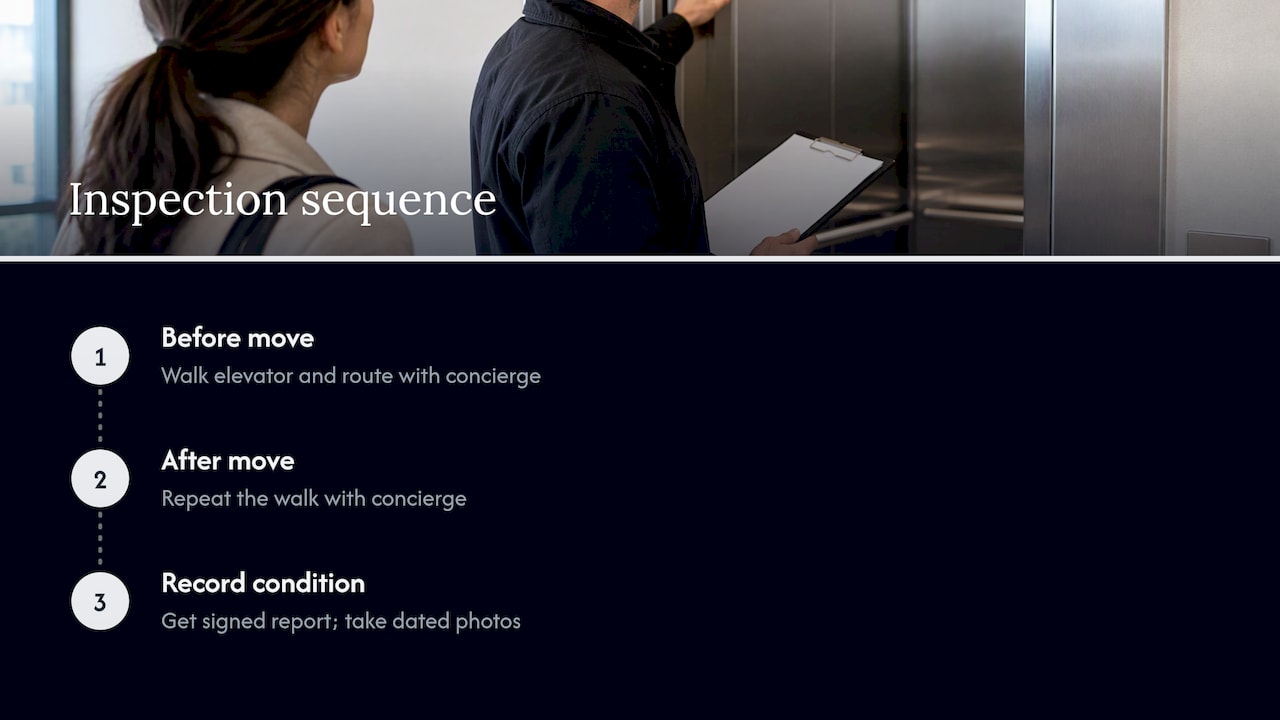
This is where people lose money. Walk the elevator and the moving route with the concierge before you start, and again when you finish. Make sure they sign the inspection report. According to the same style of agreement, skipping the sign-off can put the whole deposit at risk. Take dated photos of the elevator pads, door frames and corridor corners too.
Blocked-out days and one move per day
Some buildings block certain dates, often around garbage and recycling pickup, and some limit moves to one per day. Never assume your favourite slot is open. Confirm with the concierge or management at least one to two weeks ahead.
Moving into a new condo: closing day timing
If you are an owner taking possession, closing day is often too early to move in. Lawyer and bank transactions may not finish until late afternoon. Tridel’s guidance is to book the elevator for the day after closing, so you are not rushed or left without access if the funds have not arrived.
If you are a renter, the lease start date usually decides the slot. Ask your landlord or property manager whether the building needs the booking made by you, by them, or by both. Our condo moving tips for renters go through the lease side in more detail.
Loading docks, hallways and what movers need to know
The elevator is only one link in the chain. Before moving day, find out:
- Where the truck can park and for how long.
- The loading dock height clearance, if there is one. A tall truck may not fit under it.
- The size of the service elevator: can a queen mattress or a sofa go in flat?
- Whether the building restricts moving hours, and whether you may use the main lobby.
- Whether the movers must supply a certificate of insurance.
Property managers also recommend that movers visit before the day. Tridel notes that an on-site look helps spot limits on elevator size, dock clearance and garage access before they become a problem on the day. We cover the dock side in our pre-move checks against loading dock rules in Ontario.
A worked example: a Saturday move out of a one-bedroom
Here is how a typical plan looks. This is an illustration, not a real customer story.
- Five weeks out: you ask the concierge for the moving guide and reservation form. You learn that Saturday slots are limited and there is a deposit.
- Four weeks out: you submit the form with a first and second choice slot and pay the deposit. You receive confirmation by email.
- Three weeks out: you give your movers the confirmed window, the dock location and the elevator size.
- Two days out: you call the concierge to reconfirm.
- Move day: you meet the concierge, walk the route, take photos, and get the pre-move inspection signed. After the last load, you walk it again and ask for the post-move sign-off.
- After: you ask when the deposit will be returned and keep your copy of the report.
If you want a wider timeline, our Mississauga moving checklist shows what to do and when.
Our perspective: the elevator slot decides the day
We have been moving families and businesses across Ontario for over 18 years, and condo moves are where small planning gaps show up fastest. A truck that arrives early with no elevator booked, or a crew that has two hours when the job needs four, costs everybody time and patience.
Here is what we tell customers:
- Book the slot first, then the movers’ arrival time. The building’s window is the fixed point. Everything else fits around it.
- Be honest about the size of the move. A studio and a three-bedroom with a full dining set need different windows. Ask the building if you can reserve a longer slot.
- Pack before the slot starts. Boxes sealed, furniture wrapped and the route cleared mean the elevator time goes to carrying, not preparing. If you would rather not do that part, our packing service takes it off your list.
- Tell us the building rules when you ask for a quote. We give a free upfront quotation at a flat rate with no hidden fees, and the more we know about your building, the more accurate that quote is.
The building’s rules can look strict, but they protect your deposit as much as your neighbours’ hallway. Work with the concierge, not around them.
— Ali
What to do when the elevator slot falls through
Things do go wrong. Here are common cases and sensible responses.
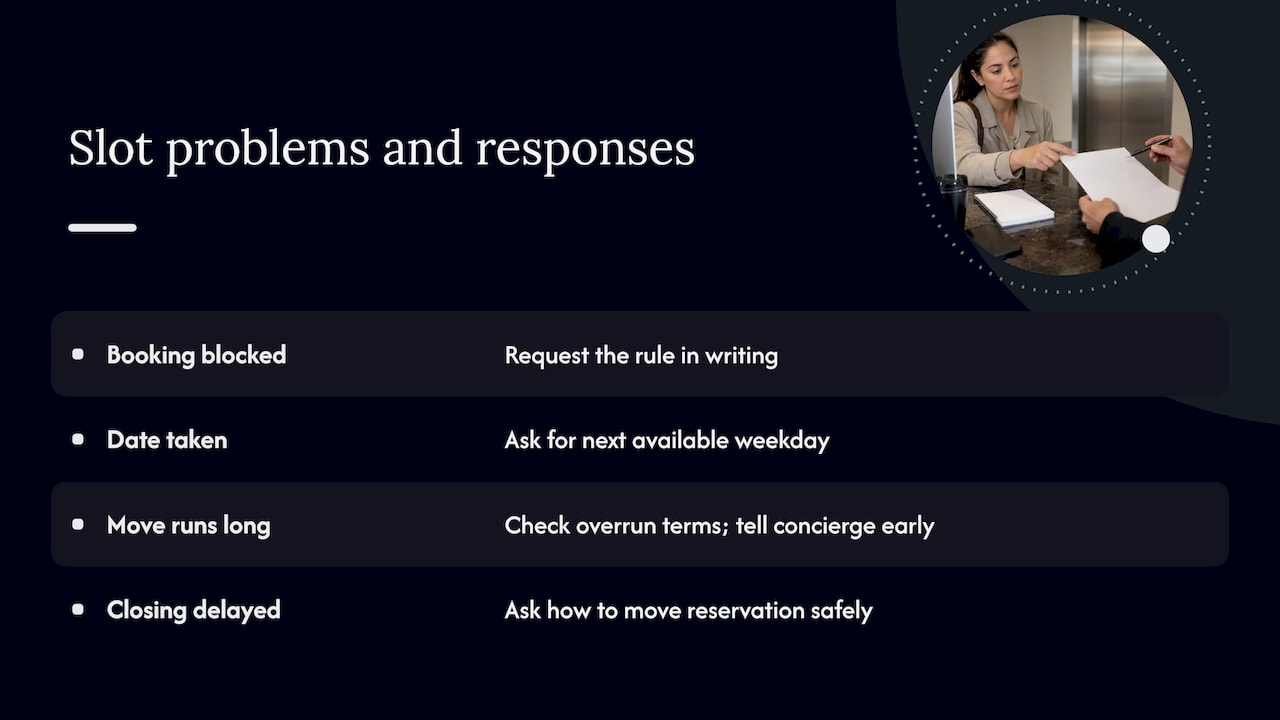
The building refuses to book until a problem is fixed. A tenant on a public forum described a condo that would not release the elevator until a plumbing line from a previous owner’s washer and dryer was removed. If you hit a condition like this, ask for it in writing, cite the rule it relies on, and request the corporation’s rules and by-laws if you do not have them. The CAO’s page on condo rules explains the process for owners.
Your preferred date is taken. Ask for the next available weekday. Weekday slots are often easier to get, and a mid-week move can be calmer for everyone.
Your move runs long. Check what the agreement says about overruns before the day. Telling the concierge early is better than surprising them.
Your closing is delayed. Ask how to move the reservation without losing the deposit or the slot, and tell the movers right away.
Choosing movers for a Mississauga condo
A good condo mover asks about the building before they give a price. Look for these signs:
- They ask for the building name, floor and elevator details.
- They explain how they will protect the elevator and corridors.
- They can show insurance when the building asks.
- They quote in writing, with a flat rate rather than an open-ended hourly guess.
We work this way across Mississauga, Oakville, Milton, Brampton and Toronto. Our local moving service covers moves within the area, and our residential moving team handles apartments, condos and houses, including antiques and art. If you need more background, see condo moving explained and our expert tips for condo moves.
Moving a condo with Aleks Moving
If you have your elevator slot and want the rest handled calmly, we can help. We offer residential and office moves, packing, bin rental, and short or long-term storage if your new place is not ready. Bin delivery and pick-up is a $150 one-off fee. You can request a free quote by form, phone or WhatsApp, and tell us your building and booked window. We price at a flat rate with no hidden fees.
A short checklist for the week before
- Confirmation of the elevator slot is in your inbox or printed.
- The deposit is paid, and you know when it is returned.
- Movers have the building’s name, loading area, time window and elevator size.
- The concierge knows a moving company is arriving and who to ask for.
- Pathways, doorways and your unit’s entrance are clear.
- You have your camera ready for before and after photos.
- Parking for the truck is sorted.
FAQ
Do I book the condo elevator or do the movers?
You do, or your landlord does. The booking is made with building management or the concierge, since it is tied to your unit and the deposit. Your movers should then work inside the window you secured.
How much is the elevator deposit in Mississauga?
There is no single amount. One Ontario property manager’s agreement lists a refundable deposit of $200 to $250 per move, and your building may charge more or less. Ask management for the exact figure and the refund timeline.
How far ahead should I book?
As soon as your date is firm. Some property managers suggest a month or two, while others ask for at least seven days. Weekends and month-end fill first, so earlier is safer.
Can I move in on my closing day?
Usually it is risky. Lawyer and bank steps can run late into the afternoon, so Tridel recommends booking for the day after closing. Ask your lawyer when funds are expected to release.
What if the building has no written rules?
Ask management for them. If you are an owner and have not received them, the Condominium Authority of Ontario explains how to request your corporation’s rules and by-laws.
Sources
- Condominium Authority of Ontario: Rules
- Tridel: Closing and moving in
- Service Elevator Reservation Agreement (TSCC 1834)
- Service Elevator Reservation Agreement (TSCC 1788)
- DASH Property Tenant Help FAQs
- Andrin Guide to Homecare for Condominiums