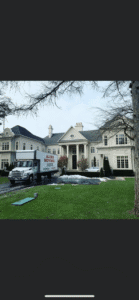

Brampton doesn’t issue an ordinary moving truck permit for parking on city streets. The City offers a narrow “parking consideration” instead, and it isn’t built for box trucks. A truck actively delivering or providing a service at the property may be treated differently for a short time. Call 311 before move day to confirm your situation.
TL;DR:
- A parking consideration is issued per licence plate and mainly targets recreational vehicles; it generally will not protect oversized moving trucks or detached trailers.
- A truck actively delivering or providing a service may be treated differently, but this exception does not authorize overnight storage or override safety and obstruction rules.
- A household move using a driveway or legal curb space does not automatically need a road occupancy permit; lane restrictions or access changes can trigger one.
- Measure the truck, including attachments, then call 311 with your address, dimensions, and move date; keep the reference number for enforcement questions.
- If your home is on a Regional Road, contact Region of Peel Works about right of way access instead of asking Brampton to handle it.
Table of Contents
- What Brampton’s parking rules say about moving trucks
- When the delivery exception applies and when you need a road occupancy permit
- How to check and request permission before move day
- Moving-day checklist to avoid tickets and towing
- Why we tell every Brampton customer to call early
- Ready for a Brampton move without the parking worry?
- FAQ
- Sources
What Brampton’s parking rules say about moving trucks
The City does not offer permit parking on its streets, so there is no standard moving parking permit to apply for. What exists is a set of rules that apply to every vehicle, plus a limited exception process. Here is what matters for a moving truck:
- Overnight parking is restricted.
- Parking is subject to time limits.
- Large vehicles, including their attachments, are restricted from street parking in residential areas.
- A parking consideration is available per licence plate, but it is aimed mainly at vehicles designed for recreational use.
That last point trips people up. A parking consideration is something a resident requests, and it does not turn a moving truck into a permitted vehicle. Most moving trucks exceed the size thresholds, and the City’s parking enforcement guidance says a consideration will not be effective for a large motor vehicle of that type.
Detached trailers are also not eligible for a parking consideration. Every other parking offence stays enforceable even if you do receive one, so a consideration never excuses blocking a driveway or parking at a hydrant.
The practical takeaway: plan truck placement around the rules rather than hunting for a blanket permit that doesn’t exist.
When the delivery exception applies and when you need a road occupancy permit
Two different ideas often get mixed up here: parking and road occupancy.
A truck that is actively making a delivery or providing a service at the property can be treated differently from one parked or stored overnight. The City describes this as an exception for temporary service activity. It is not permission to leave an oversized vehicle sitting on the street. Safety, obstruction and other by-law requirements still apply the whole time.
A Road Occupancy and Access Permit is a separate thing. According to the City’s road occupancy page, it applies to work on a City road, boulevard or right-of-way. Typical triggers include:
- Excavation in the road or boulevard
- Lane restrictions or closures
- Changes to road or driveway access
- Work that otherwise occupies the right-of-way
An ordinary household move that loads from the driveway or a legal curb space does not automatically trigger this permit. It becomes relevant only when your move needs something like a lane restriction or an access change.
Regional roads work differently. If the road in front of your home is a Region of Peel road, the City directs you to the Region rather than handling it itself.
How to check and request permission before move day
You can get an authoritative answer for your street and your truck in a few steps. Do these well ahead of time, earlier if your move falls on a busy weekend.
- Measure the truck. Record height and length, including any attachments, since the by-law counts them.
- Call 311 or submit a service request. Give your address, the truck dimensions and the date, then ask about parking considerations and enforcement for your block.
- Email roa.permits@brampton.ca if your move might affect the road, boulevard or access, such as a lane restriction.
- Contact Region of Peel Works at roadpermits@peelregion.ca if your street is a Regional Road.
- Submit the application if a permit is required. The City’s process asks for a completed Road Occupancy and Access application, a Traffic Control Plan checklist and supporting documents. A security deposit may apply, and in-person deposits require booking an appointment.
Pro Tip: Ask for a 311 reference number every time you call and save it on your phone. If a question about enforcement comes up on move day, that number shows you checked ahead.
Moving-day checklist to avoid tickets and towing
Rules matter less than how you handle the day itself. This is what we plan around on move day:
- Use your private driveway or other lawful private space whenever you can, rather than relying on the street.
- Keep clear of sidewalks, fire hydrants, neighbouring driveways, fire zones and any signed restriction.
- Respect the overnight parking restriction and time limits unless the City has confirmed an allowance in writing.
- Don’t assume a parking consideration covers a commercial box truck. Check the dimensions first, and remember detached trailers aren’t eligible.
- Keep your paperwork within reach: the 311 reference number, any permit documents or traffic control plan, and the phone number of your mover.
- Have a backup plan. If enforcement asks the truck to move, a second vehicle or a different placement lets loading continue.
Pro Tip: Walk the street the evening before. Look for signs, hydrants, low branches and tight spots, and decide exactly where the truck will sit.
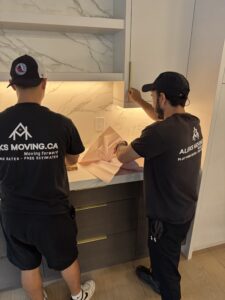
If you’d rather not manage this yourself, our local moving service in Brampton includes planning the truck’s position. We also share more street-level advice in our guide to moving truck parking in Canada.
Why we tell every Brampton customer to call early
We help families with moves, and people often have questions about the process. People ask whether they need a permit, whether the truck can sit out front all day, and what happens if a neighbour complains. The honest answer is that it depends on the street and the truck, which is exactly why a quick check beats a guess.
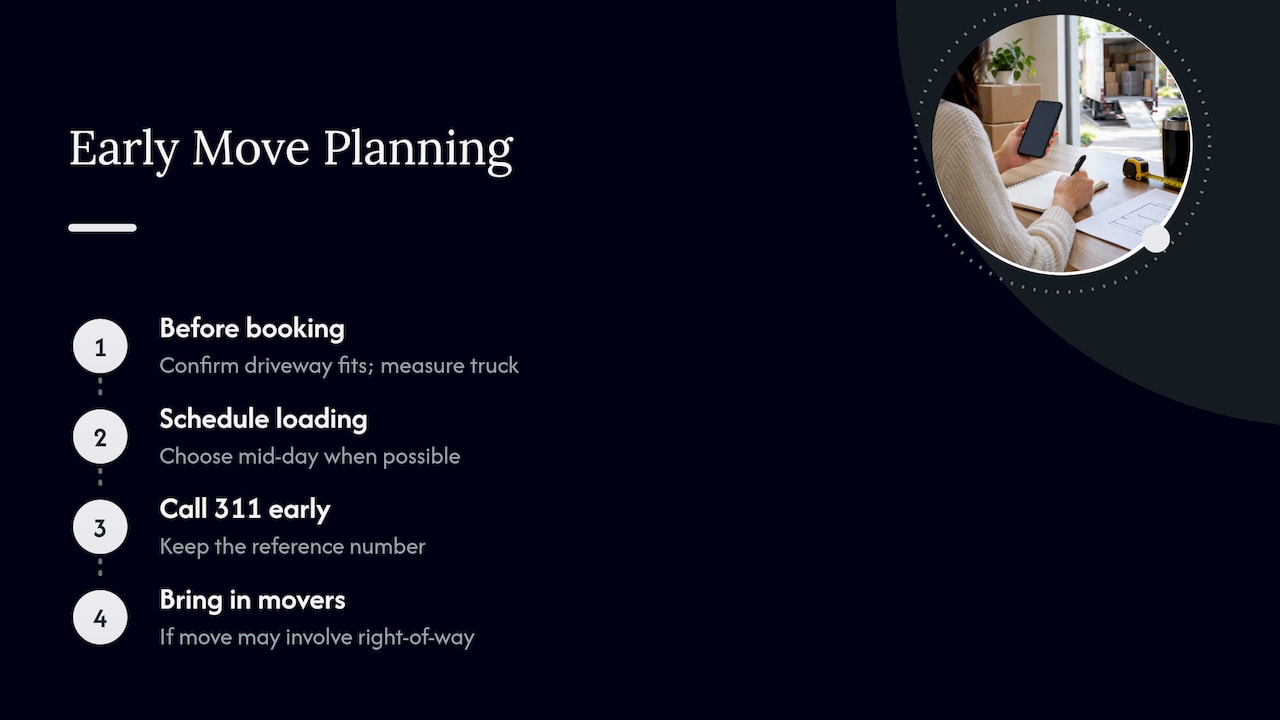
Two habits save the most trouble. First, confirm your driveway can actually hold the truck, and measure the truck itself, before the booking date. Second, schedule loading for mid-day when you can, since a tight morning or evening window leaves no slack if the truck has to be repositioned.
Call 311 early, keep the reference number, and bring in experienced movers if your move might involve the right-of-way. Our guide to efficient moving in Brampton covers more of what we see on local streets.
— Ali
Ready for a Brampton move without the parking worry?
We handle truck placement, loading and the details around them, so move day stays on schedule. Our residential moving services come with a flat-rate quote and no hidden fees, and we can start with a free quote today. Reach out through our site or send us a message on WhatsApp to book your date.
FAQ
Does Brampton issue a moving truck parking permit?
No. Brampton does not offer permit parking on City streets. A resident can request a parking consideration per licence plate, but it is aimed mainly at recreational vehicles, not moving trucks.
How long can a moving truck park on a Brampton street?
Street parking is subject to time limits and overnight restrictions. Large vehicles are also restricted from residential street parking.
Do I need a road occupancy permit for a normal household move?
Usually not. That permit applies to work affecting the road, boulevard or right-of-way, such as lane restrictions or access changes. Email roa.permits@brampton.ca if your move might require any of those.
Who do I contact about a Regional Road?
Contact Region of Peel Works at roadpermits@peelregion.ca. The City directs residents who need right-of-way access on a Regional Road to the Region instead of the City.
What happens if my truck breaks a parking rule on move day?
Parking offences remain enforceable, so a ticket or tow is possible. Confirm your plan with 311 ahead of time and keep your reference number handy.