Skip to content


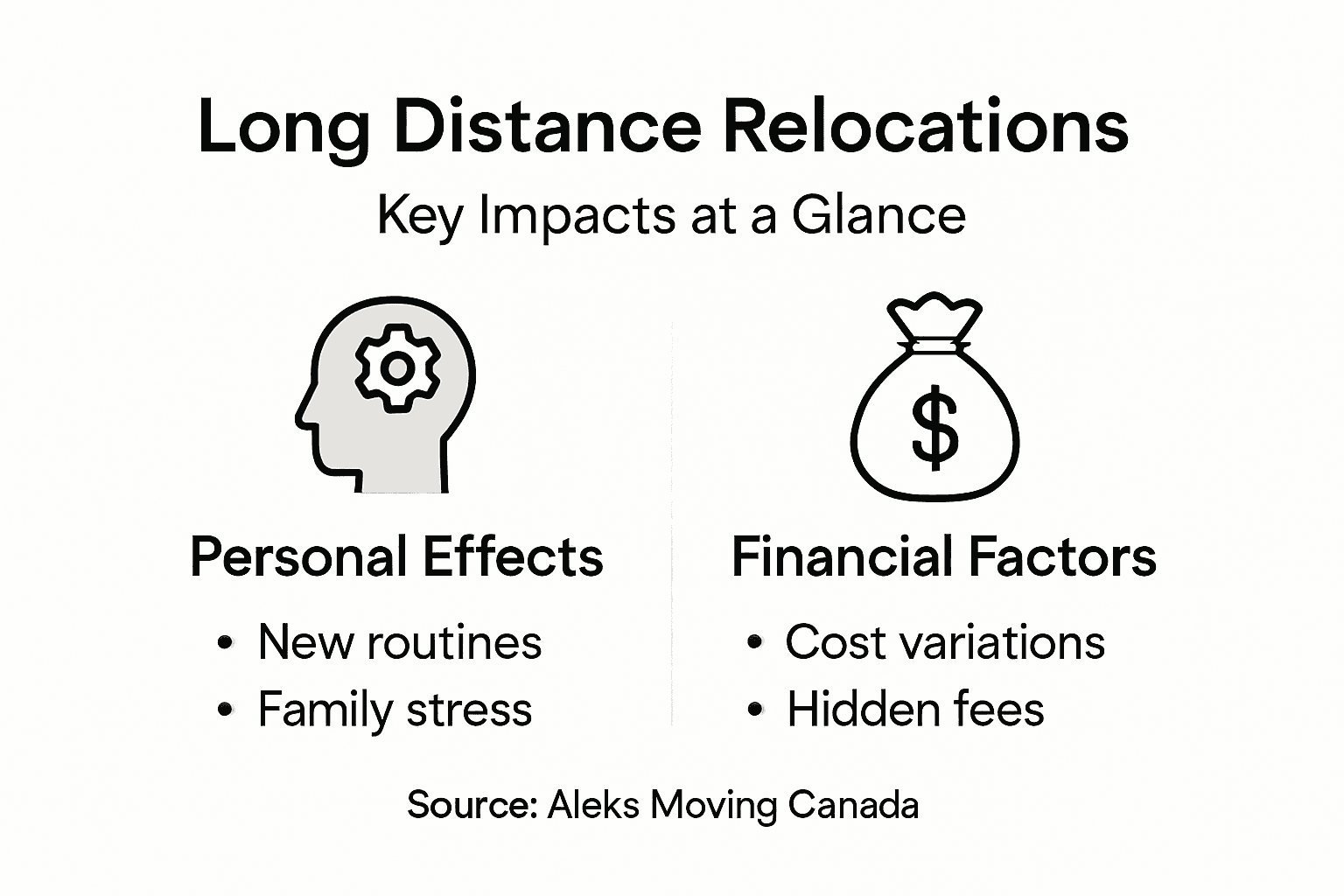
Moving from one corner of Ontario to another province means more than just packing boxes. Long distance relocations reshape your daily routines, introduce new financial questions, and often bring unexpected emotional stress. Whether you are looking for affordable rates or clear advice on the process, learning about long distance relocations in the Canadian context will help you prepare wisely, avoid common traps, and keep costs predictable throughout your journey.
Table of Contents
- Defining Long Distance Relocations In Canada
- Major Types And Typical Moving Scenarios
- Step-By-Step Process For Long Distance Moves
- Pricing, Flat Rates, And Cost Influences
- Practical Tips And Avoiding Common Pitfalls
Key Takeaways
| Point | Details |
|---|---|
| Understanding Long Distance Relocations | Long distance relocations in Canada involve complex personal, economic, and social transitions, often requiring extensive planning. |
| Moving Scenarios | Common moving scenarios include professional relocations, educational migrations, family reunification, and lifestyle changes, each with unique considerations. |
| Planning Steps | Effective long distance moves necessitate a detailed planning process that includes inventory assessments, coordination with moving companies, and understanding critical documentation needs. |
| Cost Management | Managing moving costs involves comparing quotes, understanding pricing models, and scheduling moves during off-peak seasons to avoid unexpected expenses. |
Defining Long Distance Relocations in Canada
Long distance relocations in Canada represent more than simple geographical movement – they are complex transitions involving significant personal, economic, and social transformations. Population mobility research reveals that these relocations encompass moves across municipalities, provinces, and even international boundaries, reflecting the dynamic nature of Canadian migration patterns.
From a technical perspective, long distance relocations are typically defined by specific distance and administrative boundary criteria:
- Moves crossing provincial boundaries
- Relocations involving travel over 300-500 kilometres
- Geographic transitions that require substantial logistical planning
- Moves involving significant lifestyle or employment changes
Statistics Canada provides a nuanced framework for understanding these relocations, categorizing them into several key mobility types:
- Intra-provincial moves within the same province
- Inter-provincial moves between different Canadian provinces
- International migrations entering or leaving Canada
These relocations are not merely physical transitions but represent complex life decisions influenced by economic opportunities, personal relationships, educational pursuits, and career development. Relocation studies indicate that such moves can profoundly impact family dynamics, social networks, and individual psychological experiences.
Pro tip: Before planning a long distance relocation, create a comprehensive checklist that includes financial planning, logistical arrangements, and potential emotional challenges.
Major Types and Typical Moving Scenarios
Long distance relocations in Canada encompass a diverse range of relocation process typologies, each presenting unique challenges and considerations. These moves extend far beyond simple geographical transitions, representing complex life decisions that involve multiple strategic dimensions including personal agency, logistical planning, and social dynamics.
Key Moving Scenarios include:
- Professional Relocations: Career-driven moves involving inter-provincial job transfers
- Educational Migrations: Students moving to different provinces for university or advanced studies
- Family Reunification: Moves to reconnect with extended family members across Canadian regions
- Lifestyle Changes: Relocations motivated by retirement, climate preferences, or quality of life improvements
These relocations can be further categorized based on their fundamental characteristics:
- Voluntary moves initiated by personal choice
- Planned community transitions
- Emergency or forced displacements
- Seasonal or temporary relocations
Community relocation studies reveal that long distance moves are not just physical transitions but profound social experiences that reshape individual and collective identities. The psychological and logistical complexities of these moves require comprehensive planning and adaptive strategies.

Typical Moving Characteristics that define these scenarios include:
Here is a summary of major types of long distance moves and their unique aspects in Canada:
| Scenario Type | Common Motivator | Typical Planning Needs | Social Impact |
|---|---|---|---|
| Professional Relocations | Career advancement | Employer coordination, relocation aid | Expanded networks |
| Educational Migrations | University or college | Student housing, credential transfers | Building new social circles |
| Family Reunification | Reconnecting with family | Coordination with relatives, shared costs | Stronger family bonds |
| Lifestyle Changes | Retirement or climate | Long-term planning, health care arrangements | Enhanced well-being |
- Duration of planned stay
- Distance travelled
- Number of individuals involved in the move
- Purpose of relocation
- Degree of advance planning
Pro tip: Document every aspect of your long distance move, including inventory lists, timeline projections, and potential contingency plans to mitigate unexpected challenges.
Step-by-Step Process for Long Distance Moves
Long distance relocations demand meticulous planning and strategic execution. Moving preparation strategies require comprehensive approaches that address the complex logistical challenges inherent in interprovincial transitions. Understanding each critical phase helps homeowners navigate the intricate process with confidence and minimal stress.
Initial Planning Phase involves several key preparatory steps:
- Conduct comprehensive inventory assessment
- Research potential moving companies
- Develop detailed budget allocation
- Create timeline for packing and transportation
- Arrange necessary documentation and transfer services
The actual moving process unfolds through systematic stages:
- Pre-Move Assessment (6-8 weeks before moving date)
- Packing and Sorting (4-6 weeks before moving)
- Logistics Coordination (2-3 weeks before moving)
- Transportation and Transit
- Post-Move Settlement
Critical Documentation Requirements include:
- Provincial health card transfers
- Driver’s licence updates
- Vehicle registration modifications
- Address change notifications
- Banking and financial institution updates
Packing Strategies should prioritize:
- Categorizing items by fragility and importance
- Using high-quality packing materials
- Labelling boxes with detailed contents
- Creating separate essentials box for immediate needs
- Protecting valuable and sentimental items
Pro tip: Create a digital and physical moving folder containing all critical documents, contracts, and checklists to maintain organisation throughout your long distance relocation.
Pricing, Flat Rates, and Cost Influences
Long distance moving costs are complex, involving multiple interconnected factors that directly impact pricing structures. Cost pressures in moving industries reveal significant economic dynamics that homeowners must understand when budgeting for interprovincial relocations.
Primary Cost Influencing Factors include:
- Distance between origin and destination
- Total volume and weight of belongings
- Complexity of move (stairs, long carries, special items)
- Time of year and seasonal demand
- Additional services like packing and storage
Typical Cost Breakdown for Long Distance Moves:
- Base transportation fee
- Packing material expenses
- Labour costs
- Insurance and liability coverage
- Fuel surcharges
Pricing Model Categories:
Below is a comparison of different long distance moving pricing models:
| Pricing Model | How It’s Calculated | Best for Move Type | Main Advantage |
|---|---|---|---|
| Flat Rate | Total distance & volume | Interprovincial | Predictable total cost |
| Weight-Based | Measured shipment weight | Large household moves | Accurate for heavy loads |
| Volume-Based | Cubic space used in truck | Multi-item relocations | Reflects item compactness |
| Hourly Rate | Hours worked by crew | Local/in-town moves | Flexibility for short moves |
- Hourly Rates: Typically used for local moves
- Flat Rates: Preferred for long distance relocations
- Weight-Based Pricing: Calculated by total shipment weight
- Volume-Based Pricing: Determined by cubic space occupied
Transparent pricing eliminates unexpected expenses and provides clear financial expectations for customers.
Strategies to Manage Moving Costs:
- Schedule moves during off-peak seasons
- Reduce total item volume before moving
- Compare multiple moving quotes
- Understand included and additional services
- Negotiate potential discounts
Pro tip: Request comprehensive written quotes that detail all potential charges to avoid surprising additional fees during your long distance move.
Practical Tips and Avoiding Common Pitfalls
Long distance relocations require strategic planning and proactive problem-solving. Top moving strategies emphasize preparation as the key to minimizing stress and potential complications during interprovincial moves.
Critical Pre-Move Preparation Steps:
- Begin planning at least 8-10 weeks before moving date
- Create comprehensive digital and physical documentation system
- Develop detailed inventory of all belongings
- Research provincial regulations for moving
- Establish communication protocols with moving company
Common Pitfalls to Avoid:
- Underestimating total moving expenses
- Failing to declutter before packing
- Inadequate insurance coverage
- Poor communication with movers
- Incomplete address and utility transfer documentation
Documentation Checklist:
- Provincial health card transfers
- Driver’s licence updates
- Vehicle registration modifications
- Medical record transfers
- School/professional credential relocations
Meticulous planning transforms a potentially chaotic move into a smooth, manageable transition.
Psychological Preparation Strategies:
- Maintain flexible mindset
- Create contingency plans
- Budget for unexpected expenses
- Establish support networks in new location
- Practice stress management techniques
Pro tip: Create a dedicated moving folder with digital and physical copies of all critical documents, ensuring instant access during your interprovincial relocation.
Make Your Long Distance Relocation Smooth and Stress-Free with Aleks Moving
Long distance relocations in Canada demand careful planning and trustworthy support to overcome challenges like logistical complexities, cost management, and emotional stress. If you are preparing for a move across provinces or a major city-to-city transition, you need a moving partner who understands the unique obstacles you face. Aleks Moving brings over 18 years of professional experience to ensure your move is transparent, affordable, and tailored for success. We specialize in flat-rate pricing with no hidden fees so you can plan your budget confidently without surprises.
Discover why thousands of homeowners and businesses across Ontario trust Aleks Moving for their local and long distance relocations. From comprehensive packing services to smooth transportation and timely delivery, we handle every detail with care and precision. Take the first step now and get your free, no-obligation moving quote at Aleks Moving. Let us provide the reliable expertise you need to turn your complex long distance move into a seamless new beginning.
Frequently Asked Questions
What are the primary factors influencing the cost of long distance relocations?
The primary cost influencing factors include the distance between origin and destination, the total volume and weight of belongings, the complexity of the move, the time of year, and additional services such as packing and storage.
How do I effectively prepare for a long distance move?
Effective preparation involves conducting a comprehensive inventory assessment, researching potential moving companies, developing a detailed budget, and creating a timeline for packing and transportation.
What types of personal impacts can long distance relocations have?
Long distance relocations can significantly impact individual and family dynamics, social networks, and may lead to lifestyle changes, prompting emotional adjustments during the transition.
What are the common pitfalls to avoid during a long distance move?
Common pitfalls include underestimating total moving expenses, failing to declutter before packing, inadequate insurance coverage, poor communication with movers, and incomplete address and utility transfer documentation.