Skip to content


TL;DR:
- Moving homes requires careful planning to avoid overlooked tasks and last-minute stress. Starting the process eight weeks early helps secure services, declutter, and organize essential documents smoothly. Following this step-by-step checklist ensures a manageable move and a seamless transition into your new home.
Moving homes is one of the most logistically demanding things a family can do. There are dozens of tasks to coordinate, and without a solid step by step moving checklist, it’s easy to miss something critical until the worst possible moment. A thorough residential move involves roughly 128 distinct tasks spread across an 8-week timeline. That number sounds overwhelming, but broken into stages, each step is completely manageable. This guide walks you through every phase of your move — from early planning right through to unpacking in your new home.
Table of Contents
- Key takeaways
- The step by step moving checklist: 8 weeks out
- Packing and logistics: 4 to 6 weeks out
- Final prep and moving day
- Settling into your new home
- What I have learned from years of moving experience
- Move with confidence using Aleksmoving
- FAQ
Key takeaways
| Point | Details |
|---|---|
| Start 8 weeks early | Beginning your planning well in advance gives you time to book services and declutter without rushing. |
| Declutter before packing | Sorting belongings into keep, donate, and discard piles lowers your transport costs significantly. |
| Build an essentials box | Pack a separate bag or box with medications, documents, and chargers that stays with you on moving day. |
| Confirm logistics in advance | Arrange parking permits, utility transfers, and mover arrival times before moving day arrives. |
| Settle in with a plan | Unpack by priority and register your new address with government agencies and financial institutions promptly. |
The step by step moving checklist: 8 weeks out
The most common moving mistake is starting too late. Beginning your checklist 8 weeks before your move date gives you the best chance of securing your preferred movers, negotiating better rates, and handling administrative tasks without a last-minute scramble.
Your very first task is creating a moving binder or digital folder. Collect all quotes, lease agreements, utility account numbers, and contact information in one place. You will reference this folder constantly over the coming weeks, and having it organised from the start saves real time.
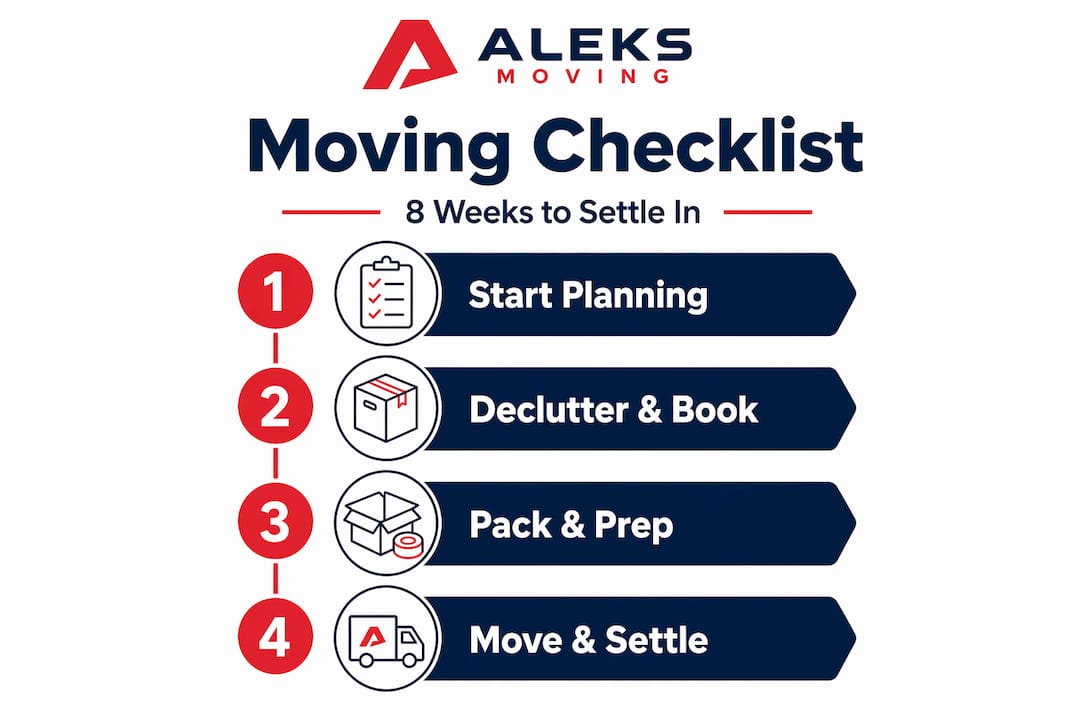
Next, set your moving budget. Consider the cost of professional movers, packing supplies, potential storage, and a contingency buffer of around 10 to 15 percent for surprises. Knowing your numbers early helps you make confident decisions rather than reactive ones. For practical guidance on keeping costs reasonable, reviewing ways to save on moving is worth your time.
Here is your 8-week action list:
- Sort all belongings into keep, donate, sell, and discard piles. Early decluttering reduces both your moving costs and the volume of items to pack and unpack
- Notify your landlord in writing. Standard notice periods for rental properties range from 30 to 90 days depending on your lease agreement and local laws
- If you own your home, begin the sale process with your real estate agent and confirm your closing timeline
- Start researching and contacting professional movers for quotes
- Gather key documents such as passports, medical records, school records, and insurance policies into a dedicated folder
Pro Tip: Sell unwanted items on Facebook Marketplace or Kijiji before you start packing. The cash offsets moving costs, and you immediately reduce what needs to be transported.
Packing and logistics: 4 to 6 weeks out
Once your decluttering is done, the next phase of your moving checklist step by step is all about packing and locking in your logistics. This is the window where the real groundwork gets laid.
Start by gathering your packing supplies: boxes in small, medium, and large sizes, packing tape, bubble wrap, packing paper, and permanent markers for labelling. Do not underestimate how many boxes you will need. Most people run short halfway through and end up making multiple supply runs.
Follow this packing sequence:
- Pack non-essential items first. Off-season clothing, books, decorative items, and hobby equipment can be packed weeks before you move without disrupting daily life.
- Label every box with its contents and the destination room. Write on the top and at least one side so the label is visible regardless of how a box is stacked.
- Wrap fragile items individually. Plates should be packed vertically like records, not stacked flat. Use bubble wrap for glassware and fill empty space in boxes with packing paper to prevent shifting.
- Create your essentials box. This is one of the most overlooked steps on any complete moving list. Pack medications, phone chargers, a change of clothes, toiletries, snacks, important documents, and your children’s comfort items. This box travels in your personal vehicle.
- Book your movers or truck rental now if you have not already. Confirm the flat rate, any additional fees, insurance coverage, and what happens if the move runs long.
- Schedule utility disconnections and connections. Contact your electricity, gas, internet, and water providers. Aim for disconnection the day after your move and connection at the new address the day before you arrive.
- Submit your change of address. Notify Canada Post, your bank, employer, insurance providers, the Canada Revenue Agency, and any subscriptions you hold.
Pro Tip: Take photos of the back of your electronics before you dismantle them. When you reconnect everything at your new home, you will know exactly where every cable goes without guessing.
Final prep and moving day
The days just before your move are not the time to slow down. Your moving day checklist needs to cover both practical and logistical details. Overlooking even one can cost you hours.
Here is what to take care of in the final 48 hours:
- Finish packing everything that is left, including daily-use items like toiletries, coffee makers, and bedding
- Confirm your mover’s arrival time and the address of your new home in writing
- Secure parking permits for your moving truck if you live in an urban area or a building with restricted access. Failure to do this can add significant labour costs if movers have to carry items a long distance from truck to door
- Prepare cash or payment for your movers in advance, including tips if you plan to offer them
- Take photographs of all your valuables before they are loaded. Photographic documentation of your belongings before transport supports any insurance claims if damage occurs
- Keep your essentials box and all personal documents with you in your vehicle. Your essentials box should never go on the moving truck
On moving day itself, stay present. Supervise the loading process so you know where fragile or valuable items are placed on the truck. Communicate clearly with your movers about anything that requires special handling.
Before you leave your old home for the last time, do a thorough final walkthrough. Check inside every drawer, cupboard, appliance, and closet. Look behind doors and in every corner of every room. Check the garage, garden shed, and any outdoor storage. It takes 15 minutes and prevents the need to drive back for a forgotten item. Clean the home if required for your deposit return or as a courtesy to the next occupant.
Settling into your new home
Getting through moving day is a real achievement. The post-move phase of your residential moving checklist is about transitioning quickly from boxes to comfort.
Follow this sequence after you arrive:
- Check utilities immediately. Confirm that electricity, water, heat, and internet are all functioning before your movers leave. If anything is not working, you want to resolve it while your phone is charged and you have support nearby.
- Unpack the essentials box first. Set up your bathroom, make the beds, and get your kitchen functional for a basic meal. Your first night should be as comfortable as possible.
- Set daily unpacking goals. Trying to unpack everything at once leads to chaos. Assign one or two rooms per day and work through them methodically.
- Register your new address officially. Update your information with Service Canada, the Canada Revenue Agency, your provincial health card, your driver’s licence, and your vehicle registration.
- Register for local services. If you have children, contact your new school district. Register with a local family doctor and dentist. If you have pets, find a local veterinarian.
- Schedule any repairs or installations. If the new home needs work, book contractors while your schedule is still relatively clear.
The most common post-move mistake is ignoring administrative tasks because you feel mentally exhausted. Address them within the first two weeks while the details are still fresh. For a broader overview of the settling-in process tailored to Canadian residents, Aleksmoving’s guide on residential moving in Canada covers the transition in depth.
What I have learned from years of moving experience
I have seen hundreds of families move, and the patterns are consistent. The people who struggle most are the ones who underestimate how much they own and start packing too late. Two weeks is not enough time to make good decisions about what to keep and what to let go. When you rush decluttering, you move things you did not want, and you pay to do it.
The essentials box is the single most undervalued item on any moving day guide. Most people know they should make one. Few people actually think carefully about what goes in it. Medications are the obvious one. But what about your child’s favourite toy? Your pet’s food and water bowl? A kettle and two mugs? The essentials box should cover your first 24 hours in the new home with zero need to open another box.
My most counterintuitive advice: keep moving day completely clear of everything else. No work calls, no errands, no social commitments. Things always take longer than expected, and every competing obligation adds stress and slows the process. Give the day entirely to the move.
Finally, stay flexible. The elevator at your old building will be reserved by someone else. The movers will be 45 minutes late. Your new internet will not be connected on time. These things happen on nearly every move. Expecting some disruption means you handle it calmly rather than catastrophically.
— Ali
Move with confidence using Aleksmoving
Planning a move is a big undertaking, and having the right team behind you makes a genuine difference.

Aleksmoving has been helping Ontario families relocate for over 18 years. Whether you are moving across the street or across the province, our team handles packing, loading, transport, and delivery with care and no hidden fees. Our flat-rate pricing means you know your cost upfront, and our experienced crew takes the physical and logistical pressure off your shoulders. From the moment you get in touch, we work around your timeline and needs. Visit our residential moving services page to request your free quote and see how we can make your next move the smoothest one yet.
FAQ
When should I start a moving checklist?
Start your checklist 8 weeks before your move date. This gives you enough time to declutter, book movers, and handle all administrative tasks without rushing.
What goes in an essentials box for moving day?
Your essentials box should contain medications, phone chargers, toiletries, a change of clothes, important documents, snacks, and anything your household needs for the first 24 hours. It travels in your personal vehicle and never goes on the truck.
How do I notify my landlord before moving?
Give written notice as early as possible. Notice periods typically range from 30 to 90 days depending on your lease and provincial tenancy laws, so check your agreement and local regulations.
What is the most common moving day mistake?
Not doing a thorough final walkthrough before leaving your old home. Physically check every drawer, cupboard, and appliance to make sure nothing is left behind.
Do I need a parking permit for my moving truck?
In urban areas and many apartment buildings, yes. Arranging parking permits in advance prevents your movers from having to carry items a long distance from the truck, which increases time and cost.