
TL;DR:
- Effective moving day logistics involve careful planning of three sequential phases: preparation, loading, and unloading with sign-off. Clear responsibilities, advance access arrangements, and detailed paperwork reviews are essential to prevent delays and damage. Proper preparation, communication, and legal documentation protect belongings and ensure a smooth, cost-effective move.
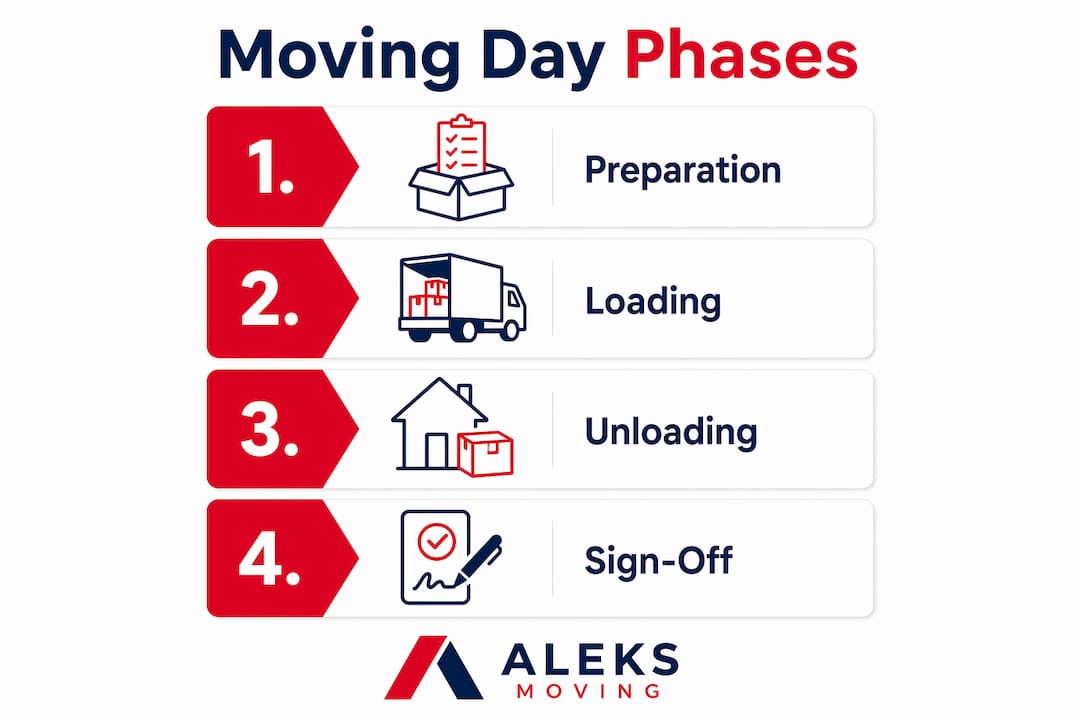
Moving day logistics is the coordinated management of every task, person, and timeline required to execute your move on the actual day it happens. The industry term for this practice is relocation coordination, and it covers three distinct phases: the pre-move walkthrough, loading, and unloading with sign-off. When these phases are planned well, your move runs on schedule and your belongings arrive safely. When they are not, even a short local move can stretch into an exhausting, costly ordeal. Tools like a detailed inventory list, a Bill of Lading (BOL), and a scheduling app are the practical backbone of sound moving day planning.
What are the key phases of moving day logistics?
Moving day logistics follows a three-phase sequence, and each phase has its own set of tasks, timing requirements, and decision points. Understanding what happens in each phase helps you stay ahead of problems rather than reacting to them.
Phase 1: Preparation and walkthrough
The day begins before the truck arrives. You should do a final sweep of every room, confirm that all boxes are sealed and labelled, and set aside a personal bag with documents, valuables, and daily essentials. Once the movers arrive, walk through the home with the crew lead. Point out fragile items, identify furniture that needs disassembly, and confirm which items are not moving. This walkthrough sets expectations and prevents costly misunderstandings later.
Phase 2: Loading
Loading is the most physically demanding phase and the one where most damage occurs if it is rushed. Movers should load heavy furniture first, followed by large boxes, then fragile items on top. Floor runners and door-frame protectors should be in place before any item crosses the threshold. Your job during loading is to supervise placement decisions and confirm that every item on the inventory list is accounted for before the truck door closes.
Phase 3: Unloading and sign-off
At the destination, the process reverses. Direct movers to place furniture in its intended room immediately, because repositioning heavy pieces after the crew leaves is difficult. Once everything is inside, review the inventory list against what was delivered and note any damage before signing the final paperwork. This sign-off step is legally significant and cannot be undone once you have signed.
One important distinction: local moves usually finish same-day, while interstate or long-distance moves involve separate pickup and delivery days with a delivery window that can span several days. Your logistics for moving plan must account for this gap, including temporary storage if needed.
Pro Tip: Pack a clearly labelled “open first” box with kettle, toiletries, phone chargers, and a change of clothes. Place it last on the truck so it comes off first at the destination.
Who is responsible for what on moving day?
Clear separation of responsibilities is the single biggest factor in a smooth move. Conflicting instructions slow crews down and increase the chance of errors, so every household should designate one decision-maker before the truck arrives.
Here is how responsibilities divide across the three most common move types:
| Task | Full-service movers | Truck rental + labour | DIY |
|---|---|---|---|
| Packing | Movers (if booked) | Customer | Customer |
| Loading | Movers | Labour crew | Customer |
| Driving | Movers | Customer | Customer |
| Unloading | Movers | Labour crew | Customer |
| Paperwork | Movers prepare, customer signs | Customer manages | Customer |
| Placement decisions | Customer directs | Customer directs | Customer |
In a truck rental plus labour scenario, the customer is responsible for driving the truck and managing the schedule, while the hired labour crew handles the physical loading and unloading during their booked hours. This split is often misunderstood, leading to overtime charges when the customer is not ready to drive on time.
Your core responsibilities as the customer, regardless of move type, are:
- Be present on-site for the entire move, or designate a trusted adult in your place
- Secure all valuables, jewellery, and important documents before movers arrive
- Direct furniture placement at the destination clearly and promptly
- Confirm payment method and tip allocation before the crew finishes
A helpful resource for understanding moving day etiquette covers the communication side of this relationship in detail, including how to give clear directions without micromanaging the crew.
What challenges can disrupt moving day logistics?
Access problems are the leading cause of moving day delays, and they are almost entirely preventable with advance planning. Parking restrictions, elevator reservations, stairwells, and gate codes affect schedule more than any other variable. A truck that cannot park within a reasonable distance of your entrance adds significant time and physical strain to every trip.
Common access challenges and how to prevent them:
- Parking permits: Contact your municipality at least one week before moving day to reserve a parking zone for the moving truck. In cities like Toronto and Ottawa, this requires a formal permit application.
- Elevator booking: Most condo buildings require advance booking of the service elevator. Confirm the booking window with building management and share it with your moving crew.
- Stairwells and narrow hallways: Measure large furniture pieces against doorway and stairwell dimensions before moving day. Identify any items that need disassembly in advance, not on the morning of the move.
- Gate codes and access cards: Write these down and give them to the crew lead before loading begins.
Unfinished packing is another major disruptor. Moving crews will stop work if items are not packed and ready, because they cannot safely load loose or open items. This pause costs you time and, in hourly-rate moves, money. Complete all packing the night before, without exception.
Weather delays are harder to control but easier to plan for. Build a 60-minute buffer into your schedule for any move between November and March in Ontario. Wet or icy conditions slow loading, require extra protective coverings, and increase the risk of slips on ramps and stairs.
Pro Tip: Call your building manager and your neighbours at least 48 hours before moving day. Confirm elevator access, notify neighbours of potential hallway congestion, and get any access codes in writing.
How to manage paperwork and inventory on moving day
Moving day logistics is not just physical. The administrative layer protects your belongings legally and financially, and most people underestimate it until something goes wrong.
- Review the Bill of Lading before loading begins. The Bill of Lading is a legally binding contract that outlines the terms of your move, including declared value, pickup and delivery addresses, and any special handling instructions. You should receive a partially completed copy before the truck is loaded. Read it carefully and ask questions before you sign.
- Check the inventory list at loading. Walk through the list item by item as boxes and furniture go onto the truck. Note the condition of each item, particularly anything with pre-existing scratches or damage. This record is your protection if a dispute arises at delivery.
- Photograph high-value items. Before movers handle antiques, artwork, or electronics, photograph them from multiple angles. Store these photos in cloud storage, not just on your phone, in case the device is misplaced during the move.
- Review the inventory list again at delivery. Disputing discrepancies before signing delivery paperwork is far easier than filing a claim after the fact. If an item is missing or damaged, note it on the BOL before the crew leaves.
A consistent verification loop at both load and delivery is best practice for preventing claims and ensuring every item is accounted for. Never sign final delivery paperwork until you have physically checked every item on the list.
Declare high-value items in writing before the move. Most standard moving contracts cap liability at a low per-kilogram rate unless you declare additional value. If you are moving items worth more than a few hundred dollars, ask your mover about full-value protection coverage.
Practical tips to keep your moving day on track
Good moving day planning comes down to preparation, communication, and staying one step ahead of the crew. These habits separate a smooth move from a stressful one.
- Prepare your essentials bag the night before. Pack personal valuables separately in a locked bag or your personal vehicle. Include identification, passports, medication, phone chargers, and a small amount of cash for tips and last-minute purchases.
- Label every box with room and contents. Use a colour-coding system by room so movers can place boxes without asking you each time. This alone saves 20 to 30 minutes at the destination.
- Designate one point of contact. Tell the crew lead who to approach with questions. Multiple family members giving different instructions is one of the most common sources of delay and misplaced items.
- Do a final walkthrough before the truck leaves. Check every room, closet, cabinet, and outdoor space. Check the attic, garage, and storage locker. Items left behind are rarely recovered without a second trip.
- Confirm payment before the crew finishes. Know your payment method in advance. If tipping, the standard in Canada is $20 to $50 per mover for a local move, paid in cash directly to each crew member.
For a detailed step-by-step moving checklist, Aleksmoving has compiled a thorough resource covering everything from six weeks out to the final hour of moving day.
Key takeaways
Effective moving day logistics requires mastering three phases, assigning clear responsibilities, and treating paperwork as seriously as the physical move itself.
| Point | Details |
|---|---|
| Three-phase structure | Every move follows prep/walkthrough, loading, and unloading/sign-off phases in sequence. |
| One decision-maker | Designate a single point of contact to avoid conflicting instructions and delays. |
| Access planning first | Book parking permits and elevator slots at least one week before moving day. |
| Double-check inventory | Review the inventory list at both loading and delivery before signing any paperwork. |
| Essentials bag is non-negotiable | Pack valuables, documents, and daily necessities separately and keep them with you. |
What I have learned from years of moving day experience
After being involved in hundreds of moves across Ontario, the pattern I see most often is this: families spend weeks planning the big things and completely overlook the small access details. A family will meticulously pack every box, hire a great crew, and then discover on moving day that the condo elevator is booked by another resident until noon. That two-hour wait costs real money and real stress.
The second thing I have noticed is that people treat the Bill of Lading as a formality. They sign it quickly because they are excited to get moving. Then, three days later, they realise a lamp is cracked or a box is missing, and they have no written record of the item’s condition at loading. The paperwork is not bureaucracy. It is your only protection once the truck drives away.
My honest advice: treat the day before moving day as part of moving day itself. Finish packing completely. Confirm elevator bookings. Write down every access code. Brief your family on who is the designated decision-maker. When the crew arrives, you want to be ready to walk them through the home, not scrambling to seal boxes.
The moves that go smoothly are not the ones with the most expensive movers. They are the ones where the customer showed up prepared.
— Ali
How Aleksmoving supports your moving day logistics

Aleksmoving has over 18 years of experience managing residential and commercial relocations across Ontario, and we understand that moving day logistics is where plans either hold together or fall apart. Our full-service moving options cover packing, loading, transport, and unloading, with a crew that handles access coordination and BOL paperwork as part of every job. We offer flat-rate pricing with no hidden fees, so you know exactly what to expect before the truck arrives. Whether you are moving locally or across the province, our team is ready to take the coordination off your plate. Explore our professional moving services and request a free quote today.
FAQ
What is moving day logistics exactly?
Moving day logistics is the coordinated management of all tasks on the day of your move, including the pre-move walkthrough, loading, transport, and unloading with final sign-off. It covers both the physical and administrative steps required to complete a move safely and on schedule.
What should I have ready before movers arrive?
All boxes should be sealed, labelled, and stacked by the door. Your essentials bag with valuables, documents, and daily necessities should be set aside separately and kept in your personal vehicle throughout the move.
What is a Bill of Lading and why does it matter?
The Bill of Lading is a legally binding contract between you and your moving company that confirms the terms of the move. You should review it before loading begins and sign the final version only after confirming all items have been delivered and checked.
How far in advance should I book elevator access?
Book your building’s service elevator at least one week before moving day, and confirm the booking in writing with building management. Many buildings in Toronto and Ottawa have limited windows and high demand, particularly on weekends.
How do I prepare my home for the moving crew?
Clear pathways through every room, protect floors with runners if possible, and prepare your home by removing obstacles from doorways and staircases. This allows the crew to work efficiently and reduces the risk of damage to your walls and floors.