Skip to content


Most Canadian antique moves range from several hundred dollars for a single small crated piece moved locally to several thousand dollars or more for a multi-item, long-distance move with custom crating and replacement-value coverage. The spread is wide because three things drive the price: how much custom crating and cushioning the piece needs, how many handlers and how much specialized equipment the job takes, and how far it has to travel. The only way to get a number you can trust is an itemized, inspection-based quote, not a phone estimate.
TL;DR:
- Custom crating often accounts for the largest portion of moving costs due to the need for shock, vibration, and environmental protection, with crate panels typically at least 12 mm thick.
- Long-distance moves with high-value antiques can cost between $1,500 and $4,000 or more, depending on the number of crates, transport complexity, and insurance coverage.
- Accurate quotes require detailed measurements, photos, and condition documentation measured before the move; vague descriptions or phone estimates are unreliable.
- Standard liability coverage based on weight offers minimal protection for high-value antiques, making declared-value insurance essential for full coverage.
- Choosing a mover with inspection-based quoting, proper handling, and museum-grade crating standards reduces the risk of damage and can lower costs over rushed, vague estimates.
Table of Contents
- Antique moving cost factors: what actually shows up on your quote
- Typical price ranges for antique moves across Canada
- How movers price your quote: what to prepare in advance
- Insurance and valuation: why weight-based coverage rarely protects antiques
- Cutting antique moving costs without cutting corners
- What Aleks Moving has learned handling antiques across Ontario
- Get a real number: request your antique moving quote
- Sources
- FAQ
Antique moving cost factors: what actually shows up on your quote
Every line on an antique moving quote traces back to risk. The more a piece can be damaged in transit, the more labour, materials, and planning go into protecting it, and that’s what you’re paying for.
Custom crating is usually the biggest single cost driver. The Canadian Conservation Institute identifies shock, vibration, abrasion, compression, and environmental exposure as the main hazards in transit, and the packaging has to match both the object and the route. Museum practice commonly calls for crate panels at least 12 mm thick with cushioning up to 75 to 100 mm on high-risk shipments, according to CCI’s guidance on safe shipment. A crate built to that standard for a large armoire or a marble-top table costs far more in materials and build time than a simple moving blanket wrap.
Beyond crating, several other factors stack up:
- Handlers and equipment: large paintings and heavy case pieces often need two or more movers plus specialized carts, like an A-frame trolley for artwork.
- Access difficulty: narrow stairwells, no elevator, or a tight condo hallway all add handling time and sometimes hoisting fees.
- Transport legs: every transfer between vehicles increases hazard exposure, which is why long routes with multiple legs cost more than a straight door-to-door run.
- Disassembly and reassembly: pieces with removable legs, mirrors, or marble tops take extra labour to break down safely and rebuild on arrival.
- Storage: if your new place isn’t ready, short-term storage adds a separate fee.
Pro Tip: Ask your mover whether your route uses a controlled, specialist network or standard freight. A dedicated door-to-door antique transport service can sometimes use lighter crating because it avoids the repeated handling that ordinary shipping involves.
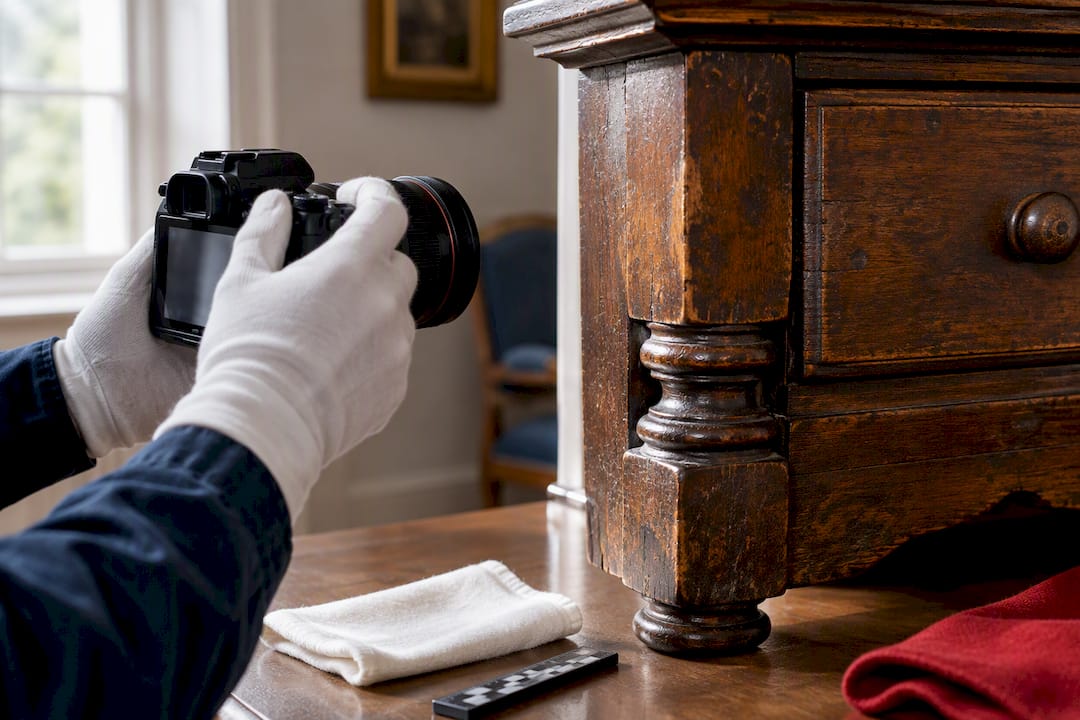
Condition documentation matters here too. A detailed pre-move photo record protects you if a damage claim comes up later, and it often factors into how a mover prices insurance add-ons.
Typical price ranges for antique moves across Canada
Real quotes vary by city, season, and mover, but a few benchmark scenarios give you a starting point for comparison.
- A single medium antique cabinet, moved locally: expect roughly $300 to $700. That covers two handlers, a basic custom crate or heavy padding, and a short local haul across the same city.
- A large framed painting or oversized artwork: budget $250 to $600 for the piece alone if it needs an HTS-style handling frame and specialized carrying equipment, on top of whatever else is in the move.
- Multiple high-value antiques on a long-distance provincial move: this is where costs climb, often $1,500 to $4,000 or more, once you factor in several custom crates, extended transport time, and replacement-value insurance on the full inventory.
These figures are examples, not quotes. A grandfather clock and a Victorian dresser of similar size can price very differently depending on fragility, weight distribution, and how the movement mechanism inside the clock needs to be secured. The only reliable number comes after someone experienced with antiques and art has actually looked at your pieces, either in person or through detailed photos and measurements you send in advance.
How movers price your quote: what to prepare in advance
An accurate antique moving price guide starts with what the mover needs to see, not what they guess. Skipping this step is the single biggest reason initial estimates and final invoices don’t match.
During an inspection, whether it’s on-site or done virtually through photos and video, a mover is checking:
- Dimensions and estimated weight of each piece, since crate size and handler count depend on both.
- Access conditions at pickup and delivery, including stairs, elevators, and parking distance from the door.
- Fragility and construction details, such as veneer, inlay, glass, or loose joinery that changes how a piece needs to be packed.
- Route hazards, particularly for long-distance moves involving transfers between vehicles or storage stops.
To speed this up, prepare photos of each item from multiple angles, rough measurements, and any appraisals or proof of purchase you have. Federal pre-move guidance recommends a High Value Inventory and generally expects written appraisals for items valued over $5,000. A simple list with item name, quantity, estimated weight, and estimated value, backed by photos, gets you a far tighter quote than a verbal description over the phone.
Pro Tip: Take dated photos of every antique before movers arrive. If a dispute ever comes up, a clear “before” record settles it faster than any conversation.
Ask directly what crate specifications the mover uses, whether they follow anything close to the CCI’s panel thickness and cushioning guidance, and how many handlers will be assigned to your largest or heaviest pieces. A mover who answers specifically, rather than vaguely, is usually the one who has actually done this kind of work before.
Insurance and valuation: why weight-based coverage rarely protects antiques
Standard mover liability in Canada is calculated by weight, not value, and for antiques that’s almost always a mismatch. Released valuation, the default minimum coverage under most moving contracts, works out to $0.60 per pound ($1.32 per kg) per article according to the Canadian Association of Movers. A 40-pound antique side table insured at that rate would be covered for about $24 if it’s damaged beyond repair, regardless of what you paid or what it’s actually worth.
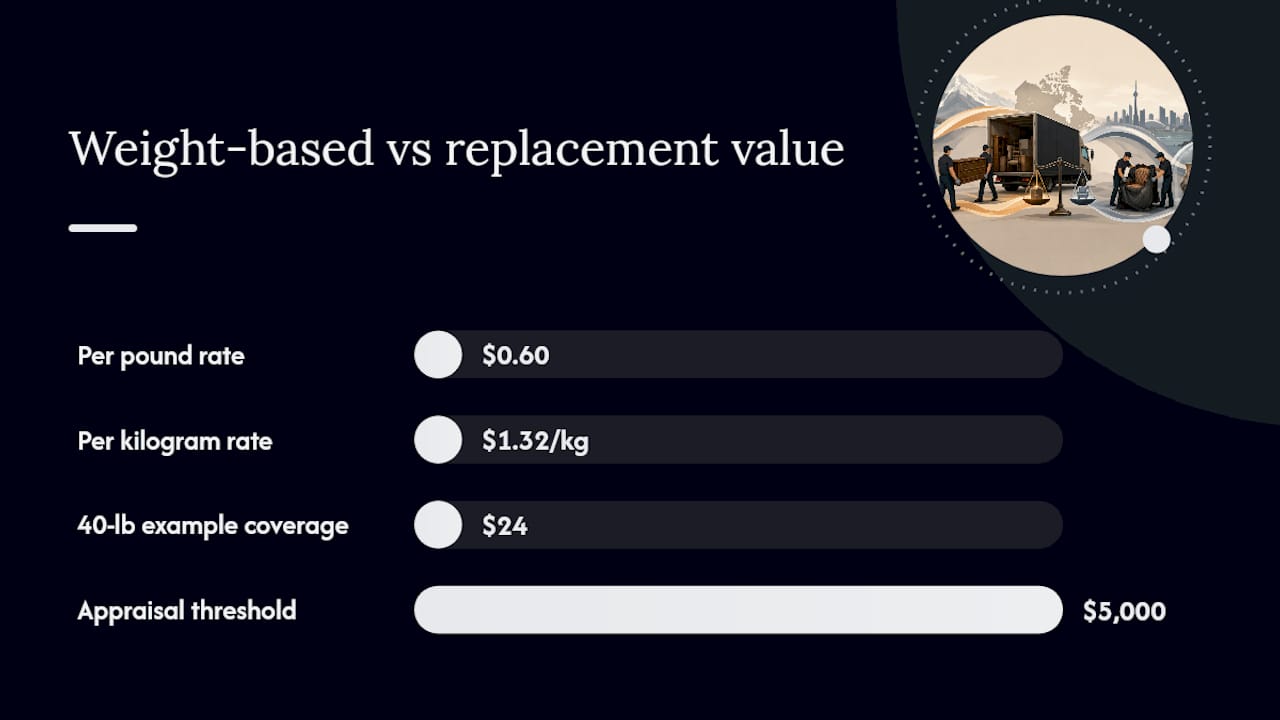
That gap is exactly why replacement-value protection exists. Under this option, you declare the actual value of high-value items upfront, and the mover charges a premium based on that declared amount rather than weight. What matters is the value you declare, not how heavy the piece is, so don’t assume a light but valuable item is automatically covered.
To use replacement-value protection properly, be ready to provide:
- A written appraisal or proof of purchase, particularly for anything over $5,000.
- Clear photos documenting condition before the move.
- A specific declared value for each item, not a lump estimate for the whole shipment.
For exceptional pieces, a family heirloom clock, a signed painting, rare porcelain, standard mover coverage may still fall short even with replacement value added. Fine art insurance products exist specifically for this gap, though availability and appraisal thresholds vary by province and provider.
Cutting antique moving costs without cutting corners
You can bring the price down in a few genuine ways, and none of them involve skipping protection on pieces that actually need it.
- Consolidate into one door-to-door move rather than staggering shipments. Fewer transport legs means less handling and lower risk-based pricing.
- Declare high-value items early, not on move day. Agreed-value terms are easier to negotiate before a truck is booked.
- Do the prep work yourself where it’s safe: remove drawers, take down mirrors, and clear loose decorative elements so movers aren’t billing labour time for tasks you could handle.
- Leave crating to professionals. A hand-wrapped blanket job on a dining table is fine; a custom crate for a marble bust or a large mirror is not the place to save money.
Pro Tip: Booking mid-week and mid-month, outside the peak summer moving season, can shave meaningful dollars off labour rates simply because movers have more availability to schedule your job properly.
What Aleks Moving has learned handling antiques across Ontario
Over 18 years of moving households and businesses across Ontario and beyond, one pattern holds: the antique moves that go wrong are almost always the ones that were rushed at the quoting stage. We build our antiques and art moving quotes around actual inspection, whether that’s a free on-site visit or a set of photos and measurements you send us directly, because guessing at crate size or handler count is where damage happens.
We quote flat rate with no hidden fees, and on our specialty moves across Ontario, we report a 70% reduction in damage incidents using our handling and crating methods. If you’re getting quotes from any specialist, ask what crate materials they use, how many handlers they assign to heavy or oversized pieces, and whether they document condition before loading. Those three answers tell you more than the estimate itself.
— Ali
Get a real number: request your antique moving quote
There are DIY options for smaller antique moves, and general moving guides that cover the basics. But antiques and artwork aren’t general cargo, and a flat rate built around an actual inspection beats a rough online estimate every time.
Aleks Moving offers dedicated antiques and art moving services across Ontario, backed by our flat-rate pricing with no hidden fees. When you request a quote, we’ll ask for photos, rough measurements, and any appraisal or purchase documentation you have, then walk you through crating, handling, and insurance options before you commit to anything. If your move includes a mix of antiques and everyday furniture, our packing service and long-distance moving options can be bundled into one quote, and we offer temporary storage if your new space isn’t ready yet. Reach out through our site, by phone, or by WhatsApp to start your free, itemized quote today.
Sources
- Features of Effective Packaging and Transport for Artwork – Technical Bulletin 34
- Five Steps to Safe Shipment – Canadian Conservation Institute (CCI) Notes 20/3
- Liability | Canadian Association of Movers
- Fine art insurance | Chubb Canada
FAQ
How much does it cost to move an antique piece locally?
A single antique piece moved locally, like a cabinet or dresser, typically runs $300 to $700 depending on crating needs, handler count, and access at both ends. Larger or more fragile pieces requiring custom crates push toward the higher end of that range.
Does moving insurance actually cover antiques at full value?
Standard released valuation covers antiques by weight, not worth, at $0.60 per pound ($1.32/kg) per article under Canadian Association of Movers guidance, which rarely reflects true value. Replacement-value protection, where you declare the item’s actual worth upfront, is the more adequate option for antiques.
What documents do movers need to quote an antique move accurately?
Movers need photos, measurements, and ideally a written appraisal or proof of purchase, especially for items over $5,000, as outlined in federal pre-move guidance. A simple inventory listing item, quantity, weight, and value speeds up the quoting process significantly.
Why do antique moving quotes vary so much between companies?
Quotes vary because crating standards, handler experience, and insurance options differ widely between movers. A company that inspects your pieces and builds crates to museum-grade specifications, like the panel thickness CCI recommends, will price differently than one offering blanket-wrap only.
Does Aleks Moving offer free quotes for antique and art moves?
Yes, Aleks Moving provides free, itemized quotes for antiques and art moving across Ontario, available on-site or virtually through photos and measurements. Current pricing details and quote requests are available directly on the Aleks Moving site.