Skip to content


TL;DR:
- Choosing packing materials based on specific hazards prevents damage during moving or storage. Proper selection and layering of cushioning, void fill, rigid containers, and barrier protection ensure items arrive safe and intact. Planning and using eco-friendly options can reduce waste without compromising protection.
Packing materials are specific products designed to protect your belongings during moving or storage by cushioning impacts, filling empty space, providing rigid support, or blocking moisture. Choosing the right supplies is not a matter of grabbing whatever is nearby. Protective packaging falls into four clear functional categories: cushioning, void fill, rigid containment, and barrier protection. Each category addresses a different transport hazard. Matching your materials to those hazards is the single most reliable way to prevent damage. This guide covers the most practical examples of packing materials across all four categories, with comparison tables and pro tips drawn from real moving experience.
1. What are the best examples of packing materials for cushioning?
Cushioning materials absorb shock and vibration before they reach your belongings. They sit between the item and the box wall, taking the force of drops, bumps, and rough handling. Cushioning absorbs shock; void fill prevents shifting; rigid materials resist compression and weight. These are distinct jobs, and confusing them leads to damaged items.
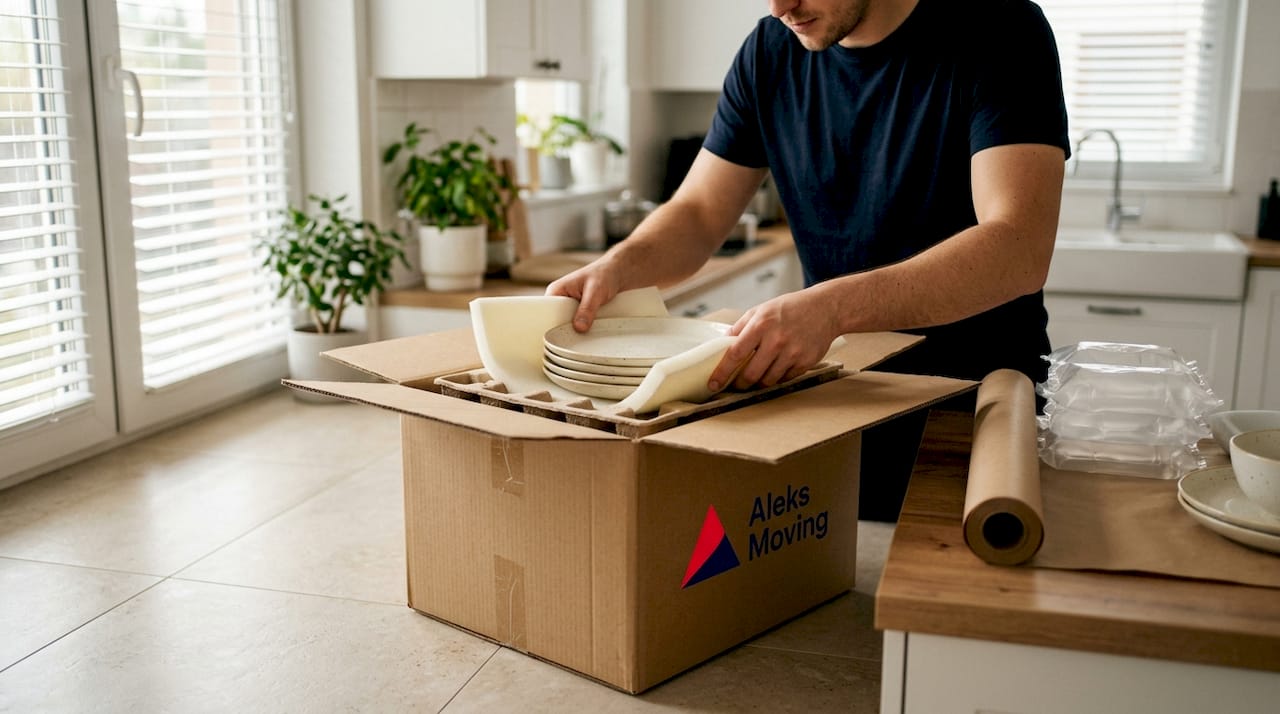
The most common cushioning options for movers are bubble wrap, polyurethane foam sheets, molded pulp trays, and corrugated pads. Bubble wrap protects fragile items from shock, vibration, and abrasion. It works well for glassware, ceramics, picture frames, and electronics. Polyurethane foam conforms to irregular shapes and offers firmer protection for heavier fragile items. Molded pulp is a paper-based option that is both compostable and effective for items with predictable shapes, such as wine glasses or small appliances.
| Material | Cost | Effectiveness | Eco-friendly? |
|---|---|---|---|
| Bubble wrap | Low | High for fragile items | No (plastic) |
| Polyurethane foam | Medium | Very high for heavy fragile items | No (plastic) |
| Molded pulp | Medium | High for shaped items | Yes (compostable) |
| Corrugated pads | Low | Moderate for flat surfaces | Yes (recyclable) |
Pro Tip: Pair cushioning with a snug box fit. A well-cushioned item in an oversized box will still rattle and break. Fill every gap.
2. How does void fill packaging prevent item shifting during moves?
Cushioning and void fill serve different purposes, and practitioners treat them as separate decisions. Cushioning wraps the item; void fill fills the empty space left inside the box after packing. Without void fill, even a well-wrapped item can shift, collide with box walls, and break.
The most practical void fill options for movers include:
- Packing paper: Crumpled kraft paper is the most affordable and widely available option. Ink-free versions are recommended for wrapping items directly, as Move.org advises for DIY moves.
- Air pillows: Lightweight and space-efficient. They fill large voids quickly and are reusable.
- Foam-in-place: A two-component foam that expands to fill any cavity. Best for irregularly shaped or high-value items.
- Recycled kraft paper: A paper-based void fill that is both effective and compostable, making it a strong eco-friendly choice.
Void fill prevents shifting and protects items from damage caused by rattling inside boxes. That rattling is one of the most common causes of breakage during a move, and it is entirely preventable.
Pro Tip: Shake every packed box before sealing it. If you hear movement, add more void fill. A silent box is a safe box.
3. Which rigid and structural packing materials ensure container protection?
Rigid packaging resists compression and stacking forces. It is the outer shell that keeps everything else intact when boxes are stacked in a truck or stored in a unit. Choosing the wrong box or skipping reinforcement is where most moving damage starts.
Corrugated cardboard boxes are the standard choice for most household moves. They come in specialty sizes including dish packs, wardrobe boxes, and mirror cartons. Free boxes can be sourced from supermarkets or bookstores, though their structural integrity varies. For high-value or heavy items, wooden crates and heavy-duty plastic bins offer superior compression resistance. Edge protectors made from cardboard or foam guard corners and edges during stacking.
Tape selection is as important as box selection. Budget tapes can fail quickly under heat or cold during transport. Quality tape with temperature resistance and full seam coverage keeps boxes sealed through the entire move. Scotch Long Lasting Storage Packing Tape and Staples-branded moving tape are widely used options that hold up across temperature changes.
| Box type | Best use | Reinforcement method |
|---|---|---|
| Standard corrugated box | General household items | Double-tape bottom seams |
| Dish pack (double-wall) | Plates, glasses, ceramics | Layer with packing paper between each item |
| Wardrobe box | Hanging clothes | No folding needed; use as-is |
| Wooden crate | Antiques, art, heavy equipment | Custom foam lining inside |
| Plastic bin | Tools, hardware, heavy books | Lid-lock clips for stacking |
Pro Tip: Always tape box seams in an H-pattern on both the top and bottom. This distributes weight evenly and prevents the base from giving out under load.
4. What are barrier packing materials and when should you use them?
Barrier materials protect items from moisture, dust, gases, and contamination. They are not optional for electronics, documents, or anything sensitive to humidity. A corrugated box alone offers no moisture protection whatsoever.
The main barrier options for movers are:
- Moisture-barrier bags: Sealed poly bags that block humidity. Use these for electronics, cameras, and important documents.
- Shrink wrap: Wraps around furniture, mattresses, and appliances to block dust and surface moisture during transit.
- Desiccants (silica gel packets): Placed inside sealed bags or boxes to absorb residual moisture. Particularly useful for long-distance moves or storage.
- Poly bag liners: Inserted inside boxes before packing to create a moisture-resistant inner layer. Effective for clothing, linens, and books.
Barrier materials work best when layered with cushioning. Wrap an electronic device in a moisture-barrier bag first, then wrap it in bubble wrap, then place it in a rigid box with void fill. Each layer addresses a different risk. Skipping the barrier layer because the item looks dry is a common and costly mistake.
Pro Tip: For long-distance moves or any move involving storage, add a silica gel packet to every sealed bag containing electronics or documents. The cost is minimal; the protection is significant.
5. Eco-friendly packing supplies: what are the best options?
Reusable and compostable packing materials like molded pulp and paper-based void fill offer genuine alternatives to single-use plastic. Reusable crates, in particular, may have a smaller environmental footprint than single-use foam packing across their full lifecycle. This matters for movers who want to reduce waste without compromising protection.
The most practical eco-friendly options are recycled kraft paper for void fill, molded pulp trays for cushioning, and corrugated cardboard boxes sourced from recycling streams. Biodegradable air pillows made from plant-based film are also available through specialty packing suppliers. Reusable plastic bins eliminate single-use boxes entirely for local moves and can be rented through some moving companies.
The trade-off is cost and availability. Eco-friendly specialty packing supplies often cost more per unit than their plastic counterparts. For most residential moves, a hybrid approach works well: use recycled paper and cardboard where possible, and reserve bubble wrap or foam for items that genuinely need it.
6. Specialty packing supplies: when standard materials are not enough
Specialty packing is the practice of using purpose-built materials for items that standard boxes and bubble wrap cannot adequately protect. Antiques, fine art, mirrors, musical instruments, and large electronics all fall into this category. Using generic supplies for these items is the leading cause of high-value damage claims during moves.
Mirror cartons are double-walled flat boxes sized specifically for mirrors and framed artwork. Foam corner protectors fit over picture frame corners before the piece goes into a carton. Custom foam inserts, cut to the exact dimensions of a fragile item, are used for high-value electronics and collectibles. Mattress bags are oversized poly covers that keep mattresses clean and dry during transport. For antiques and fine art, professional handling combined with custom crating is the standard approach.
Specialty packing supplies are available through professional moving suppliers and some large office supply retailers. The cost is higher than standard materials, but the replacement cost of an unprotected antique or instrument is always higher.
7. How to choose the right packing materials for your move
No single packing material suits all needs. Matching materials to specific transport hazards yields the best protection. The selection process starts with identifying the risk profile of each item: Is it fragile? Heavy? Moisture-sensitive? Irregularly shaped?
A practical packing material selection framework works like this. Fragile items need cushioning plus void fill. Heavy items need rigid containers with reinforced seams. Moisture-sensitive items need barrier protection layered with cushioning. Bulky or irregular items need specialty supplies or custom solutions. Every item fits one of these profiles, and every profile has a clear material answer.
Combining cushioning and void fill maximises protection by cushioning impacts and preventing item movement inside boxes. This combination is the baseline for any fragile item. Add barrier protection for anything sensitive to moisture, and upgrade to rigid specialty containers for high-value pieces.
Key takeaways
The most effective packing material selection matches each material to a specific protective function: cushioning, void fill, rigid containment, or barrier protection.
| Point | Details |
|---|---|
| Match material to risk | Identify each item’s hazard profile before choosing any packing supply. |
| Layer for fragile items | Combine cushioning and void fill to prevent both impact damage and internal shifting. |
| Use barrier protection | Wrap electronics and documents in moisture-barrier bags before adding cushioning. |
| Tape seams properly | Use temperature-resistant tape in an H-pattern on all box seams, top and bottom. |
| Consider eco-friendly options | Molded pulp, recycled kraft paper, and reusable bins reduce waste without sacrificing protection. |
What I have learned about packing materials after years of moves
The mistake most people make before they even start packing
Most people buy packing supplies the day before a move. They grab whatever is on the shelf, use the same bubble wrap for a wine glass and a laptop, and wonder why things arrive damaged. The real problem is not the materials themselves. It is the absence of any selection logic.
After working alongside hundreds of moves across Ontario, the pattern is clear. The movers who have the fewest damage claims are the ones who treat packing material selection as a separate planning step, not an afterthought. They assess each item, assign it a risk category, and choose materials accordingly. That process takes an hour at most. It saves far more time and money than it costs.
The other thing I have noticed is that people consistently underestimate void fill. They wrap items carefully and then leave half the box empty. A well-wrapped item in a half-empty box will still break. Void fill is not optional; it is the difference between a packed box and a protected box.
Eco-friendly options have also improved significantly. Recycled kraft paper and molded pulp are now genuinely competitive with foam and bubble wrap for most household items. The only area where plastic still wins is moisture protection. For that, a simple poly bag costs almost nothing and does the job perfectly.
Plan your packing supplies list at least a week before moving day. Source specialty items like dish packs, wardrobe boxes, and moisture-barrier bags early. The step-by-step packing workflow approach makes this much easier to manage without last-minute stress.
— Ali
Aleksmoving’s packing services take the guesswork out of your move
Choosing the right packing supplies for every item in your home is a real task, and getting it wrong is expensive. Aleksmoving brings over 18 years of experience to every residential move across Ontario, with professional-grade materials and trained packers who know exactly which supplies each item needs.
Our professional packing services cover everything from standard household goods to fragile antiques and large furniture. We use quality cushioning, void fill, barrier materials, and specialty supplies matched to each item’s risk profile. Our flat-rate pricing means no surprises on moving day. If you want your belongings packed safely and efficiently, request a free quote from Aleksmoving today.
FAQ
What are the main types of packing materials for moving?
The four main types are cushioning materials (bubble wrap, foam), void fill (packing paper, air pillows), rigid containers (corrugated boxes, plastic bins), and barrier materials (moisture-barrier bags, shrink wrap). Each type addresses a different transport hazard.
Is bubble wrap or packing paper better for fragile items?
Bubble wrap provides superior shock absorption for fragile items like glassware and electronics. Packing paper works best as void fill to prevent shifting inside the box. Using both together gives the strongest protection.
How do I choose the right box size for packing?
Use small boxes for heavy items like books and tools, and larger boxes for lighter bulky items like linens. Specialty boxes such as dish packs and wardrobe boxes are purpose-built for specific household items and offer better protection than standard sizes.
When should I use moisture-barrier bags during a move?
Use moisture-barrier bags for electronics, cameras, important documents, and any item sensitive to humidity. They are especially important for long-distance moves or when items will be placed in storage, where temperature and humidity fluctuations are common.
What is the most eco-friendly packing material for a move?
Recycled kraft paper and molded pulp are the most practical eco-friendly options for most moves. Reusable plastic bins eliminate single-use boxes entirely for local moves and can significantly reduce overall packaging waste.