Skip to content


TL;DR:
- Rental property relocations vary based on management, duration, and funding, requiring careful planning.
- A staged approach starting with short or mid-term housing and transitioning to long-term leases offers flexibility and cost savings.
Types of rental property relocations are defined by who manages the move, the housing duration, and the financial arrangements involved. The industry recognises two primary categories: corporate-sponsored and self-directed relocations, each with distinct funding models and service scopes. Within those categories, housing duration further shapes logistics, costs, and legal obligations. Whether you are a business relocating employees or an individual making a lifestyle change, knowing which type of move you are dealing with is the first step to planning it well.
1. corporate-sponsored rental property relocations
Corporate-sponsored relocation is an employer-funded move managed through a company’s relocation policy, often administered by a third-party relocation management company (RMC). Corporate moves typically cover home sale assistance, temporary housing, transportation, and sometimes spouse career support. This full-service scope is what separates corporate moves from every other type of rental property relocation.
Employer relocation packages generally fall into four structures:
- Lump sum: A fixed cash payment the employee manages independently.
- Reimbursement: The employee pays upfront and submits receipts for repayment.
- Third-party managed services: An RMC coordinates vendors directly on the employee’s behalf.
- Direct billing: The employer pays vendors without the employee handling funds.
Employees without any employer assistance can face moving costs from $20,000 to over $100,000 depending on distance and scope. That figure underscores why the structure of a corporate package matters so much. Understanding corporate moving challenges before the move begins saves both time and money.
Pro Tip: Since the 2018 Tax Cuts and Jobs Act, employer-paid relocation benefits are taxable income for employees in the United States. Canadian employees should verify their own federal and provincial tax obligations, as similar gross-up provisions may apply depending on the benefit structure.
2. individual or self-directed rental property relocations
Self-directed relocation places full financial and logistical responsibility on the individual. There is no RMC coordinating vendors, no employer covering costs, and no guaranteed temporary housing. The individual negotiates directly with moving companies, landlords, and storage providers.
Common scenarios that lead to self-directed moves include:
- Lifestyle changes: Moving closer to family, downsizing, or upgrading neighbourhoods.
- Retirement: Relocating to a preferred region without employer involvement.
- Divorce or separation: Splitting a household and establishing a new rental independently.
- Career changes: Accepting a new job without a relocation package attached.
Voluntary lifestyle moves like retirement rely entirely on self-organisation and financing. That reality demands thorough planning well in advance. One area many people underestimate is property compliance. Property managers enforce strict moving rules, including scheduled time windows and elevator protection requirements. Failing to follow these rules leads to additional fees and damage claims.
Pro Tip: Before booking any mover, request your building’s moving policy in writing. Confirm the mover carries liability insurance that meets the property manager’s requirements. This single step prevents the most common and costly disputes in self-directed rental moves.
3. short-term rental housing during relocations
Short-term rental housing covers stays under 30 days. These are regulated as hospitality stays rather than residential tenancies, which means standard landlord-tenant protections do not apply. Hotels, serviced apartments, and platforms like Airbnb and VRBO operate in this space.
Short-term options carry the highest per-month costs of any housing duration category. The trade-off is maximum flexibility. For someone arriving in a new city before a long-term lease begins, a short-term furnished unit removes the pressure of committing too early. The regulatory distinction matters too: stays under 30 days fall under hospitality law, not residential tenancy law, which affects your insurance coverage and legal recourse if something goes wrong.
Short-term housing suits corporate transferees in transit, disaster-displaced tenants, and individuals waiting for a long-term unit to become available.
4. mid-term rental housing during relocations
Mid-term rentals cover stays from 30 days to one year. This category is the fastest-growing segment in the rental market and the most practical option for most relocating tenants. Furnished apartments, corporate housing providers like Blueground and Sonder, and private landlords offering flexible leases all operate here.
Starting with temporary furnished corporate housing allows relocating employees to assess local market conditions before committing to a long-term lease. This is the staged model that relocation professionals recommend most often. Costs are lower than short-term options but higher than a standard annual lease. The legal protections are also stronger: once a stay crosses 30 days, residential tenancy laws apply in most Canadian provinces.
Mid-term housing suits corporate employees on project assignments, individuals in the middle of a property purchase, and anyone whose relocation timeline is uncertain.
5. long-term rental housing during relocations
Long-term rentals run for one year or more and offer the lowest monthly cost of any duration category. Standard lease agreements, full residential legal protections, and stable pricing make this the right choice once a relocation is confirmed and settled.
The risk with long-term leases during a relocation is committing too early. Immediate long-term leases can cause extra costs if a tenant needs to break the lease due to an uncertain assignment length or a change in circumstances. The smarter approach is to use short or mid-term housing first, then transition to a long-term lease once the situation is stable. Reviewing local vs. long-distance move costs before signing any lease helps you budget the full picture accurately.
6. government-assisted rental property relocations
Government relocation programs fall into four main categories, each with distinct rules, eligibility criteria, and benefit caps. Knowing which programme applies to your situation is critical because misapplication causes claim rejection.
- Military Permanent Change of Station (PCS): Covers active-duty members ordered to relocate. Benefits include transportation, temporary housing allowances, and storage. Timelines and caps are set by the Department of National Defence or equivalent authority.
- FEMA disaster assistance: Available to tenants displaced by federally declared disasters. Covers temporary housing costs and limited moving expenses. Applications have strict deadlines tied to the disaster declaration date.
- Federally funded project displacement: Applies when a government-funded development project displaces existing tenants. The Uniform Relocation Assistance Act in the United States and equivalent Canadian provisions govern benefit levels.
- Trade adjustment assistance: Covers workers displaced by trade-related job losses who must relocate for new employment. Eligibility requires certification through the relevant federal programme.
Navigating government relocation programmes requires careful compliance with eligibility and residency requirements. Documentation is non-negotiable. Missing a single deadline or submitting incomplete paperwork is the most common reason claims are denied.
7. comparing all types of rental property relocations
The table below summarises the key differences across the main relocation types to help you identify which fits your situation.
| Relocation Type | Funding Source | Housing Duration | Legal Framework | Best For |
|---|---|---|---|---|
| Corporate-sponsored | Employer / RMC | Short to mid-term initially | Residential tenancy (30+ days) | Employees with relocation packages |
| Self-directed | Individual | Any duration | Hospitality or residential | Lifestyle, retirement, divorce moves |
| Government-assisted | Federal / provincial | Short to mid-term | Programme-specific rules | Military, disaster, displacement |
| Long-term lease transition | Individual or employer | 1+ year | Full residential tenancy law | Settled, confirmed relocations |
The staged model is the most practical approach for both corporate and individual moves. Begin with a short or mid-term option, assess the local market, then commit to a long-term lease. Treating moving services as a core operational item reduces vacancy gaps and protects property value during the transition.
Pro Tip: Book your professional mover and your temporary housing at the same time. Coordinating both together reduces the risk of overlapping costs, storage gaps, and last-minute availability problems. Aleksmoving offers flat-rate pricing with no hidden fees, which makes this kind of coordinated planning much easier to budget.
Key takeaways
The most effective rental property relocation strategy matches the funding model, housing duration, and legal framework to your specific circumstances before you book a single service.
| Point | Details |
|---|---|
| Know your relocation type first | Corporate, self-directed, and government-assisted moves each have different costs and legal rules. |
| Housing duration changes your legal protections | Stays under 30 days fall under hospitality law; stays over 30 days trigger residential tenancy protections. |
| Stage your housing commitment | Start with short or mid-term housing, then transition to a long-term lease once your situation is confirmed. |
| Tax implications matter in corporate moves | Employer-paid relocation benefits may be taxable; confirm gross-up provisions before accepting a package. |
| Professional movers protect your deposit | Property managers enforce strict moving rules, and non-compliance leads to fees and damage claims. |
What i have learned after years of rental relocations
The single biggest mistake I see people make is treating all rental moves as the same problem. They are not. A corporate transferee with a lump-sum package and a retiree downsizing to a condo in a new city face completely different challenges, even if both are moving a two-bedroom apartment.
The corporate mover’s biggest risk is the tax bill they did not see coming. The retiree’s biggest risk is signing a 12-month lease in a neighbourhood they have never lived in. Both problems are avoidable, but only if you understand which type of relocation you are actually dealing with before you start making commitments.
The other thing I have noticed is that people consistently underestimate how long temporary housing lasts. They budget for two weeks and end up staying two months. That gap is expensive. The staged model, short-term first, then mid-term, then long-term, is not just a nice idea. It is the approach that consistently produces the best financial outcome.
Government-assisted moves are their own category of complexity. The programmes are real and the benefits are meaningful, but the documentation requirements are unforgiving. If you qualify for military PCS benefits or FEMA assistance, get professional help with the paperwork. A denied claim because of a missed deadline costs far more than the help would have.
— Ali
How Aleksmoving supports every type of rental move
Whether you are managing a corporate transfer, a self-directed lifestyle move, or a long-distance rental relocation across Ontario, Aleksmoving has the experience and the crew to handle it properly. With over 18 years in the industry and flat-rate pricing with no hidden fees, we make it straightforward to plan and budget your move from day one.
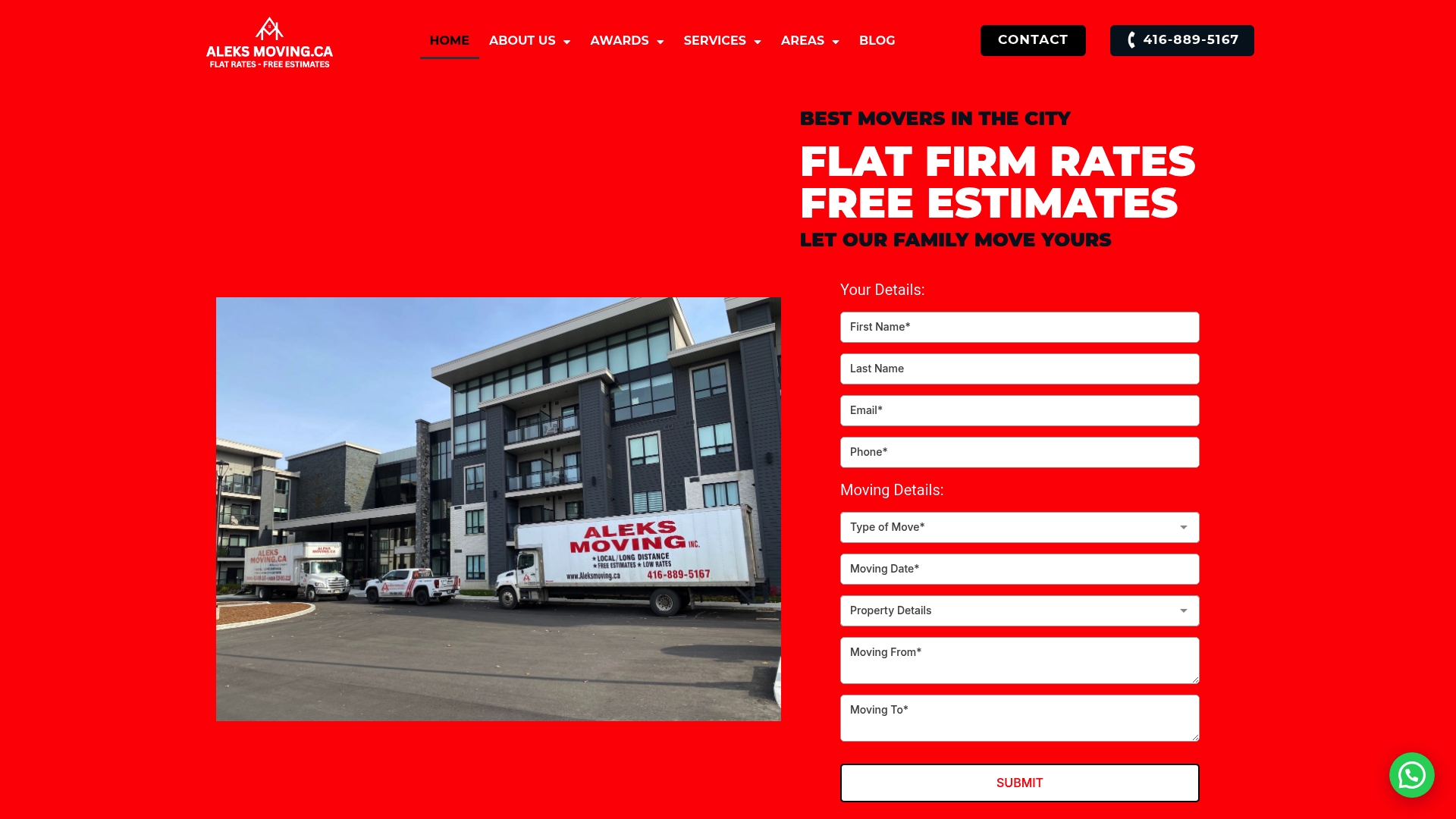
Our residential moving services cover everything from packing and transport to storage solutions for tenants in transition. We also support businesses managing commercial relocations with the same level of care and coordination. If you are ready to plan your rental property move, contact Aleksmoving today for a free upfront quote and let us take the stress out of the process.
FAQ
What are the main types of rental property relocations?
The main types are corporate-sponsored, self-directed, and government-assisted relocations, each defined by who funds and manages the move. Housing duration, short-term, mid-term, or long-term, further shapes the logistics and legal framework for each type.
How do short-term and long-term rentals differ during a relocation?
Short-term rentals under 30 days are governed by hospitality law and carry the highest monthly costs, while long-term rentals over one year offer lower costs and full residential tenancy protections. The 30-day threshold is a hard legal boundary that affects your insurance and tenant rights.
Does a corporate relocation package cover temporary housing?
Most corporate relocation packages include temporary housing as part of the benefit, either through direct billing or reimbursement. The specific coverage depends on whether the package is lump sum, reimbursement-based, or managed by a relocation management company.
What government programmes help with rental relocations in canada?
The main government-assisted categories include military PCS benefits, FEMA-style disaster assistance, federally funded project displacement support, and trade adjustment assistance. Each programme has strict eligibility rules and documentation deadlines that must be met to avoid claim rejection.
When should i commit to a long-term lease during a relocation?
Commit to a long-term lease only after you have confirmed your work assignment, assessed the local rental market, and settled into the area. Starting with a mid-term furnished rental first reduces the risk of costly early lease termination.