

TL;DR:
- Effective planning, packing, and communication are crucial for successful same-day moves.
- Prioritize essential items, label thoroughly, and seek professional help to ensure efficiency and safety.
- Conduct thorough checklists and secure valuables upon arrival to minimize post-move setbacks.
How to prepare for a same-day move: fast strategies
You wake up and realise you have to be out by tonight. It sounds impossible, but thousands of Ontario homeowners and renters face exactly this situation every year. A landlord dispute, a job relocation, or a family emergency can compress weeks of planning into a single frantic morning. The good news is that a well-structured plan turns chaos into manageable steps. With the right supplies, a clear order of operations, and a trusted moving team on standby, a same-day move does not have to cost you your sanity or your belongings.
Table of Contents
- What you need for a successful same-day move
- Step-by-step guide to packing quickly and safely
- Common pitfalls and how to avoid them
- Verifying and securing your new home
- Why most same-day moving advice misses these critical steps
- Let professionals handle your last-minute Ontario move
- Frequently asked questions
Key Takeaways
| Point | Details |
|---|---|
| Prioritise essentials | Start with critical items to avoid last-minute chaos. |
| Organise supplies | Have boxes, tape, and labels ready for quick, efficient packing. |
| Label everything | Clear labels save time and prevent confusion in your new home. |
| Avoid common mistakes | Checklists and prep help prevent forgotten items and delays. |
| Seek professional help | Same day move experts can improve speed and reduce risk. |
What you need for a successful same-day move
After you accept the reality of your timeline, the very first thing to do is stop, breathe, and make a list. Urgency rewards preparation, not panic. Planning tools, materials, and time management are critical for urgent moves, and gathering everything before you start packing saves far more time than diving in empty-handed.
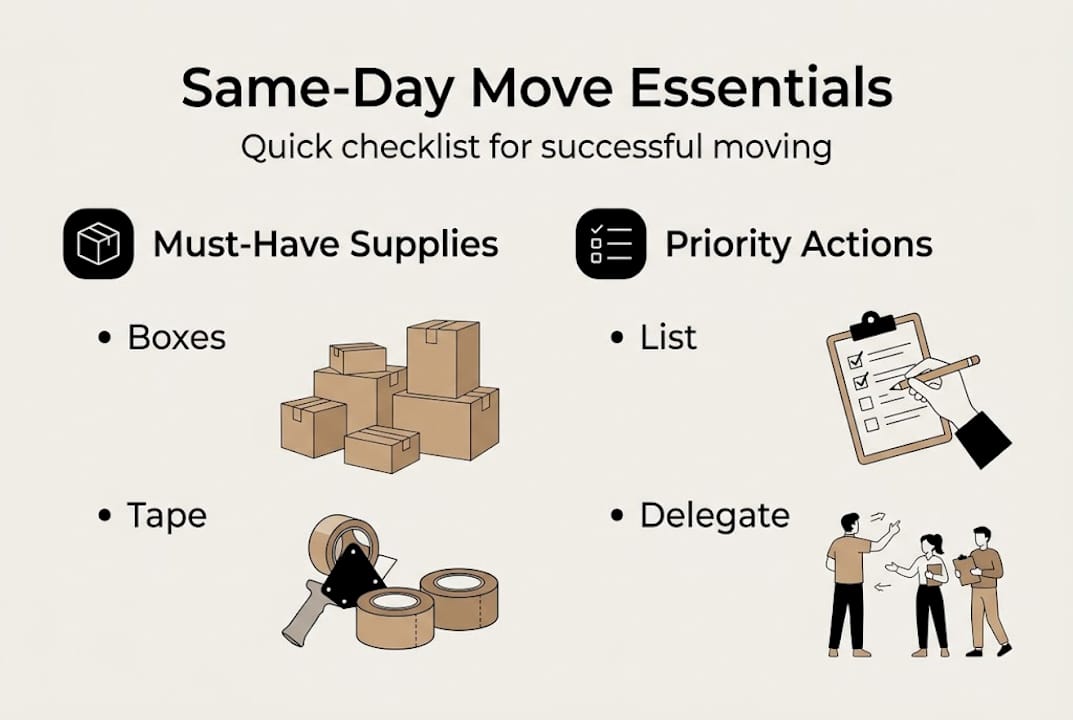
Supplies you absolutely need
Before you touch a single drawer, pull together these essentials:
- Sturdy boxes in at least three sizes: small for books and heavy items, medium for kitchen goods, large for bedding and pillows
- Packing tape and a dispenser: a dispenser alone cuts taping time in half
- Permanent markers for labelling every single box
- Moving blankets or thick towels to protect furniture corners and fragile items
- A basic toolkit: screwdriver, Allen keys, and pliers for dismantling bed frames and shelving units
- Zip-lock bags for screws, bolts, and small hardware so nothing gets lost
- A dolly or hand truck if your movers do not supply one
If you run out of boxes, use laundry baskets, suitcases, reusable grocery bags, and even garbage bags for soft items like pillows and linens. Improvisation is part of the process.
Organising your documents and communicating with your movers
Gather your important papers first: lease agreements, mortgage documents, identification, passports, insurance cards, and financial records. Place them in a single folder or binder and set it aside from everything else. This folder travels with you personally, never in the moving truck.
Call your moving company the moment you confirm the move. Be honest about the volume of belongings and the complexity of your home. Advanced move planning is ideal, but when time is short, clear communication replaces it. Tell your movers about parking restrictions, elevator availability, long hallways, or narrow staircases. Every detail you share upfront prevents a costly delay on moving day.
Setting realistic expectations
A same-day move for a bachelor or one-bedroom apartment is very different from a three-bedroom house. Be honest with yourself about what can realistically move today versus what might go into storage temporarily. Prioritise your bedroom essentials, kitchen basics, bathroom necessities, and work equipment. Everything else is secondary.
Pro Tip: Use a free timer app to break packing into 20-minute sprints with 5-minute breaks. This micro-task method keeps energy levels steady and prevents the mental burnout that kills productivity during long urgent moves.
| Priority level | Item category | Action |
|---|---|---|
| High | Documents, valuables, medication | Pack personally first |
| High | Bedroom essentials, toiletries | Pack before anything else |
| Medium | Kitchen basics, work tools | Pack in second wave |
| Low | Décor, books, non-essentials | Pack last or store temporarily |
Step-by-step guide to packing quickly and safely
Now that you know what you need, here is how to execute packing for a same-day move without missing a step. Speed and safety are not opposites. They work together when you follow a clear sequence. Efficient organisation and packing under tight timelines reduce damage significantly, so resist the urge to just throw things into boxes randomly.
- Pack your essentials bag first. This single bag or backpack holds everything you need for tonight: phone charger, medications, toiletries, a change of clothes, snacks, keys, and your documents folder. No matter what else happens today, this bag stays with you.
- Start with the bedroom. Strip the bed, roll the bedding into a garbage bag or large box, and dismantle the frame if needed. Bag all screws and label the bag with the room name.
- Move to the kitchen. Wrap breakable plates and glasses in tea towels, dish cloths, or clothing. For a packing checklist approach, group items by cabinet and label boxes accordingly so unpacking is straightforward.
- Pack the living room next. Electronics should be wrapped in blankets or clothing. Take photos of your cable setups before disconnecting anything. This five-second step saves enormous frustration when setting up your new space.
- Tackle clothing last. Leave items on hangers and lay them flat across the back seat of your car, or bundle them into large bags. These packing clothes tips prevent wrinkles and save you from refolding everything later.
- Label every box clearly. Write the room name and a brief content description on at least two sides of each box. When boxes are stacked, you can still read the label.
- Do a sweep before the truck leaves. Check every cabinet, closet shelf, under every bed, inside appliances like the fridge and washing machine, and behind doors. A whole-home packing walkthrough takes five minutes and prevents hours of regret.
Pro Tip: Keep a roll of brightly coloured tape to mark boxes containing fragile items. One strip across the top signals your movers to handle those boxes with extra care without you needing to supervise every lift.
Safety reminder: Never pack a box so heavy that one person struggles to lift it. A full box of books is a back injury waiting to happen. Split heavy items across multiple smaller boxes and pad fragile pieces generously. Your belongings and your movers’ safety both depend on reasonable box weights.
Common pitfalls and how to avoid them
After you have packed up, keep an eye out for these common issues that can derail urgent moves before you even reach the new address. Mistakes in last-minute moves often lead to lost items and significant extra costs, and most of them are entirely preventable with a few simple habits.
The biggest mistakes people make
- Skipping an inventory list. Even a quick photo log on your phone of each room before packing counts as an inventory. This protects you if anything goes missing or is damaged during transit.
- Not labelling boxes in the rush. Unlabelled boxes create a nightmare at the new address. You will open five boxes looking for the coffee maker before finding it at the bottom of a mislabelled pile.
- Packing hazardous items. Aerosol cans, paint, propane, and cleaning chemicals cannot travel in a moving truck. Set them aside to discard safely or transport in your own vehicle with proper ventilation.
- Forgetting to notify key contacts. Your employer, bank, Canada Post, CRA, and your child’s school all need your new address. Forward your mail immediately to avoid missing critical correspondence.
- Overlooking parking and building access. Ontario apartment buildings and condominiums often require elevator bookings for moves. Calling building management the morning of can still secure a reserved window and prevent costly delays.
- Underestimating help needed. One person cannot pack and move a two-bedroom apartment in eight hours alone. Call in favours from friends or book urgent moving tips support from professionals who specialise in fast-turnaround relocations.
Good vs. bad practices under time pressure
| Situation | Bad practice | Good practice |
|---|---|---|
| Packing fragile items | Tossing loosely into a box | Wrapping in cloth, labelling as fragile |
| Labelling boxes | Skipping labels to save time | Writing room and contents on two sides |
| Heavy items | Filling one large box completely | Splitting across small boxes |
| Documents and valuables | Packing in the truck | Carrying personally in a separate bag |
| Notifying contacts | Waiting until settled | Updating address same day online |
| Building access | Assuming elevator is free | Calling management to reserve elevator |
These small decisions separate a smooth relocation from a stressful one. Every minute spent avoiding these pitfalls pays you back double at the other end.
Verifying and securing your new home
Finally, with everything packed and transported to your new place, it is time to secure, organise, and verify. Arrival is not the finish line. It is the start of a new checklist, and completing all tasks after arrival minimises post-move disruption significantly.
- Do a walkthrough of your old home. Check every room, closet, cabinet, appliance interior, basement corner, garage shelf, and outdoor space. Open the dishwasher. Look under bathroom vanities. Check the attic if applicable. Many people leave behind items they only discover are missing weeks later.
- Confirm the truck is empty. Walk through the moving truck yourself before it pulls away. Check the front cab area, corners of the truck bed, and any built-in shelves or compartments.
- Inspect your new home upon arrival. Document any existing damage with photos before a single item enters the space. This protects your security deposit and establishes a clear record for your landlord or property manager.
- Secure valuables first. Bring in your personal essentials bag, documents, and any high-value items personally. Set up a designated secure spot, such as a bedroom closet, before the full unload begins.
- Update your address immediately. Canada Post offers a mail forwarding service you can set up online in minutes. Update your bank, employer, healthcare provider, vehicle insurance, and CRA account as soon as you are settled enough to sit for ten minutes.
- Check utilities and connections. Confirm that electricity, water, heating, and internet are active. If anything is missing, call the provider immediately. Do not wait until after the movers leave.
- Change the locks if renting. Ask your landlord if they can arrange a lock change or arrange it yourself with permission. Knowing who has access to your new home is a basic safety step that too many people skip.
Post-move checklist reminder: Walk through every space, confirm the truck is cleared, update your address, secure your valuables, and document the condition of your new home before the moving team leaves. These steps take less than 30 minutes and prevent weeks of regret.
Why most same-day moving advice misses these critical steps
Most guides on urgent moves focus on speed: pack fast, label fast, move fast. And while that is true, it misses the nuanced parts that actually protect you. Conventional advice rarely mentions condo elevator booking windows, or the fact that many Ontario apartment buildings charge fees if you move without prior notice to building management. These are real obstacles that slow down same-day moves significantly.
From our experience managing relocations across Ontario, we know that backup plans matter as much as primary plans. What happens if your movers are delayed? Who is your emergency contact to help carry large items? Do you have a list of storage facilities near your new address in case everything does not fit right away? These are the questions that separate prepared movers from people who end up on the phone in tears at 9 PM.
Another overlooked step is delegation. One person cannot manage packing, logistics, communication, and driving simultaneously. Assign specific roles to anyone helping you, even a friend who is just wrapping dishes or watching children so you can focus. And if you have no help available, consider urgent service options specifically designed for Ontario residents who need full-service packing and moving within hours. Pre-booking professional support, even last minute, is often the single decision that transforms a disastrous day into a manageable one.
Let professionals handle your last-minute Ontario move
When the clock is ticking and every decision counts, having a professional team beside you makes all the difference. Same-day moves demand resources, reliability, and experience that are hard to replicate on your own.

At Aleks Moving, we specialise in urgent relocations across Ontario, offering trusted moving services with flat-rate pricing and no hidden fees. Whether you need full packing support, furniture protection, or a complete emergency relocation from start to finish, our team is ready to move when you are. With over 18 years of experience and a commitment to smooth, stress-free transitions, we are here to make your same-day move feel far less daunting. Contact us today for a free upfront quote.
Frequently asked questions
What is the fastest way to prepare for a same-day move?
Focus only on essentials first, pack room by room in priority order, and delegate specific tasks to anyone available. Efficient techniques for speedy moving include batching similar items together and skipping perfection in favour of progress.
Should I hire professionals for a same-day move in Ontario?
Yes, absolutely. Professional movers provide essential support for urgent moves, bringing equipment, manpower, and experience that dramatically reduce the time and risk involved in a rushed relocation.
How can I avoid forgetting things during a rush move?
Make a quick photo inventory of each room before you pack, and do a final sweep of every space before the truck leaves. Checklists help avoid missing items and take only minutes to create.
What items should be packed first for a same-day move?
Pack valuables, important documents, medication, and daily essentials before anything else. Packing essentials first ensures your most critical items are secure and accessible no matter what happens during the move.