

TL;DR:
- Moving costs in Canada are mainly influenced by distance, timing, access conditions, and additional services. Hidden fees like lease overlap and utility activation charges can significantly increase your budget if not planned properly. To prevent surprises, obtain multiple binding estimates and account for all extra expenses before moving.
Relocation costs in Canada are shaped by six core variables: distance, volume, timing, access conditions, selected services, and hidden fees. Most people budget for the obvious ones and get blindsided by the rest. Understanding every factor affecting moving costs before you book a mover is the difference between a smooth move and a budget overrun. This guide breaks down each variable with real numbers, practical examples, and advice drawn from over 18 years of moving experience across Ontario.
1. How does distance influence moving costs?

Distance is the single biggest driver of your moving expenses breakdown. The pricing model changes entirely depending on whether you are moving locally or across provinces.
Local moves under 100 miles are priced hourly, typically costing $500–$3,500 in total. Individual movers charge $25–$100 per hour each, so a two-person crew on a four-hour local move can run $200–$800 before truck fees. The final bill depends on how long the job takes, not how far the truck travels.
Long-distance moves are priced differently, based on shipment weight and total mileage. Costs typically range from $1,500 to $8,500 or more. A move from Toronto to Vancouver will cost significantly more than one from Toronto to Ottawa, even if both households contain the same amount of furniture.
Fuel surcharges also apply on longer routes, and some carriers add them as a separate line item. Ask your mover to clarify whether fuel is included in the quoted rate or billed separately. For more detail on what defines a long-distance move in Canada, Aleksmoving’s guide on what counts as long distance is a useful starting point.
Pro Tip: Get your long-distance quote in writing with the weight estimate included. If the actual shipment weighs more than estimated, your bill will increase proportionally.
| Move type | Pricing model | Typical cost range |
|---|---|---|
| Local (under 100 miles) | Hourly per mover | $500–$3,500 |
| Long-distance | Weight and mileage | $1,500–$8,500+ |
2. What role does volume and weight play in moving expenses?
The more you own, the more you pay. Volume and weight affect truck size, labour hours, and fuel consumption on every move.
For local moves, more belongings mean more time on the clock. A one-bedroom apartment typically needs two movers for three to four hours. A four-bedroom house may require four movers for eight hours or more. That difference in labour alone can add $600–$1,200 to your bill.
For long-distance moves, weight is the billing unit. Heavier shipments cost more per kilometre. This is where decluttering before your move pays off directly.
Items that require special handling add fees on top of standard rates:
- Pianos and organs require specialty equipment and trained movers, often adding $150–$500 to the total.
- Gun safes and heavy appliances may need additional crew members or dollies.
- Antiques and artwork need custom crating, which Aleksmoving handles as a dedicated specialty service.
- Hot tubs and pool tables are priced separately and require disassembly.
Decluttering before your move is one of the most effective ways to reduce moving costs. Sell, donate, or discard items you no longer need. Every kilogram removed from your shipment lowers your long-distance bill directly.
3. How does timing affect the cost of your move?
Scheduling your move at the right time can save you hundreds of dollars. The moving industry has clear peak and off-peak periods, and prices reflect demand.
Peak moving season runs from may through september, with costs running 25–50% above off-peak months. July sits at roughly 35% above the annual average. February sits about 20% below it. That gap is real money on a $3,000 move.
Other timing factors that raise costs:
- Month-end moves (last and first days of the month) are the busiest days for movers. Availability drops and rates rise.
- Weekend moves carry a premium at most companies because demand is higher.
- Last-minute bookings leave you with fewer options and less negotiating room.
The cheapest months to move are january and february. Mid-week moves (tuesday through thursday) also tend to cost less than friday or saturday. Booking four to eight weeks in advance gives you access to better rates and more choice in crew size.
Pro Tip: If your lease allows flexibility, target a mid-month, mid-week move in the off-season. You can often negotiate a better rate when movers have open slots to fill.
4. How do access conditions and logistics impact moving fees?
Access conditions are the most underestimated factors influencing relocation costs. Movers price their time, and anything that slows them down adds to your bill.
Stairs, elevators, and long carry distances all create surcharges. If the moving truck cannot park within a reasonable distance of your front door, a shuttle vehicle may be required. Shuttle fees typically run $150–$400 and are charged on top of your base rate.
Common access issues that trigger extra fees:
- Flights of stairs at origin or destination (often $50–$75 per flight above the first)
- Elevator bookings that require advance scheduling with building management
- Long carry distances when parking is far from the entrance
- Narrow doorways or hallways that require furniture disassembly on site
- Parking restrictions in urban areas like downtown Toronto or Ottawa
Disclose every access condition to your mover before the quote is finalised. Undisclosed access conditions are one of the leading causes of surprise fees on moving day. Aleksmoving’s article on hidden fees in Ontario covers these surcharges in detail.
Pro Tip: Walk through both your current and new home before your quote appointment. Note every staircase, elevator, and parking limitation. Send photos to your mover if you can.
5. Which additional moving services affect your total cost?
Add-on services are where the moving expenses breakdown gets complicated. Each service adds real value, but each one also adds to the invoice.
Packing services range from partial to full packing, with full packing adding $300–$1,000 or more to your total. If you pack yourself, materials like boxes, tape, and bubble wrap typically cost $50–$200. Professional packing saves time and reduces breakage risk, but it is a meaningful cost to factor in.
| Service | Typical cost | Best for |
|---|---|---|
| Full packing | $300–$1,000+ | Busy households, fragile items |
| Partial packing | $100–$400 | Specific rooms or valuables |
| Furniture disassembly | $50–$200 | Large beds, wardrobes, desks |
| Storage (monthly) | $80–$300+ | Gap between move-out and move-in |
| Valuation coverage | Varies by declared value | High-value items |
Storage is another common add-on. If your new home is not ready on move-in day, short-term storage bridges the gap. Aleksmoving offers storage options for relocations that are priced separately from the move itself.
Insurance valuation coverage is worth understanding before you sign. Basic carrier liability covers a very low rate per kilogram. Full replacement value protection costs more but covers the actual value of damaged or lost items. For high-value furniture or electronics, the upgrade is usually worth the cost.
6. What are the hidden fees in moving that catch people off guard?
Hidden fees in moving are not always the mover’s fault. Many arise from the broader relocation process that most people do not budget for.
Lease overlap is the most common hidden expense, costing $800–$2,000 or more. Most leases start on the first of the month, but cleaning and moving take several days. You end up paying rent on two homes at the same time. Budget for at least one week of overlap if you are renting.
Service activation fees for utilities and internet add $200–$700 or more in unexpected costs on move-in day. Deposits vary by provider and credit history. Call your utility providers two to three weeks before your move date to confirm activation timelines and costs.
DIY truck rentals appear cheaper but hidden costs often push the real total above $2,000. Gas, insurance, equipment rental, and your own time all add up. Aleksmoving’s comparison of hiring vs. DIY moving shows where the numbers diverge.
Most families underestimate their moving budget by 30–50% because they leave out deposits, utility setups, and last-minute essentials. Add a 15–20% contingency buffer to whatever total you calculate.
Key takeaways
Distance, timing, and access conditions are the three variables that most directly control what you pay for a move in Canada.
| Point | Details |
|---|---|
| Distance sets the pricing model | Local moves are billed hourly; long-distance moves are billed by weight and mileage. |
| Timing changes the rate | Moving in peak season (may–september) costs 25–50% more than moving in february. |
| Access conditions add surcharges | Stairs, long carries, and shuttle needs raise costs; disclose them before your quote. |
| Add-on services compound quickly | Packing, storage, and valuation coverage each add $100–$1,000+ to the base rate. |
| Hidden fees are predictable | Budget for lease overlap and utility activation fees, which together can exceed $2,000. |
What I have learned about moving budgets after 18 years
The clients who get the most accurate quotes are the ones who do the most homework before the first phone call. They know their access conditions, they have a rough inventory, and they ask for a binding written estimate after a proper walkthrough. Getting at least three binding estimates is the single best way to avoid cost surprises on moving day.
What I see go wrong most often is not the mover’s quote. It is the stuff around the move. Lease overlap catches people every single time. You sign a new lease starting the first of the month, but you need three days to clean and hand over keys. Suddenly you are paying two rents. That $1,000 or more was never in the budget.
The other thing people consistently miss is utility activation. You call on moving day and find out there is a $300 deposit because of your credit history. That is not a mover problem. That is a planning problem. Call your providers three weeks out, not three days out.
My honest advice: build your moving budget in two columns. Column one is the mover’s quote. Column two is everything else. Lease overlap, utility deposits, packing supplies, cleaning fees, and a contingency buffer. Most people only fill in column one and wonder why they went over budget.
— Ali
Plan your move with Aleksmoving and know your costs upfront
Budgeting for a move gets much easier when your mover gives you a flat rate with no hidden fees. Aleksmoving has been helping Ontario families and businesses relocate for over 18 years, with transparent pricing and a team that handles everything from access challenges to specialty items.
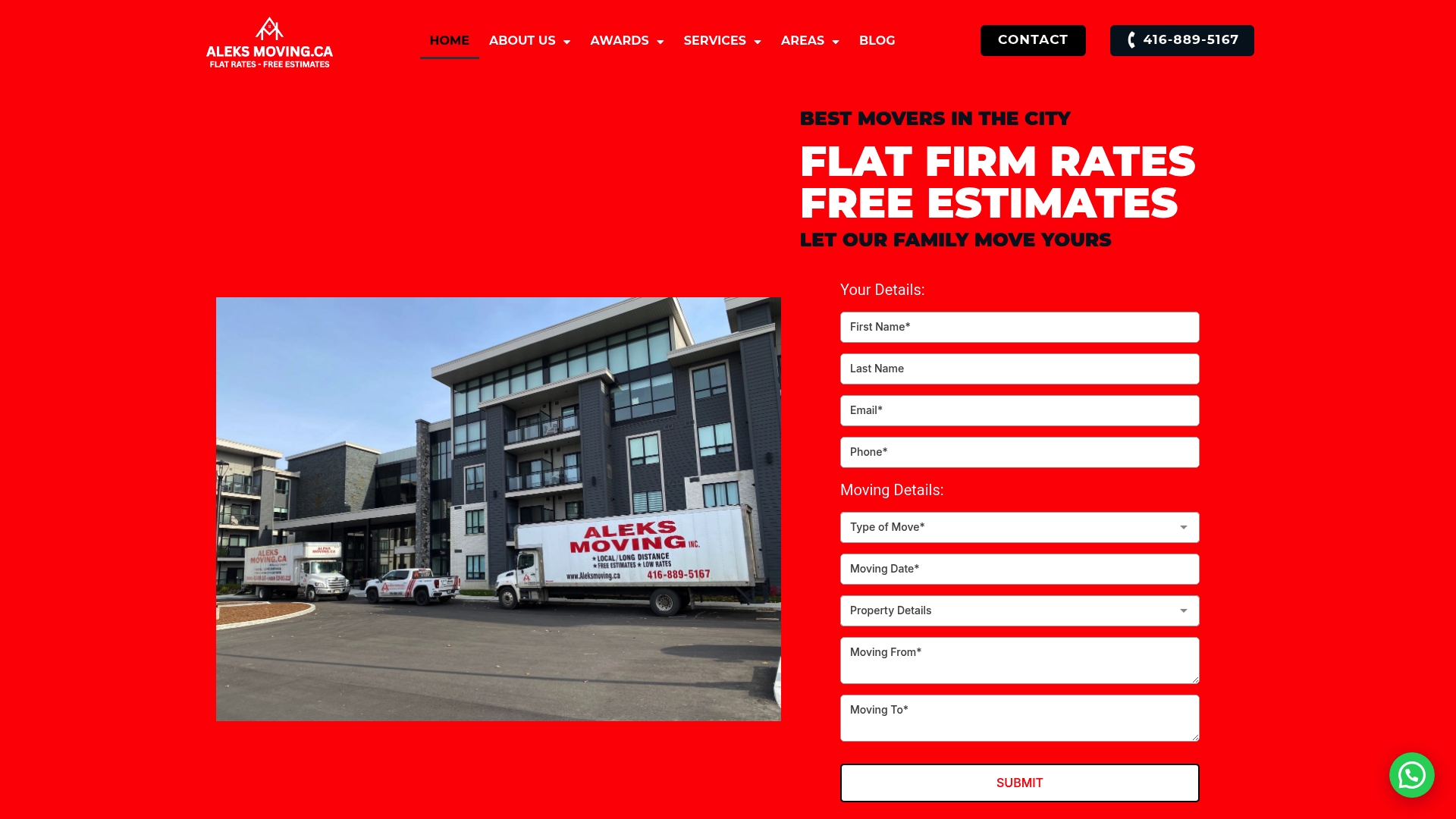
Whether you are moving across town or across the province, Aleksmoving’s residential moving services are built around clear, upfront quotes and dependable crews. We walk through your home, account for every staircase and long carry, and give you a rate you can plan around. Request a free quote today and take the guesswork out of your moving budget.
FAQ
What are the main factors affecting moving costs?
Distance, volume of belongings, timing, access conditions, and selected services are the five main factors. Hidden costs like lease overlap and utility activation fees also affect your total budget.
How much does a local move cost in Canada?
Local moves typically cost $500–$3,500, priced at an hourly rate per mover. The final total depends on crew size, hours worked, and any access surcharges.
When is the cheapest time of year to move?
January and february are the most affordable months to move. Off-peak months run about 20% below the annual average cost, and mid-week bookings add further savings.
How do I get an accurate moving estimate?
Binding estimates based on in-home or virtual walkthroughs are the most accurate. Get at least three quotes and confirm that each one accounts for your specific access conditions and any add-on services.
What hidden fees should I budget for when moving?
Lease overlap can cost $800–$2,000+ and utility activation fees can add $200–$700 or more. Budget a 15–20% contingency on top of your mover’s quote to cover these predictable extras.