

Plan the day before you lift anything: clear your pathways, stage your dollies and straps, and refuse any lift that feels too heavy for one person. Most moving injuries trace back to rushed prep, not bad luck. We build this checklist on CNESST material-handling guidance and 18 years of Aleksmoving crews putting it into practice, and the short list below turns that guidance into things you can actually do this weekend.
TL;DR:
- Using proper equipment and pacing yourself during lifting and loading can significantly reduce injury risks on moving day.
- Pack fragile items with at least 2 to 3 inches of padding and stage equipment the night before to ensure safety and efficiency.
- Call professional movers for stairs, heavy appliances over 150 pounds, or tight deadlines to prevent injuries and avoid costly mistakes.
- Safeguard household chemicals by sorting, draining fuel, and transporting hazardous materials separately with proper precautions.
- Secure your home and household during the move by labeling boxes appropriately, controlling access, and changing security codes afterward.
Table of Contents
- 10 safe moving tips for moving day
- Before moving day: clearing space and packing smart
- During the move: lifting, pacing, and loading the truck
- When it’s time to call in professional movers
- What 18 years of moves has taught our crews
- Protecting your privacy and household during the move
- Safety precautions for loading and unloading heavy furniture
- Handling hazardous materials during a move
- Emergency preparedness: first aid and injury response
- Keeping pets and kids safe during the move
- The most common moving mistake we see
- How Aleksmoving takes the risk out of moving day
- Sources
10 safe moving tips for moving day
Print this list and stick it on the fridge. Each tip pairs a rule with a quick action you can take the same day.
- Clear every pathway first. Walk the route from each room to the truck and remove rugs, cords, and toys before anyone touches a box.
- Build a timeline. Break moving day into blocks (loading, driving, unloading) so nobody feels rushed into an unsafe shortcut.
- Rent or borrow proper equipment. A hand truck, appliance dolly, and moving straps cost far less than a physiotherapy bill.
- Size your boxes to their contents. Books go in small boxes, pillows go in big ones. A box you can’t lift comfortably is packed wrong.
- Cushion fragile items properly. Leave 2 to 3 inches of padding between breakables and the box wall.
- Lift with your legs, not your back. Bend your knees, keep the load against your body, and pivot with your feet instead of twisting your spine.
- Team-lift anything over 50 pounds. U-Haul’s safety guidance treats that weight as the point where a second set of hands stops being optional.
- Take regular short breaks during active moving work to reduce fatigue-related injury risk. Drink water, stretch, and reset before fatigue starts making decisions for you.
- Load the truck heavy-to-light and floor-to-ceiling. Secure everything with straps so nothing shifts on the drive.
- Know when to call in professional movers. Stairs, appliances, and tight deadlines are exactly the conditions that turn a DIY move into an ER visit.
Before moving day: clearing space and packing smart
Trip hazards cause more moving injuries than heavy furniture does. Walk your route the night before and deal with what you find.
- Roll up rugs and runners along the path to the truck.
- Tape down loose cords and wedge interior doors open.
- Clear snow, ice, or wet leaves from the driveway and front steps if you’re moving in winter.
- Park the truck as close to the entry as the property allows, and keep any ramp at least 60 centimetres wide with the lowest gradient you can manage, per CNESST.
Packing rules matter just as much as the walkway. Choose boxes sized to what’s going inside, not the biggest box available, and double-tape the bottom seam in an H-pattern so it holds under weight.
Pro Tip: For dishes, glassware, and electronics, follow the 2 to 3 inch cushioning rule: pack crumpled paper or bubble wrap thick enough that the item never touches cardboard directly. Our guide to packing fragile items for a safe move walks through material choices room by room.
Stage your equipment the night before, too. Test that your dolly wheels roll freely, straps aren’t frayed, and ramps sit flat. Set passports, wills, cash, and jewellery aside in a bag you’ll carry yourself; federal moving guidance is blunt about this: irreplaceable items belong with you, never in a box on the truck.
During the move: lifting, pacing, and loading the truck
Good lifting technique is the single habit that separates a sore back from a real injury. Follow the sequence every time, not just for the couch:
- Stand with feet hip-width apart and close to the item.
- Bend your knees, not your waist, and grip the load firmly.
- Keep your back straight and the item close to your body.
- Lift by straightening your legs, not by yanking with your spine.
- Turn your whole body with your feet instead of twisting at the hips.
- Set the item down using the same bent-knee motion in reverse.
Treat anything heavier than approximately 50 pounds as a team lift. That’s not a suggestion; it’s the threshold U-Haul uses for a reason, and appliance dollies exist precisely to keep fridges and washers off human backs entirely.
Pace yourselves like you would a workout. Take a short break roughly every 45 minutes, or sooner if anyone’s breathing hard, and keep cool water within reach, especially on warm moving days when heat stress adds to exertion.
Pro Tip: Load the heaviest boxes low and toward the truck’s cab, then strap everything down before you close the door. An unbalanced load shifts under braking, and that’s a hazard for the driver too.
When it’s time to call in professional movers
Some jobs are worth handing off before anyone gets hurt. Appliances, staircases, tight timelines, and a shortage of helping hands are the four biggest triggers for calling professionals instead of white-knuckling it yourself.
- Fridges, washers, and dryers exceeding 150 pounds combined with any stairs.
- A move-out deadline that leaves no room for breaks or a second attempt.
- Fewer than two capable adults available to team-lift.
- Specialty items like pianos or gun safes, which often need three to four movers or dedicated rigging equipment rather than a rented dolly.
Before booking anyone, ask for a written estimate, a clear explanation of liability coverage, and a documented inventory of what’s being moved. Consumer protection guidance treats these three things as the baseline for spotting a legitimate mover versus a fraud.
What 18 years of moves has taught our crews
Experienced moving crews know where amateur moves go sideways: overloaded boxes, no dolly on-site, and nobody assigned to supervise the truck ramp.
Our crews work from a documented inventory, load heavy items first with appliance dollies, and wrap antiques and artwork with the same care outlined in our fragile-packing guide. Every quote is flat-rate, with no surprise line items added on move day.
If your relocation checks any of the “hire pros” boxes above, stairs, a piano, a deadline with no wiggle room, request a free quote and let a trained crew handle the parts of the move most likely to cause injury.
Protecting your privacy and household during the move
Moving day puts your address, your belongings, and often a full house of strangers or helpers in one place at the same time. That’s worth a little extra thought.
Label boxes by room, not by contents. A box marked “jewellery” or “medications” tells anyone passing by exactly where to look; “bedroom 2, shelf items” doesn’t. Keep a written inventory for insurance purposes, but keep it on your phone or a locked document, not taped to the outside of a box.
If you’re hiring help, confirm who’s actually showing up. Reputable moving companies send crews in company-branded shirts or vehicles and can tell you names in advance. Lock exterior doors you’re not actively using, and don’t leave the truck unattended with the roll-door open, especially in an apartment building or a busy driveway where foot traffic is constant.
Once you’ve vacated, change any smart locks, garage codes, or Wi-Fi passwords tied to the old address before handing over keys. It’s an easy step to forget in the chaos, and one of the most overlooked pieces of moving security advice.
Safety precautions for loading and unloading heavy furniture
Furniture doesn’t need to be heavy to cause an injury; it needs to be awkward. A dresser or sofa that shifts mid-carry is often more dangerous than a straightforward heavy box, because the weight moves unpredictably.
Measure doorways and stairwells before you try to force a couch through them. If it doesn’t clear with an inch to spare, remove doors from their hinges or tilt the piece rather than muscling it through at an angle that strains your grip.
Use furniture sliders or moving blankets under legs and corners so you’re sliding, not lifting, across hard flooring. On stairs, always have the stronger person on the bottom bearing the weight, and communicate verbally with every step: “down,” “left,” “stop.” Silence on a staircase is how ankles get twisted and fingers get pinched.
For anything with drawers, glass, or doors, secure them with tape or moving straps before it leaves the room. A drawer that slides open mid-carry can throw off your balance instantly, and glass cabinet doors that swing open are a genuine cut hazard. Carrying bulky items in pairs rather than solo, using wheeled equipment wherever the floor allows, cuts strain dramatically compared to a solo carry down a hallway.
Handling hazardous materials during a move
Every household collects a few items movers legally won’t touch: propane tanks, paint, aerosols, gasoline, cleaning chemicals, and old batteries. These aren’t arbitrary restrictions; they’re genuine fire and chemical risks in a packed, moving vehicle.
Sort hazardous items into a separate pile weeks before moving day, not the night before. Check your municipality’s household hazardous waste depot, most Ontario municipalities run scheduled drop-off days or permanent facilities for paint, batteries, and chemicals. Never pour chemicals down a drain or toss aerosol cans in regular garbage; both create disposal violations and safety risks for whoever handles the waste next.
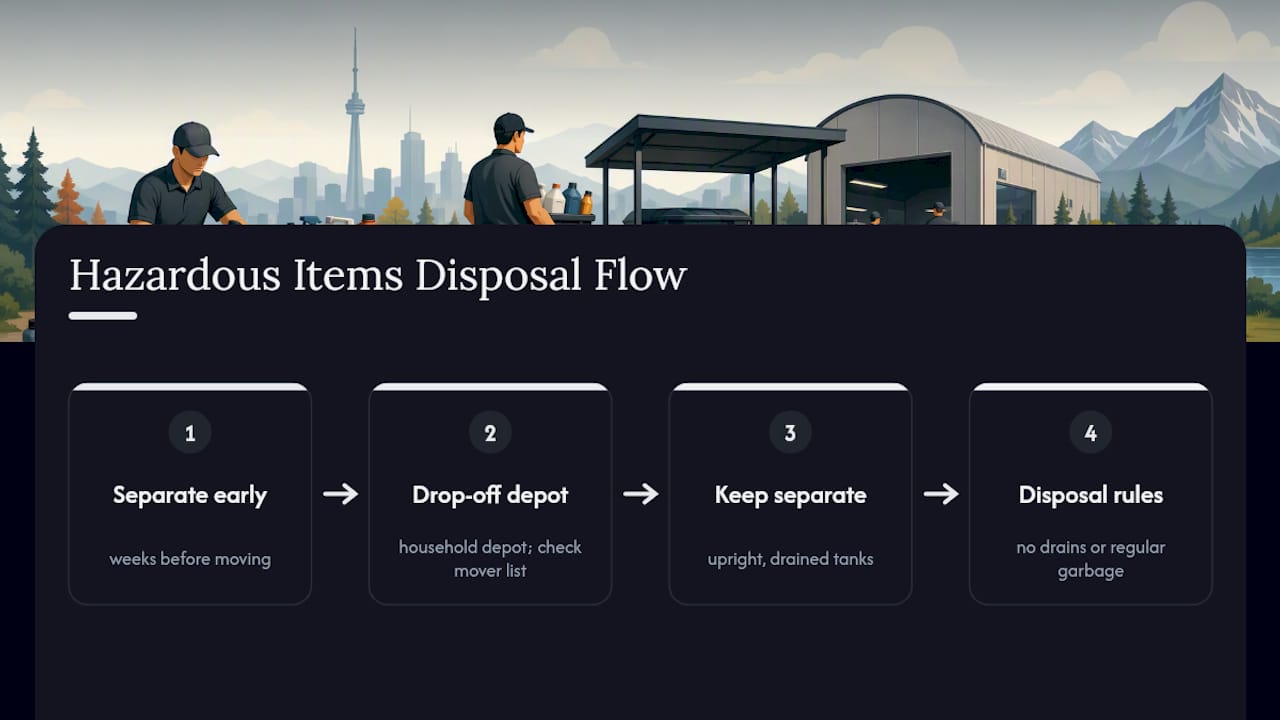
Propane tanks and gas-powered equipment (lawnmowers, generators) need to be fully drained of fuel before transport, and ideally transported upright and separately from the main load. If you’re using a moving company, ask directly what’s on their restricted-items list; it varies slightly between companies, but batteries, flammable liquids, and pressurized containers are near-universal exclusions.
If a container leaks or a chemical spills during loading, stop immediately, ventilate the area, and clean up according to the product’s label instructions rather than guessing. Keep a pair of disposable gloves in your moving-day kit specifically for this scenario.
Emergency preparedness: first aid and injury response
Pack a small first aid kit last so it’s the first thing off the truck, not buried under three boxes of kitchenware. Include adhesive bandages, gauze, antiseptic wipes, tape, ibuprofen, and a cold pack for the sprains and pinched fingers that are the most common moving-day injuries.
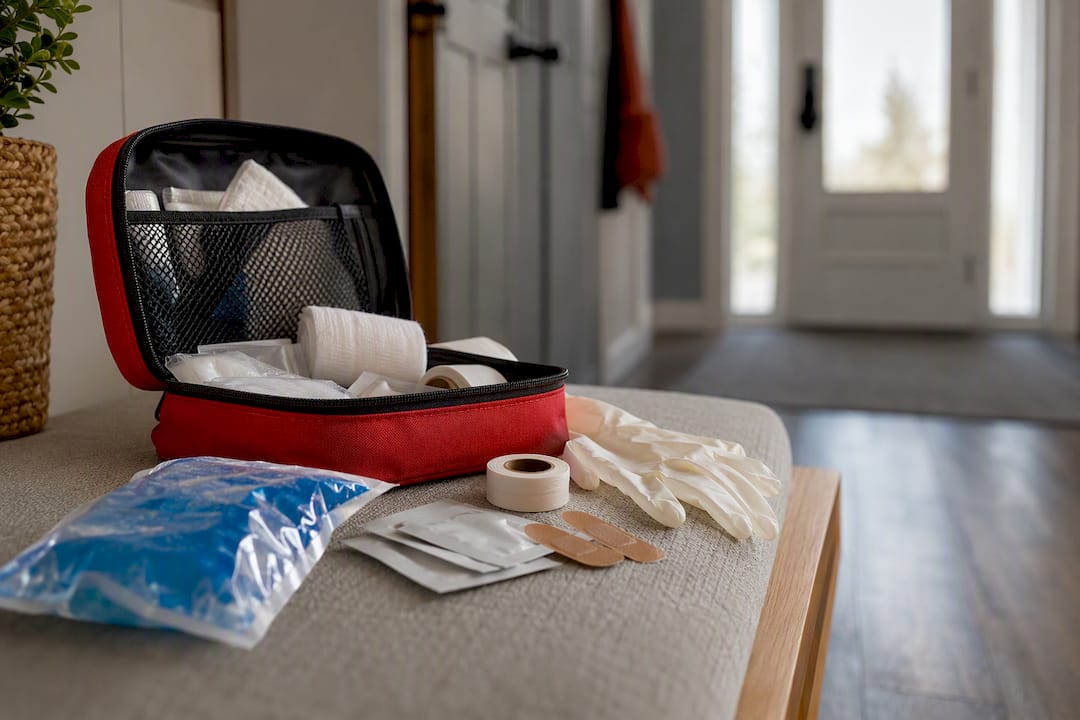
Know your nearest walk-in clinic or hospital before moving day starts, especially if you’re relocating to an unfamiliar neighbourhood. A quick note in your phone with the address saves time if something goes wrong.
If someone strains their back or twists an ankle, stop the activity immediately rather than pushing through it. Apply a cold pack, elevate if it’s a lower-body injury, and reassess whether that person should keep lifting at all that day. For cuts from glass or box cutters, clean the wound, apply pressure, and bandage before returning to work, don’t just wrap a paper towel around it and keep going.
For anything involving chest pain, difficulty breathing, or a fall from height, call emergency services rather than waiting to see if it improves. Moving-day adrenaline masks pain surprisingly well, which is exactly why more serious injuries sometimes go unaddressed for hours.
Keeping pets and kids safe during the move
A moving day with an open front door, unfamiliar people, and constant noise is disorienting for pets and stressful for kids. Both need a plan that keeps them out of the flow of traffic entirely.
For pets, the safest option is a quiet room with the door closed, a sign taped to it, or a boarding arrangement for the day if your pet is anxious around strangers. An open front door is the single biggest reason pets go missing on moving day; a startled cat or dog can bolt in seconds. Keep a leash and carrier accessible for transport once the house is clear.
For young children, designate one adult (not one of the lifters) to supervise them away from the loading zone. Boxes stacked near a doorway, an open truck ramp, and moving straps left on the ground are all genuine hazards for a toddler exploring a suddenly rearranged house. If older kids want to help, give them light, supervised tasks, carrying pillows or small bags, rather than letting them near boxes or furniture in transit.
Keep a bag with snacks, water, a favourite toy, and any medications for both kids and pets separate from the moving boxes, so nobody’s digging through a truck to find an EpiPen or a stuffed animal at 4 p.m.
The most common moving mistake we see
Overfilled boxes and flip-flops cause more sprains than furniture does. Pack boxes to a weight you can carry one-handed, and wear closed shoes with real tread, every time.
— Ali
How Aleksmoving takes the risk out of moving day
Professional moving crews bring dollies, straps, and team-lifting discipline that turn a risky DIY day into a controlled one. Experienced teams quote flat rates upfront, with no hidden fees added once the truck is loaded.

Services typically cover local and long-distance residential moves, office relocations, full packing and unpacking, and specialty handling for delicate items. Crews document inventory before loading, supervise ramp and stair work directly, and use appliance dollies rated for the weight they’re carrying rather than improvising with hand trucks.
If your move involves stairs, heavy appliances, a tight deadline, or simply not enough hands to lift safely, request a free quote for our moving services and let an experienced crew handle the parts of the day most likely to cause an injury.
Sources
- Moving safety | CNESST
- How to package fragile shipments | Purolator
- How to Stay Safe on Moving Day: 10 Essential Tips | U-Haul
- Moving advice | ISED