

Yes, winter is a reasonable time to move in Canada, and it often costs less, but it demands real preparation. Lower demand can mean better rates and more flexible dates, while cold temperatures, snow and ice bring genuine safety risks. Check the forecast, book experienced movers like Aleks Moving early, and clear and salt your access paths well before the truck arrives.
TL;DR:
- Get a written flat rate after sharing room photos, oversized items, stairs, and driveway access; confirm weather delays, extra labor, and protective supplies are included.
- For driving below 7°C, use four winter tires bearing the mountain snowflake symbol, with at least 4 mm of tread, and check road advisories.
- Let cold electronics sit at room temperature for about 24 hours before powering them on, because condensation inside can damage internal components.
- Confirm weather rescheduling fees before booking, then leave a buffer before your move out deadline so storms do not force a rushed replacement plan.
Table of Contents
- Winter moving costs and pricing expectations in Canada
- Pros and cons: trade-offs of moving in winter
- Essential safety precautions for a winter move
- Vehicle and driving preparation for winter moving trips
- A concise winter moving checklist (week and 24 to 48 hours before)
- Packing and protecting belongings during cold-weather moves
- Scheduling, hiring movers in winter and questions to ask
- Dealing with delayed or rescheduled moves due to winter weather conditions
- Tips for protecting your home and surroundings during a winter move
- How to choose a moving date with consideration of typical winter weather patterns in Canada
- Special equipment or clothing movers might require for winter moves
- Advice for moving seniors or vulnerable individuals safely during winter conditions
- Publisher perspective: what 18 years of Canadian winters has taught us
- How Aleks Moving can help with your winter move
- FAQ
- Sources
Winter moving costs and pricing expectations in Canada
Winter is the slow season for movers across Canada, and that shift in demand usually works in your favour. Fewer people move between December and February, so companies have more open dates and more room to offer competitive pricing and flexible scheduling than you’d find during the busy summer months.
That said, winter conditions can add real costs if you’re not prepared for them. A longer job because of slower loading in snow, extra time spent de-icing walkways, or a delay while roads clear can all affect your final bill.
To get an accurate quote, give your mover a clear picture of the job before moving day:
- Share photos of each room and any oversized or fragile items.
- Note driveway and walkway conditions, including stairs or narrow access points.
- Flag anything that needs special handling, like antiques, art or electronics.
- Ask whether the quote is flat-rate and what it includes if weather causes delays.
A detailed picture upfront helps your mover plan labour and equipment correctly, which keeps your final price close to your estimate.
Pros and cons: trade-offs of moving in winter
Moving in winter comes with real advantages, but it’s worth weighing them against the challenges before you commit to a date.
Advantages:
- Lower prices and more negotiating room due to reduced demand.
- Faster booking, since movers have more open slots.
- Less competition for your preferred date, including weekdays.
Challenges:
- Weather delays from snowstorms, ice or extreme cold.
- Higher risk of slips and strains on icy walkways and stairs.
- Possible moisture or salt damage to furniture and boxes if items aren’t protected.
The right balance depends on where you live. A move in coastal British Columbia looks very different from one in rural Manitoba. Your movers’ winter experience, everyone’s physical health, and how urgently you need to relocate should all factor into your decision.
Essential safety precautions for a winter move
Cold weather raises the physical demands of moving day, so a few precautions go a long way toward keeping everyone safe.
Dress in layers with a wind-resistant outer layer, and avoid overexertion. Environment and Climate Change Canada notes that pushing too hard in cold weather raises the risk of heart stress, so pace yourself when carrying heavy items or shovelling snow. Warm socks, a hat and mittens matter as much as a good coat.
Inside the home, protect your floors from slush and salt with runners, mats or shoe covers at every entry point.
Pro Tip: Keep a thermos of hot water and a bag of rock salt by the front door so you can refresh icy steps throughout the day, not just before the truck arrives.
A few more steps worth building into your plan:
- Clear and salt walkways, driveways and front steps before movers arrive.
- Pack an emergency bag with gloves, hand warmers and a first aid kit.
- Watch for winter weather alerts and be ready to pause or reschedule if conditions turn severe.
Vehicle and driving preparation for winter moving trips
If your move involves any driving, whether it’s a moving truck or your own vehicle following behind, winter tires matter. Transport Canada recommends winter tires marked with the mountain-snowflake symbol for temperatures below 7°C, since they stay flexible in the cold and improve traction and stopping distance. Install them in sets of four, with at least 4 mm of tread depth.
Before a winter trip, get a basic vehicle check:
- Test the battery, since cold weather is hard on an aging one.
- Top up coolant and switch to winter-grade washer fluid.
- Check wiper condition and tire pressure, which drops as temperatures fall.
For longer or intercity moves, check provincial travel resources like Ontario 511, DriveBC or 511 Alberta before you leave. Some BC mountain passes require winter tires or chains from October 1 to April 30.
A concise winter moving checklist (week and 24 to 48 hours before)
A little structure in the days leading up to your move keeps winter-specific risks from catching you off guard.
Ahead of the move:
- Confirm your mover’s availability and get a written flat-rate quote.
- Photograph each room and note access points for your mover.
- Order winter-grade packing materials, including moisture-resistant wrap.
Shortly before the move:
4. Clear and salt all walkways, stairs and driveway access.
5. If possible, leave the heat on at your new home ahead of move-in.
6. Pack an essentials box with warm clothing, bedding and basic toiletries.
Day of the move:
7. Keep walkways clear throughout the day as snow continues to fall.
8. Offer warm drinks and indoor breaks to your crew and family.
9. Keep a shovel, salt and a charged phone within easy reach.
Pro Tip: Lay down old towels or cardboard just inside your entryway. It catches slush and salt before it reaches your floors.
Packing and protecting belongings during cold-weather moves
Cold and moisture are harder on your belongings than most people expect, so a bit of extra care in how you pack pays off later.
Give sensitive electronics, like TVs and computers, about 24 hours at room temperature before powering them on after a cold-weather move. Moving them from a freezing truck straight into a warm house can cause condensation to form inside, which risks damaging internal components.
For everything else:
- Wrap upholstered furniture and mattresses in moisture-resistant plastic.
- Seal boxes well to keep out wet snow and road salt during loading.
- Pad furniture legs and use sliders to protect hardwood and tile floors.
- Label one box clearly as “open first,” with space heaters, bedding and towels inside.
These small steps prevent the most common winter moving damage: warped wood, rusted metal and water stains on fabric.
Scheduling, hiring movers in winter and questions to ask
Not every moving company handles winter conditions the same way, so it’s worth asking a few direct questions before you book.
- Ask how much winter moving experience the crew has and what protective gear they use for floors and furniture.
- Confirm their policy for weather-related delays or rescheduling, including any added fees.
- Clarify whether the flat-rate quote includes runners, snow clearing and extra labour time.
- Find out if there’s a winter surcharge and, if so, what it covers.
At Aleks Moving, we offer flat-rate pricing with no hidden fees across our residential, packing and bin rental services.
Dealing with delayed or rescheduled moves due to winter weather conditions
Weather delays are one of the most common disruptions to a winter move, and having a plan in place keeps a postponed date from becoming a bigger problem.
If a storm is forecast for your moving day, talk to your mover as early as possible. Most reputable companies build flexibility into their winter schedules and would rather reschedule a day or two than risk an unsafe move. Ask in advance what their cancellation and rescheduling policy looks like, including whether a weather delay comes with any added cost.
If your move does get pushed back, a short-term storage solution can bridge the gap, particularly if you’ve already given notice on your old place or your new home isn’t quite ready. Keeping belongings in a secure, climate-controlled space protects them from temperature swings while you wait out the weather.
It also helps to build a buffer into your original plan. Booking before you absolutely need to be out gives you room to shift without scrambling for a last-minute option. For long-distance or intercity moves, where highway closures are more likely, that buffer matters even more since rerouting around a closed stretch of highway can add hours to a trip.
Stay in regular contact with your moving company in the days leading up to the date. A company with solid winter experience will flag concerns early rather than leaving you to find out on moving morning.
Tips for protecting your home and surroundings during a winter move
Protecting the home you’re leaving and the one you’re moving into matters just as much as protecting your belongings.
At your current home, clear snow and ice from the driveway, walkways and any steps well before the truck arrives. A thin layer of rock salt or sand applied ahead of time gives it time to work before boots and dollies start crossing it repeatedly.
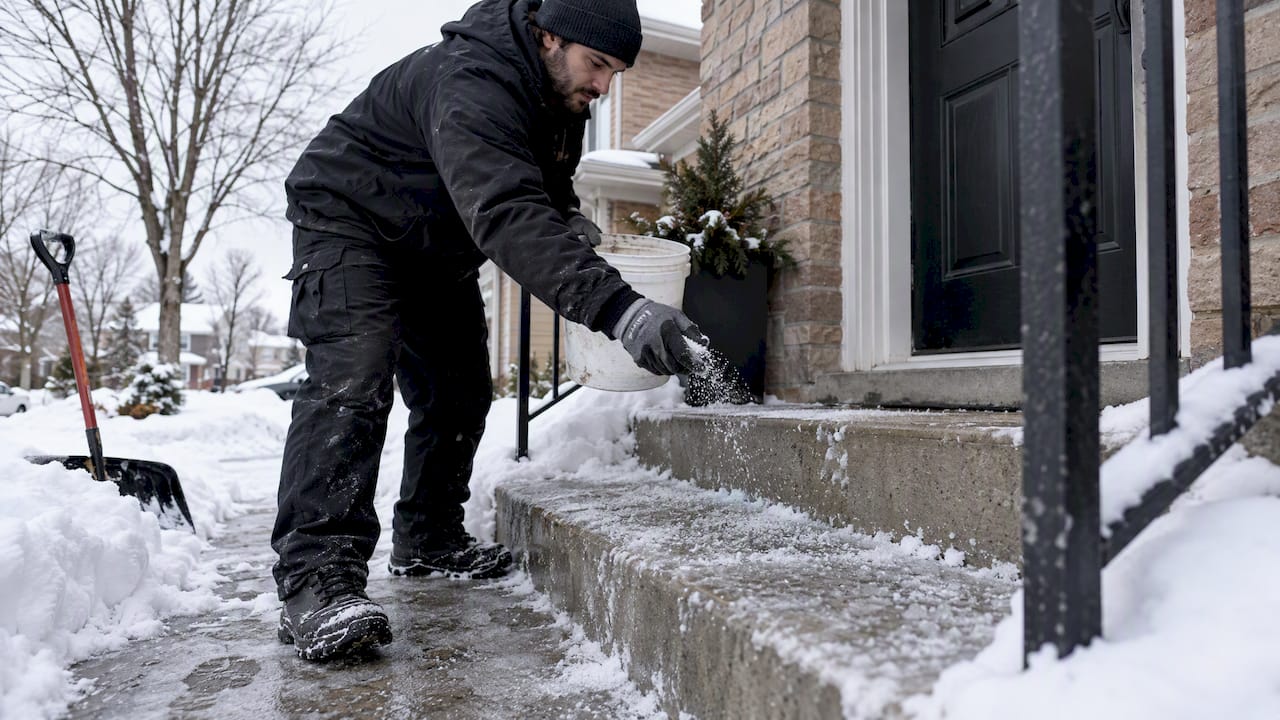
Pay attention to entry points specifically. Front doors and side doors see heavy traffic during a move, and melting snow tracked in repeatedly can pool and seep into flooring or baseboards. Placing thick mats or cardboard just inside each entrance catches most of that moisture before it spreads.
Watch your eavestroughs and gutters too, especially if your move happens during a thaw. Ice damming can send water back under roof shingles, so clearing visible ice buildup near entry points before moving day avoids an unpleasant surprise.
At your new home, the same principles apply in reverse. If you can, shovel and salt the walkway before the truck arrives rather than after the first trip inside. A few minutes of prep here saves considerable cleanup later, both on your floors and on the furniture itself.
How to choose a moving date with consideration of typical winter weather patterns in Canada
Winter weather varies enormously across Canada, so your ideal moving window depends heavily on where you live and where you’re headed.
Coastal regions in British Columbia tend to see milder temperatures but more rain and the occasional snow event that catches drivers off guard. The Prairies and Northern Ontario face consistently colder temperatures and more reliable snow cover, which can actually make roads more predictable than a freeze-thaw cycle. Southern Ontario and Quebec often swing between thaw and freeze, which creates icy conditions that are arguably more hazardous than steady cold.
Where possible, avoid scheduling your move around major storm systems or extended cold snaps. Snowfall patterns vary by region, so if your timeline allows flexibility, compare the forecast and local conditions when choosing a date.
Weekdays also tend to have more availability than weekends throughout the season, since movers see less demand overall. If your schedule allows for a Tuesday or Wednesday move instead of a Saturday, you’ll likely have an easier time booking your preferred crew.
Whatever date you land on, build in flexibility. A buffer around your target date gives you room to shift if a storm system moves in unexpectedly.
Special equipment or clothing movers might require for winter moves
Winter moves call for a few extras that don’t come up during a summer relocation.
For the crew and anyone helping out, insulated waterproof boots with solid tread make the biggest difference in preventing slips on icy surfaces. Layered clothing that can come off as people warm up from physical work, along with waterproof gloves that still allow a solid grip on boxes and furniture, rounds out the basics.
On the equipment side, floor runners and furniture pads protect hardwood and tile from slush and salt tracked in from outside. Plastic shoe covers at the door reduce how much moisture makes it past the entryway in the first place. A sturdy shovel and a supply of rock salt or sand should be on hand both at the home you’re leaving and the one you’re moving into.
For the truck itself, tire chains or winter tires are worth confirming with your moving company, particularly for longer routes through regions prone to heavy snowfall. Extra moving blankets also do double duty in winter, insulating furniture from both temperature swings and moisture during loading and transport.
Advice for moving seniors or vulnerable individuals safely during winter conditions
Winter moves carry extra risk for seniors and anyone with mobility or health concerns, so a bit of extra planning protects both safety and peace of mind.
Icy walkways and steps are a leading hazard, so clearing and salting access points well ahead of time matters even more than usual. Where possible, arrange for a senior or vulnerable family member to wait inside a warm space rather than overseeing the move from outside in the cold.
Cold exposure is a genuine concern too. Environment and Climate Change Canada points out that overexertion in cold weather increases the risk of heart stress, which is worth keeping in mind for anyone with a heart condition or limited stamina. Dressing in warm layers, taking frequent indoor breaks and avoiding heavy lifting entirely are reasonable precautions.
Our Seniors Moving service is built around this kind of careful, unhurried approach. Planning extra time into the schedule, rather than rushing to finish everything in a single day, also reduces pressure on everyone involved.
Publisher perspective: what 18 years of Canadian winters has taught us
Years of moving families and businesses through Canadian winters have shaped most of the advice in this guide. We’ve learned that preparation beats improvisation every time, whether that means salting a driveway or giving a client’s electronics about 24 hours to adjust to room temperature. Our flat-rate pricing and services reflect lessons learned on real moving days, not theory.
— Ali
How Aleks Moving can help with your winter move
Winter conditions call for a mover who plans for them, not one who’s caught off guard. We offer residential moving, packing services, bin rental, storage and long-distance relocation, all with flat-rate pricing and no hidden fees.

If you’re planning a move this season, request a free quote and ask us directly about our services. Reach out through our local moving services page to get started.
FAQ
Do people actually move during the winter in Canada?
Yes, since many Canadians prioritize job changes, lease dates or family needs over waiting for warmer weather. Statistics Canada data shows most moves happen within the same province, often tied to housing upgrades or employment rather than seasonal preference.
What should I look for in a reliable long-distance mover?
Look for a company with clear flat-rate pricing, documented winter driving experience, and a transparent policy on weather-related delays. Ask directly how they protect belongings from cold and moisture during transport, since that detail separates experienced movers from less prepared ones.
Which parts of Canada have the mildest winters?
Coastal British Columbia, particularly areas like Victoria and Vancouver, generally sees milder winter temperatures than the rest of the country, though it comes with more rain and occasional ice events. Even in milder regions, checking provincial travel conditions before a move remains worthwhile.
What’s the most budget-friendly way to move cross-country in winter?
Booking during the winter off-season, choosing a weekday date and getting your quote locked in as flat-rate upfront are the most reliable ways to control cost. Comparing quotes early and asking what’s included, like packing materials and winter protections, helps you avoid surprise add-ons.
How far in advance should I book a winter move?
Booking ahead gives you a better shot at your preferred date, since winter may have more open availability than peak season but experienced crews can still fill up around the holidays. Early booking also gives your mover time to plan around any forecasted storms.
Sources
- Using winter tires
- Canada
- Why do people move within Canada? A study on the reasons for internal migration and mobility using the Canadian Housing Survey