Skip to content


TL;DR:
- Proper management of tenant move workflows minimizes vacancy and protects rental income. Starting inspections and marketing early, with clear documentation and vendor scheduling, ensures efficient turnovers. Digital photo records and proactive communication reduce disputes and accelerate tenant transitions.
Tenant move management is the coordinated process of guiding a rental unit from one occupancy to the next with minimal vacancy and maximum documentation. Every vacant day on a $1,800 unit costs approximately $60 in lost revenue, and poor turnover management routinely adds one to two extra vacant weeks to that gap. Knowing how to manage tenant moves as a structured workflow, rather than a series of reactive tasks, is the single most effective way to protect your net operating income. This guide covers the full pipeline from move-out notice to new tenant move-in, with practical steps for inspections, vendor scheduling, and tenant communication.
How to manage tenant moves: the five-stage pipeline
A five-stage tenancy turnover workflow is the recognised industry framework for reducing vacancy and controlling costs. The five stages are: move-out notice, pre-move-out inspection, make-ready preparations, marketing and screening, and move-in record creation. Each stage produces a deliverable that feeds directly into the next. Skipping or delaying any stage creates a “dead gap” where the unit sits vacant and unproductive.
Here is how each stage works in practice:
| Stage | Key tasks | Responsible party | Output |
|---|---|---|---|
| Move-out notice | Confirm dates, send instructions | Property manager | Signed notice, move-out checklist |
| Pre-move-out inspection | Walk unit, document condition | Property manager | Repair scope, photo record |
| Make-ready | Repairs, cleaning, painting | Vendors | Completed unit, cost invoices |
| Marketing and screening | List unit, qualify applicants | Property manager | Signed lease |
| Move-in record | Walk unit with new tenant | Property manager + tenant | Signed condition report |
The table above shows that every stage has a clear owner and a defined output. That clarity prevents the most common cause of extended vacancies: nobody knowing whose job it is to move the process forward.
- Confirm the move-out date in writing within 24 hours of receiving notice.
- Send the outgoing tenant a written move-out checklist at the same time.
- Book the pre-move-out inspection before the tenant even starts packing.
- Start the make-ready vendor list the moment you have the inspection scope.
- Create the new move-in condition report before handing over keys.
Pro Tip: Keep a single shared document or property management platform entry for each unit turnover. Every stage update, vendor invoice, and photo goes into that one record. You will never chase paperwork again.
How to conduct a pre-move-out inspection
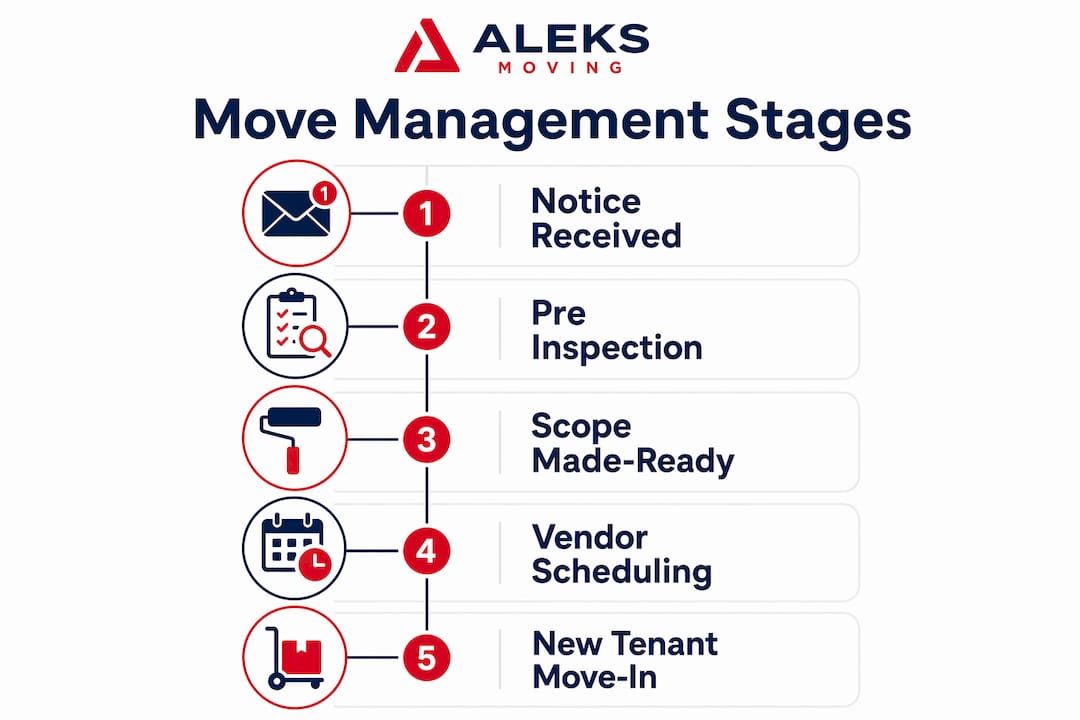
Pre-move-out inspections should occur 14 days before lease end to identify needed repairs early and secure vendor availability. That two-week window gives you time to order non-standard parts, book tradespeople, and price the work before the unit is even empty. Waiting until move-out day to assess the unit is the single most avoidable cause of extended vacancies.
What to look for during the inspection
Walk every room with a checklist and a camera. Focus on the items that take the longest to repair or source: flooring damage, appliance faults, window hardware, and any custom fixtures. Photograph everything from multiple angles and timestamp each image. Those photos become your deposit deduction evidence if a dispute arises later.
Common repair categories identified during pre-move-out inspections include:
- Flooring: scratches, stains, or lifting edges that require refinishing or replacement. Floor refinishing services that offer fast rental turnaround can complete a screen and recoat in a single day, keeping your turn window tight.
- Walls: nail holes, scuffs, and paint touch-ups or full repaints.
- Appliances: burner elements, dishwasher racks, refrigerator seals.
- Plumbing fixtures: dripping taps, slow drains, toilet mechanisms.
- Locks and hardware: worn keys, stiff deadbolts, loose door handles.
Preparing the make-ready scope
Once the inspection is complete, convert your notes into a written scope of work. Assign each item to a vendor category: cleaning, painting, flooring, plumbing, or general maintenance. Scheduling locksmith services, cleaning, painting, and maintenance with precise timing creates a smooth turn window usually completed within 7–14 days. That window only stays tight if you book vendors before the unit is vacant, not after.
Pro Tip: Send the written scope to your vendors the same day as the inspection. Ask for a confirmed booking date by return. A verbal “I’ll try to fit you in” is not a booking.
How to coordinate vendor scheduling and marketing to minimise vacancy
Marketing the unit should begin as soon as the move-out notice is received, not after the unit is empty. That single shift in timing is the most underused tactic in residential property management. A well-written listing with current photos can attract qualified applicants while the outgoing tenant is still in residence, so you have a signed lease ready before the make-ready is even finished.
Locking in vendor appointments before vacancy day
Dead days between tenant move-out and vendor access are the primary driver of lost net operating income. The fix is simple: confirm every vendor appointment before the outgoing tenant hands back keys. Cleaning, painting, and flooring crews should have a confirmed date on the calendar by the time the pre-move-out inspection report is written.
Treat every vendor task as a tracked, dated request to prevent delays. Verbal or text confirmations lead to gaps and missed appointments. Use a written work order, even a simple email with the unit address, the scope, and the confirmed date. That paper trail also protects you if a vendor invoices for work not completed.
Common scheduling pitfalls and how to avoid them:
- Booking vendors after vacancy: Always pre-book. Confirm dates during the inspection week.
- Overlapping trades: Schedule cleaning after painting, and flooring after cleaning. Sequence matters.
- No follow-up: Send a reminder 48 hours before each vendor appointment.
- Missing materials: Order paint, grout, or hardware the day the scope is written, not the day the vendor arrives.
- Untracked invoices: Log every invoice against the unit record immediately on receipt.
For landlords managing multiple units, the Ontario property manager checklist from Aleksmoving provides a practical framework for keeping vendor coordination on track across several turnovers at once.
What are best practices for tenant communication throughout the move process?
Early tenant communication, including clear move-out instructions and expectations, improves unit condition and avoids last-minute disputes. Tenants who receive a detailed move-out checklist at notice time consistently return units in better condition than those who receive instructions only at the end of the lease. The checklist removes ambiguity about cleaning standards, key return procedures, and damage charge schedules.
Communication touchpoints for outgoing tenants
- At notice receipt: Send a written move-out checklist covering cleaning expectations, key return, and forwarding address requirements.
- 14 days before lease end: Confirm the pre-move-out inspection date and remind the tenant of any outstanding obligations.
- 48 hours before move-out: Send a final reminder with the exact key return time and the deposit refund timeline.
- Within 24 hours of move-out: Confirm receipt of keys and advise the tenant when to expect the deposit refund or deduction statement.
Communication touchpoints for incoming tenants
- At lease signing: Provide a welcome package with move-in date, key collection details, and emergency contact numbers.
- 48 hours before move-in: Confirm the unit is ready and the move-in inspection appointment time.
- At move-in: Walk the unit together, sign the condition report, and photograph any pre-existing marks together.
Digital inspections with photos and timestamps reduce security deposit disputes and speed refunds. Transparent documentation gives both parties a shared, defensible record. When a tenant can see timestamped photos of the unit condition at both move-in and move-out, disputes become rare and resolutions become fast.
The first 30 days after move-in are critical for retention. Unresolved maintenance issues in that window drive higher future costs and early lease breaks. A thorough make-ready and a signed condition report at move-in set the right tone and reduce emergency calls in the first month.
For landlords new to the process, the essential moving tips for Ontario landlords from Aleksmoving covers the practical side of facilitating smooth tenant transitions from both the property and the tenant’s perspective.
Key takeaways
Effective tenant move management requires a five-stage pipeline, early vendor booking, proactive marketing, and documented communication at every step to protect revenue and tenant satisfaction.
| Point | Details |
|---|---|
| Start marketing at notice | List the unit the day you receive the move-out notice, not after vacancy. |
| Inspect 14 days early | Pre-move-out inspections give you time to book vendors and order materials before the unit empties. |
| Track every vendor task | Use written work orders and confirmed dates; verbal agreements cause dead days and lost income. |
| Document with photos | Timestamped digital inspections reduce deposit disputes and speed refunds for both parties. |
| Prioritise move-in quality | A fully ready unit on day one reduces emergency maintenance calls and improves tenant retention. |
What I have learned from years of watching turnovers go wrong
The most expensive mistake I see property managers make is treating each stage of a turnover as a separate event. They wait for the tenant to leave before calling the cleaner. They wait for the cleaner to finish before calling the painter. They wait for the painter before listing the unit. That sequential thinking turns a 10-day turnover into a 30-day vacancy, and at $60 a day, that is a $1,200 mistake on a single unit.
Viewing turnover as a continuous pipeline rather than isolated tasks is the shift that separates efficient operators from reactive ones. The move-out walkthrough defines the make-ready scope. The make-ready documentation becomes the deposit deduction proof and the new baseline condition record. The move-in record closes the loop for the next cycle. Every stage feeds the next automatically when you set it up that way.
The second thing I have learned is that the move-in experience sets the tone for the entire tenancy. A tenant who walks into a freshly painted, clean, fully functional unit on day one is far less likely to call you about minor issues, far more likely to renew, and far more likely to return the unit in good condition. The make-ready is not just a cost centre. It is a retention investment.
Digital documentation changed everything for the managers I work with. A shared photo record with timestamps removes the “he said, she said” dynamic from deposit disputes entirely. If you are still doing paper-based inspections, switching to a digital format is the single highest-return change you can make this year.
— Ali
Aleksmoving: reliable support for tenant relocations in Ontario
Property managers who coordinate tenant moves regularly know that the physical relocation itself can be the most unpredictable part of the process. A tenant who struggles to find a reliable mover delays key handback, disrupts your vendor schedule, and extends your vacancy window.
Aleksmoving has over 18 years of experience supporting residential and commercial relocations across Ontario. Our professional moving services are available at flat-rate pricing with no hidden fees, making it straightforward for property managers to recommend us to outgoing or incoming tenants with confidence. We handle local moves, long-distance relocations, packing, and storage, so tenants have a dependable partner for every stage of their move. When the physical move goes smoothly, your turnover timeline stays on track. Contact Aleksmoving for a free upfront quote and give your tenants a move they can count on.
FAQ
What is tenant move management?
Tenant move management is the coordinated process of handling all tasks between one tenancy ending and the next beginning, covering inspections, repairs, marketing, and documentation to minimise vacancy.
How early should a pre-move-out inspection be scheduled?
Industry best practice places the pre-move-out inspection 14 days before lease end, giving property managers time to book vendors and order materials before the unit is vacant.
When should a landlord start marketing a vacant unit?
Marketing should begin the day the move-out notice is received, not after the unit empties. This approach helps secure a new tenant before the make-ready is even complete.
How do digital inspections reduce deposit disputes?
Timestamped photos taken at both move-in and move-out create a shared, defensible record for both parties, removing ambiguity about pre-existing damage and speeding the refund process.
What is the typical turnover window for a rental unit?
A well-coordinated turnover, with vendors pre-booked and marketing started at notice, is typically completed within a 7–14 day window from move-out to new tenant move-in.