Skip to content


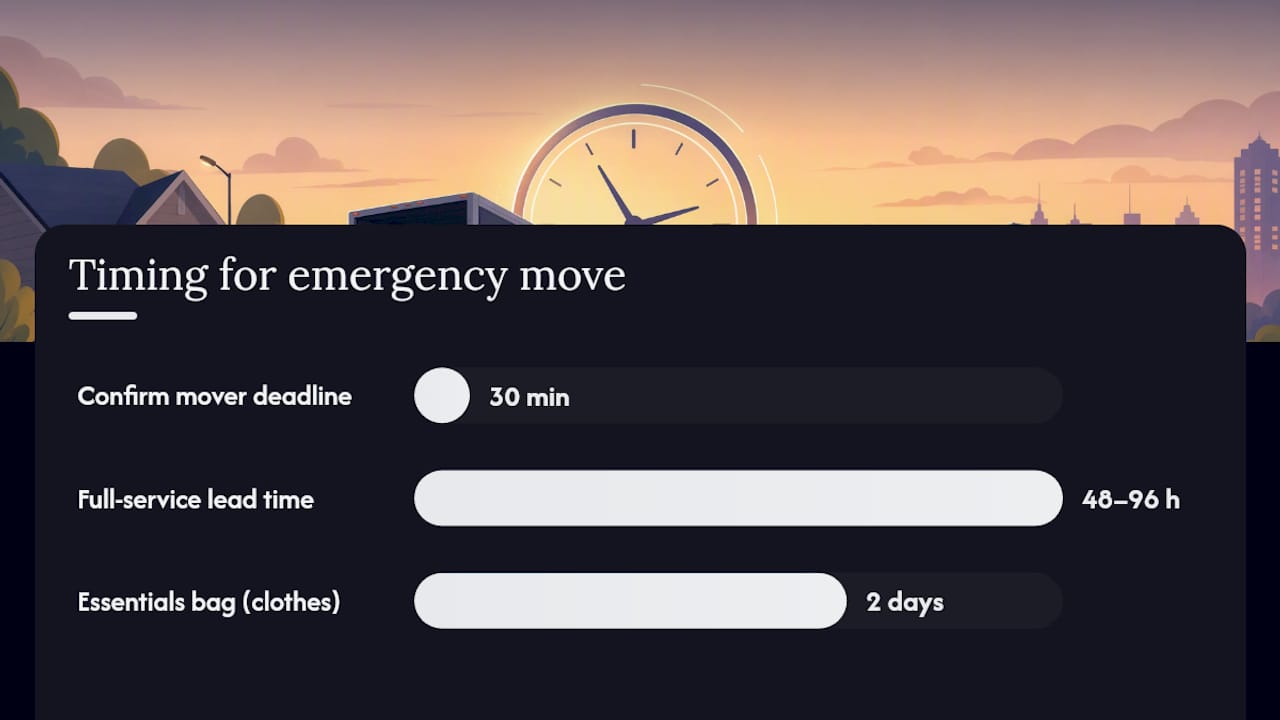
Lock a mover or truck first, then pack your essentials and confirm a written estimate before you do anything else. That single sequence, done in the first 30 minutes, determines whether your emergency move goes smoothly or spirals. Any move booked under 72 hours qualifies as a true emergency booking, which means fewer available crews and a short-notice premium on most quotes.
Here is what to do right now:
- Call multiple companies at once. Offer two flexible arrival windows rather than a fixed time. Dispatchers prioritise callers who supply an exact origin and destination address, a clear inventory (number of bedrooms and large furniture pieces), and scheduling flexibility.
- Demand a written estimate. A phone-only quote is unreliable and invites surprise fees. Get confirmation by text or email before you commit.
- Assemble an essentials bag. Pack government-issued ID, passports, medications, phone chargers, two days of clothing, cash, house keys, and your contacts list. Keep it in your car, not on the truck.
Secure transportation before you pack a single box. Rental trucks are often available same day; labour-only crews typically need 24–48 hours; full-service movers generally require 48–96 hours off-peak. Knowing your lead time tells you which option is actually on the table.
Pro Tip: When calling movers, say “I have a two-bedroom, I’m flexible between 8 AM and noon or 2 PM and 5 PM” rather than “I need someone today.” Specific inventory and flexible windows are the two fastest ways to move up a dispatcher’s priority list.
Key takeaways
Getting a mover confirmed and a written estimate in hand within the first 30 minutes of an emergency move is the single most important action you can take to protect your time, money, and belongings.
| Point | Details |
|---|---|
| Secure transport first | Book a mover or truck before packing; full-service crews typically need 48–96 hours off-peak. |
| Demand a written estimate | Never commit to a phone-only quote; get the rate, inventory, and cancellation terms in writing. |
| Pack an essentials bag | ID, medications, chargers, cash, and two days of clothing travel with you, not on the truck. |
| Confirm building access early | Reserve the elevator and parking before the crew arrives to avoid costly delays. |
| Declare high-value items | Released-value default coverage is roughly $0.60 per pound; elect full-value protection for antiques, pianos, and artwork. |
| Aleksmoving for urgent moves | Flat-rate pricing, same-day/next-day scheduling, and 18+ years of Ontario experience make Aleksmoving a dependable choice for emergency relocations. |
Table of Contents
- Your emergency moving checklist: 10 steps before the crew arrives
- What professional movers will and won’t do on short notice
- How do you book and confirm a last-minute move?
- What access and parking details do you need to confirm right away?
- How do you protect antiques, pianos, and artwork on a rushed timeline?
- What should you pack yourself when time is short?
- What do you check after the movers deliver everything?
- What does a realistic same-day or next-day move timeline look like?
- What we have learned from 18+ years of emergency moves
- Aleksmoving handles emergency moves across Ontario
- Sources
Your emergency moving checklist: 10 steps before the crew arrives
Follow this in order. The higher the step number, the more it can wait, but none of these should be skipped.
- Secure a mover or truck. Call five to eight local companies and confirm licences and a written quote immediately.
- Pack your essentials bag. Documents, medications, chargers, cash, keys, and a two-day clothing supply go with you, not on the truck.
- Reserve building access. Book the elevator, loading dock, or freight entrance right after you confirm the mover.
- Photograph every room and valuable. These photos are decisive evidence if a damage claim arises later.
- Confirm insurance and the written estimate. Verify the rate basis (flat or hourly), valuation coverage, and cancellation terms.
- Label priority boxes. Mark the first boxes you will need at the destination: bedding, toiletries, kitchen basics, medications.
- Disassemble large furniture. Bed frames, desks, and shelving units should be broken down before the crew arrives.
- Clear parking and elevator access. Notify your building manager and, if needed, contact the municipality about a temporary parking permit.
- Do a final walkthrough. Check closets, storage lockers, balconies, and appliance interiors before the truck leaves.
- Confirm your payment method. Know whether the company accepts credit card, e-transfer, or cash, and have it ready.
Pro Tip: Stage packed boxes by room near the front door before the crew arrives. Movers charge by time on hourly jobs, and a well-staged home can shave one to two hours off the bill.
What professional movers will and won’t do on short notice
A professional crew handles the heavy lifting, loading, transport, and unloading. Your job is to handle what they legally or practically cannot.
What the crew does:
- Disassemble and reassemble standard furniture (beds, desks, shelving)
- Wrap and pad large furniture and appliances
- Load and secure items on the truck
- Transport and unload at the destination
What you must handle before they arrive:
- Packing small items, breakables, and personal valuables
- Securing parking permits and elevator reservations
- Providing clear access to both addresses
- Transporting hazardous materials (paint, propane, cleaning chemicals), perishable food, and irreplaceable personal items
Always insist on a written order for service or bill of lading before the truck moves. This document confirms the agreed price, inventory, and liability terms. Without it, you have no enforceable record if something goes wrong.
Movers will typically decline to transport flammable liquids, compressed gas, and perishable food. High-value personal items such as jewellery, cash, and irreplaceable documents should always travel in your personal vehicle, not on the truck.
How do you book and confirm a last-minute move?
Moves booked under 72 hours carry a short-notice premium on most bookings. Knowing what to ask on the first call saves time and protects your money.
Ask every company these questions before you agree to anything:
- Are you licensed? (Verify interstate movers using the FMCSA SAFER system in about 30 seconds.)
- Is this a binding or non-binding estimate?
- What is the crew size and arrival window?
- What is your deposit policy?
- What are your cancellation terms?
Any company asking for 30% or more upfront in cash is a red flag. Check the Better Business Bureau profile for unresolved complaints and short business tenure before you sign anything.
Rush premiums on emergency bookings commonly run a noticeable percentage above standard rates. Flat-rate pricing protects you from bill creep on a chaotic move day; hourly pricing can escalate if access is slow or staging is poor. A written estimate should include pickup and delivery addresses, rate basis, an inventory summary, valuation coverage, and cancellation terms.
Pro Tip: A triage framework helps you know which options are still viable. At three days out, the practical universe narrows to rental truck plus labour or a portable container. Full-service movers are the better call when you have more lead time.
What access and parking details do you need to confirm right away?
Logistics delays are the most common reason emergency moves run over time and over budget. Resolve these before the crew shows up.
Confirm these details at both addresses:
- Door and hallway widths for large furniture
- Stair count and clearance at both locations
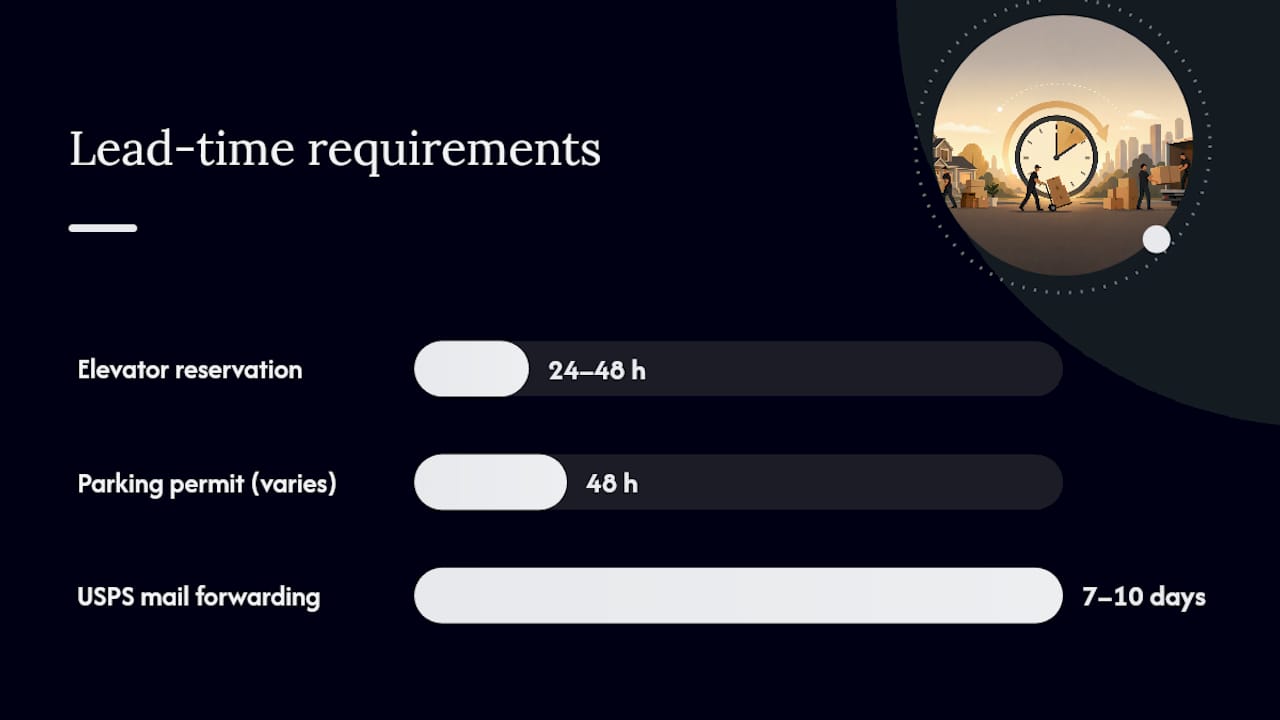
- Elevator reservation (many buildings require 24–48 hours notice and a damage deposit)
- Loading dock or freight entrance availability
- Building move-in hours and any concierge sign-off requirements
For street parking, contact your building manager first, then your municipality’s permit office if a reserved spot or no-parking zone is needed. Some cities process same-day temporary parking permits; others require 48 hours. Call early.
Pro Tip: Ask your building manager to send the elevator reservation and insurance certificate requirements by email. Having it in writing prevents disputes on move day and gives the mover the exact specs they need.
You can also start your USPS mail forwarding online now; the service typically takes 7–10 business days to activate, so submit it the moment you have a confirmed delivery address.
How do you protect antiques, pianos, and artwork on a rushed timeline?
High-value or awkward items need a few extra minutes of attention before loading. Skipping this step is where emergency moves cause the most regret.
- Photograph each item from multiple angles before it is touched. Note serial numbers on electronics and appliances.
- Declare every high-value item on the written estimate. If it is not listed, it may default to released-value coverage, which the FMCSA sets at roughly $0.60 per pound per item. That is far below replacement cost for a piano or a piece of art.
- Confirm specialty handling availability. Pianos require a dedicated team and equipment; crating services for artwork and antiques may need to be arranged separately.
- Consider short-term storage if the delivery window is uncertain. A storage holding option keeps fragile items safe until the destination is ready.
Elect full-value protection for any item you cannot replace. Released-value coverage is the default and is functionally low. Declaring the item and paying for full-value protection is the only way to recover actual replacement cost if damage occurs.
For specialty items in Ontario, confirm that the moving company has the right equipment and experience before the crew arrives, not after.
What should you pack yourself when time is short?
Pack in this order: what you need tonight, then what you need this week, then everything else.
- Essentials bag (travels with you): ID, medications, chargers, two days of clothes, cash, keys, and a contact list.
- Priority boxes (first off the truck): Bedding, toiletries, kitchen basics, pet supplies, and children’s items. Label these “Open First.”
- Leave for the movers: Large furniture, appliances, and anything bulky or unbreakable that does not need to be accessed immediately.
For speed without sacrificing protection, use garbage bags for soft items like pillows and linens, and wardrobe boxes for hanging clothes. Towels and blankets double as padding for fragile items when you run out of bubble wrap. A full packing workflow guide can help if you have a few extra minutes to plan room by room.
Pro Tip: Write the destination room on every box in large letters. Movers place boxes where they are directed, and clear labelling means nothing sits in the wrong room waiting to be moved again.
What do you check after the movers deliver everything?
Do not let the crew leave until you have done a walkthrough and signed off on the inventory.
- Walk every room at the destination and compare items against the bill of lading.
- Note any damage or missing items in writing on the delivery receipt before you sign. Photograph everything.
- File a damage claim promptly. Most companies require written notice within a specific window (often 9 months for interstate moves under FMCSA rules, though company policies vary). Ask for the claims process in writing on move day.
- Unpack in this order: sleeping area, medications, pet supplies, kitchen basics.
Never sign a clean delivery receipt if you see damage. Write “subject to inspection” or note the specific damage before you sign. A clean signature can limit your ability to file a claim later.
If not everything can be delivered immediately, short-term storage during your relocation is a practical holding option while you get the destination ready.
What does a realistic same-day or next-day move timeline look like?
| Lead Time | Best Options | Key Actions |
|---|---|---|
| same day | Rental truck, labour-only crew | Book truck first; pack essentials; confirm access |
| 24–48 hours | Labour-only or partial full-service | Confirm written estimate; reserve elevator; photograph valuables |
| 48–72 hours | Full-service movers (off-peak) | Get a binding estimate; arrange specialty handling; notify building |
| 72+ hours | Full-service, portable container | Full inventory; binding quote; permits; packing service option |
For a same-day move, front-load every booking and documentation task in the first two hours. Packing and staging can happen in parallel once transportation is confirmed. One-way truck rental networks commonly offer same-day availability in major metros and are a reliable contingency when full-service crews are booked out.
What we have learned from 18+ years of emergency moves
The single habit that separates a smooth emergency move from a costly one is writing things down. Every crew we dispatch confirms this: the clients who have a written estimate, a labelled essentials bag, and building access confirmed before we arrive finish faster, pay less, and report fewer problems.
The most common pitfall we see? Clients who call us without a clear inventory. “I have a lot of stuff” tells a dispatcher almost nothing. “Two-bedroom apartment, king bed, sectional sofa, six boxes ready” gets you a crew and a price in minutes.
At Aleksmoving, emergency and last-minute requests are handled as a priority. Our flat-rate pricing means the number on your written estimate is the number you pay, no matter how the day unfolds. With over 18 years of experience across Ontario, we have seen every version of a rushed move, and we know how to keep yours on track.
When you call, have ready:
- Full origin and destination addresses
- Number of bedrooms and a list of large items
- Two flexible arrival windows
- Any building access restrictions
Aleksmoving handles emergency moves across Ontario

When you need a mover today or tomorrow, Aleksmoving offers same-day and next-day scheduling, labour-only options, professional packing, short-term storage, and specialty handling for pianos, antiques, and artwork. Our flat-rate pricing means no hidden fees and no surprises at the end of a stressful day. Every booking comes with a written estimate before any payment is collected.
With over 18 years serving Ontario homeowners, renters, and property managers, we know how to move quickly without cutting corners. Request a free written quote by phone, contact form, or WhatsApp right now, and we will confirm availability and pricing within the hour.
Sources
Use these resources to vet movers, forward your mail, and book emergency moving services:
- Last-Minute Moving Guide: What to Do in 24–72 Hours
- Last-Minute Move? How to Find Reliable Movers on Short Notice – Moving Companies Website Blog Articles – Movers By Zip
- Last-Minute Moving Guide | MovingRated
- FMCSA SAFER system