Skip to content


TL;DR:
- Moving costs vary significantly based on distance, volume, timing, and logistical factors.
- Extra services like packing, specialty handling, and insurance can substantially increase the final bill.
- Planning ahead, decluttering, and choosing off-peak dates can save hundreds of dollars.
Most people assume moving is straightforward: hire a crew, load a truck, pay a flat fee. In reality, your final moving bill can shift significantly based on a handful of variables most people never think to ask about. Whether you’re relocating across town or across Ontario, understanding what drives moving costs puts you in control of your budget. This guide breaks down the key factors that influence price, from distance and timing to add-on services and insurance choices, so you can plan with confidence and avoid unpleasant surprises on moving day.
Table of Contents
- What influences the cost of your move?
- Distance and move type: Local vs. long-distance costs
- Services and add-ons: What else affects your final bill?
- Timing, insurance, and hidden fees: Variable cost surprises
- Saving on your moving costs: Smart planning strategies
- What most people misunderstand about moving costs
- Get pricing clarity and smooth moving support
- Frequently asked questions
Key Takeaways
| Point | Details |
|---|---|
| Distance matters most | Local and long-distance rates are the biggest driver of overall moving costs. |
| Add-ons add up | Services like packing, storage, and insurance can greatly increase your total bill. |
| Timing affects price | Moving during off-peak days or seasons can yield significant savings. |
| Ask about hidden fees | Clarifying all possible charges up front helps you avoid surprise expenses. |
| Smart planning saves | Decluttering and comparing quotes let you control your moving expenses. |
What influences the cost of your move?
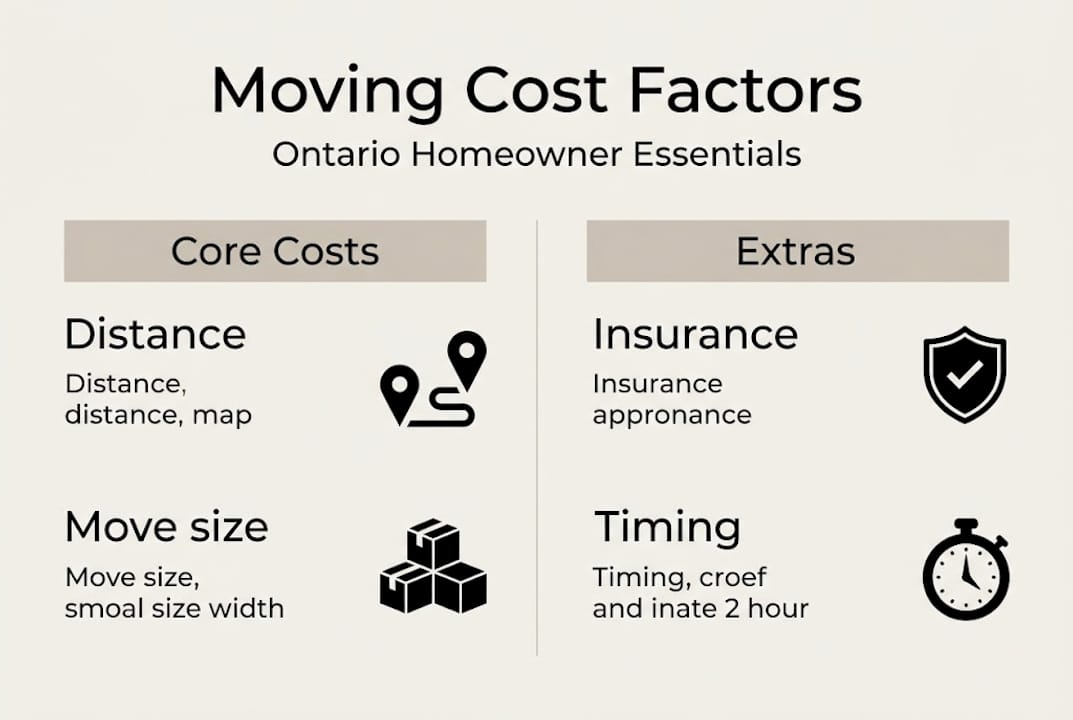
When you request a quote from a moving company, you might wonder why two homes of similar size can receive very different estimates. The answer is that residential movers cost calculations rely on multiple variables working together. No single element tells the full story.
Here are the main categories that shape your moving price:
- Distance: How far your belongings travel, whether across your city or across the province, is one of the largest drivers of cost.
- Volume and weight: The more items you have, the more truck space, fuel, and labour time is required.
- Timing: Moving during busy seasons or on weekends typically costs more.
- Service level: Choosing full packing, unpacking, storage, or specialty handling adds to the total.
- Insurance coverage: The type of protection you select influences how much you pay.
- Access and logistics: Details like parking restrictions, elevator use, number of stairs, and long carry distances from truck to door all factor into the final price.
That last point surprises many people. A third-floor apartment with no elevator and limited parking access can cost noticeably more to service than a ground-level home with a wide driveway. Small logistical details matter.
Did you know? Moving companies assess over a dozen individual variables before generating a quote. Many clients focus only on distance and size, which means overlooked factors often cause the biggest billing surprises.
Working with a professional moving company that explains each cost item upfront is the most reliable way to protect your budget from those unexpected extras.
Distance and move type: Local vs. long-distance costs
Distance is the foundational variable in almost every moving quote. In Ontario, a local move is generally defined as one that stays within roughly 100 kilometres. Long-distance moves cross that threshold and are typically priced on a different structure entirely. As local vs long-distance moves comparisons show, travel distance and move type are primary cost differentiators.
Here is a side-by-side overview of how pricing typically works for each:
| Feature | Local move | Long-distance move |
|---|---|---|
| Pricing model | Hourly rate | Flat rate or weight-based |
| Average rate | $120 to $200 per hour | $2,000 to $8,000+ depending on distance and volume |
| Travel fee | Usually included | Fuel and travel surcharges often added |
| Minimum charge | Commonly 2 to 3 hours | Often a minimum flat fee |
| Date flexibility impact | Moderate | High, off-peak dates can mean significant savings |
For local moves in Ontario, understanding local moving costs means factoring in crew size and hours worked. If your move takes five hours with a crew of three, that hourly rate adds up quickly. For long-distance relocations, our long distance moving guide outlines how weight, cubic footage, and destination all play into the flat rate you are quoted.
Pro Tip: If your timeline is flexible on a long-distance move, try scheduling your relocation on a weekday in late autumn or winter. Off-peak demand often means better availability and lower pricing from moving companies looking to fill their schedules.
One strategy that works well for long-distance moves is consolidating your shipment. If you have fewer items, sharing truck space with another customer’s shipment, known as a grouped or consolidated move, can reduce your cost substantially. Ask about this option when you request your quote.
Services and add-ons: What else affects your final bill?
Once you understand your base price from distance and move type, the next step is reviewing your service choices. Packing charges breakdown studies show that additional services like packing, unpacking, and handling specialty items can add fees that catch many people off guard.
Here is how common add-ons typically build onto your bill:
- Full packing service: Professional packers wrap and box your entire home. Convenient, but this can add several hundred dollars depending on your home’s size.
- Partial packing: You pack most rooms yourself and leave fragile or awkward items to the crew. A middle-ground option that balances cost and effort.
- Unpacking service: Movers unpack boxes at your new home. Less common, but appreciated when you move with young children or have mobility limitations.
- Furniture disassembly and reassembly: Beds, wardrobes, and large furniture pieces often need to be taken apart for transport. Most companies charge per item.
- Storage: If there is a gap between your move-out and move-in dates, short- or long-term storage adds a recurring daily or monthly fee.
- Specialty item handling: Items like pianos, artwork, antiques, or safes require special equipment and expertise.
When it comes to moving specialty items, specialty moving items such as pianos incur extra charges due to the equipment, skill, and liability involved. Professional handling can reduce the risk of damage by up to 70%.
The smartest approach is to review your list of services and split them into two categories: need-to-have and nice-to-have. Packing fragile items professionally may be a need-to-have if you have irreplaceable antiques. But unpacking your linen cupboard yourself is a nice-to-have you can easily skip.
Timing, insurance, and hidden fees: Variable cost surprises
Beyond distance and services, several less obvious variables can shift your final bill. Moving insurance options experts confirm that insurance, timing, and hidden fees all play a real role in your total moving costs.
Timing alone can make a noticeable difference:
| Time period | Demand level | Typical price impact |
|---|---|---|
| May to September | Peak season | 15 to 30% higher |
| Friday to Sunday | High demand | 10 to 20% higher |
| Monday to Thursday | Lower demand | Standard or discounted pricing |
| October to April | Off-peak season | Best rates available |
| Last two days of month | Very high demand | Premiums common |
Beyond timing, watch out for these commonly overlooked charges:
- Fuel surcharges: Added to cover fluctuating fuel prices, especially on longer routes.
- Stair fees: Charged per flight of stairs when elevator access is unavailable.
- Long carry fees: Applied when the truck cannot park close to your entrance.
- Waiting time fees: If you are delayed accessing your new home, idle crew time is often billed.
- Last-minute change fees: Rescheduling or adding items close to moving day can trigger penalties.
Insurance is another area where many people underestimate the cost impact. Basic released-value protection, which covers items at a minimal fixed rate per kilogram, is often included in your quote at no extra charge. Full-value protection, which covers the actual replacement cost of damaged items, costs more but gives you much stronger peace of mind.
Pro Tip: Before signing any moving contract, ask the company to walk you through every possible charge on the quote. A trustworthy mover will welcome that conversation and give you clear answers.
Saving on your moving costs: Smart planning strategies
Knowing what drives costs up puts you in a strong position to manage them. Choosing a moving company wisely and planning ahead are the two most reliable ways to keep your bill under control. Simple planning moves can save hundreds on your overall bill.
Here are proven strategies to reduce your moving expenses:
- Declutter before you move. Fewer items mean less truck space, less labour time, and a lower quote. Donate, sell, or discard anything you would not bring into your new home anyway.
- Lock in off-peak dates. Weekdays in autumn or winter offer the best rates. If your schedule allows even a little flexibility, use it.
- Pack your own boxes. Doing your own packing, especially for non-fragile items, is one of the biggest cost savers available. Focus your budget on professional packing for valuables only.
- Clarify your insurance needs early. Understanding what is already covered and what is optional prevents you from paying for overlapping protection.
- Ask about all potential fees upfront. Use the list from the previous section as your checklist. If a company is vague about extra charges, treat that as a warning sign.
- Request multiple quotes. Comparing at least two or three estimates gives you a clearer sense of fair pricing and reveals which companies are most transparent.
- Use a moving checklist. Staying organised reduces last-minute scrambling, which is the most common cause of costly surprises on moving day.
The two strategies that tend to deliver the biggest savings are flexible timing and self-packing. Combined, they can reduce your total moving cost quite meaningfully.
What most people misunderstand about moving costs
After years of helping Ontario families relocate, we have noticed a persistent pattern: most people focus on finding the lowest quote rather than the clearest one. That instinct is understandable, but it often backfires.
A low quote with vague terms can balloon once stair fees, waiting time, and packing charges are added at the end. A slightly higher quote that spells out every cost in writing is almost always the smarter choice. You know exactly what you are paying for, and there are no unpleasant conversations at the finish line.
People also tend to underestimate how much non-obvious variables add up. Parking access. The number of stairs. An awkward piano in the corner. These details are not afterthoughts; they are factors that experienced movers assess immediately. The most costly mistakes we see come from clients who did not ask detailed questions early in the process.
Our advice is simple. When you request a quote for hiring professional movers, treat it as a conversation. Ask questions. Request a written breakdown. A trustworthy company will always give you that transparency without hesitation.
Get pricing clarity and smooth moving support
Now that you understand what shapes moving costs in Ontario, the next step is putting that knowledge to work with a team you can trust.

At Aleks Moving, we provide detailed, transparent quotes designed to remove guesswork from your planning. With over 18 years of experience, our team assesses every factor, from distance and access to insurance and add-ons, before giving you a number. No surprises. No hidden fees. Just a clear picture of what your move will cost and what you will get. Explore our trusted moving services or browse our full range of moving services in Ontario and request your custom quote today.
Frequently asked questions
What is the biggest factor affecting moving costs in Ontario?
Distance (local versus long-distance) and the size or weight of your items are the largest influencers on your moving price. As confirmed by local vs long-distance data, these two variables form the foundation of nearly every quote.
How can I lower my moving expenses?
Declutter before your move, consider packing your own boxes, and choose off-peak moving dates to keep costs down. These three steps alone can save hundreds on your final bill.
What extra charges should I ask about before hiring movers?
Be sure to ask about fees for packing, specialty items, insurance, fuel surcharges, stair fees, and last-minute changes. Reviewing your packing charges in advance prevents billing surprises.
Does moving insurance increase the total price a lot?
Full-value protection or extended coverage costs more, but basic liability is often included in your quote by default. Reviewing your insurance options early helps you decide what level of coverage fits your needs and budget.
Are moving quotes in Ontario negotiable?
While prices reflect specific factors, you can sometimes negotiate or get matched quotes by comparing multiple moving companies. Gathering at least two or three estimates gives you real leverage and a clearer sense of fair market pricing.