Skip to content


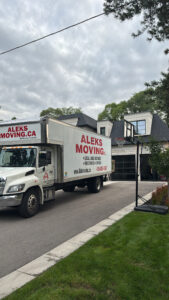
Whether you need a permit for moving truck parking depends entirely on the municipal parking zone and street type at your exact address. Here is your three-step action checklist to protect move day before anything else goes wrong.
- Check your address. Visit your city’s official moving or temporary-parking page, or call 311, and confirm whether your curb space falls in a metered zone, residential permit zone, or restricted street.
- Apply and confirm who applies. Some municipalities require the resident to submit the application; others allow the moving company to apply. Confirm this before booking your truck.
- Reserve signs and meter hooding, then keep the permit on the dash. Post temporary no-parking signs within the window your municipality requires and display the permit confirmation visibly on move day.
Three municipal pages you will need:
- City of Montréal — park a moving van or truck
- City of Vancouver — moving in or to Vancouver
- City of Calgary — streets bylaws
Key takeaways
Permit requirements for moving truck parking in Canada depend on the exact municipal zone and street type at your address, so checking the official city page or calling 311 before move day is the single most important step you can take.
| Point | Details |
|---|---|
| Check your address first | Permit requirements vary by block and zone; confirm via the city’s permit portal or 311 before booking your truck. |
| Apply well ahead of move day | Most municipalities recommend applying several days to weeks in advance to allow processing and sign-posting time. |
| Post signs within the required window | Signs must be up 24–72 hours before the reserved period; without them, your permit cannot be enforced. |
| Know your truck’s footprint | A 26-foot truck needs about two standard parking stalls of curb space. |
| Confirm permit responsibility in writing | Your moving contract should state clearly whether you or Aleksmoving will apply and pay for the permit. |
Table of Contents
- How do you find out which moving truck parking rules apply to your address?
- When do you actually need a permit for your moving truck?
- How do you apply for a temporary moving truck permit, step by step?
- What do permits and meter hooding typically cost, and how much space does your truck need?
- How do temporary no-parking signs and meter hooding work?
- What do you do if someone parks in your reserved moving truck spot?
- What are your options if you cannot reserve curb space for the truck?
- Practical tips from Aleksmoving to avoid move-day problems
- Why skipping a moving truck permit is a risk you should not take
- Aleksmoving handles the logistics so you can focus on the move
- Sources
How do you find out which moving truck parking rules apply to your address?
Start at the exact civic address, not the neighbourhood. Different blocks, or even opposite sides of the same street, can fall under different parking zones. Vancouver’s moving guidance makes this explicit: permit requirements vary by street type, and what applies to your neighbour across the road may not apply to you.
Where to look:
- Your city’s official moving or temporary-parking permit page (search “[city name] temporary parking permit moving truck”)
- The city’s online permit portal, where many municipalities now let you check zone status by entering a civic address
- 311, the municipal non-emergency line available in most major Canadian cities
- Your borough or neighbourhood office, especially in Montréal where borough-by-borough rules apply
When you call 311 or the permit office, have this information ready:
- Full civic address (both origin and destination if both are in the same city)
- Truck length in feet and metres
- Requested date and time window (start and end)
- Your name and a callback number
Pro Tip: Measure your truck before you call. A typical 26-foot rental truck is about eight metres long. Knowing your truck length helps the permit office determine the space you need to reserve, which affects permit scope and fees.
When do you actually need a permit for your moving truck?
Not every move requires a permit, but the triggers are specific enough that you should check rather than assume. Most Canadian municipalities use the same core criteria.
Common situations that require a permit:
- Parking at a metered curb space (the meter must typically be hooded or reserved)
- Streets designated as residential permit parking zones
- Any space adjacent to a bike lane or protected cycling infrastructure
- Arterial or collector streets with posted restrictions
- Designated loading zones (which have their own time limits and rules)
- Spaces within a set distance of an intersection (often 9 metres in Canadian bylaws)
- Streets affected by special events, street sweeping, or seasonal restrictions
Situations that often do not require a permit:
- Parking entirely on a private driveway (your own or with the property owner’s permission)
- Brief curb stops on unrestricted residential side streets where the truck does not block a lane or intersection
- Some single-family residential streets in smaller municipalities (confirm locally)
Who must apply varies by city. In Montréal, the borough office or the Agence de mobilité durable handles applications, and rules differ by borough. In Vancouver, the resident or the moving company can apply, but the permit must be tied to the specific address. Some municipalities allow a professional mover to apply using their fleet registration; others require the resident regardless. Confirm this detail when you call 311.
How do you apply for a temporary moving truck permit, step by step?
The process is consistent across most Canadian cities, though the portal and fee structure differ. Moving permit guides recommend applying several days to weeks ahead of your move date, not the day before.
- Locate the correct form or portal. Go to your city’s official website and search for “temporary parking permit” or “street use permit.” Montréal, Vancouver, and Calgary each have dedicated pages.
- Enter your address and vehicle details. You will need the civic address, truck length, and the number of spaces you need.
- Select your date and time window. Most permits cover a single day or a defined window (e.g., 7:00 AM to 7:00 PM). If your move spans two days, apply for both.
- Pay the fee. Fees vary by city and space type. Pay online or in person as directed.
- Collect your confirmation. Save the permit number and print or download the confirmation document.
- Post signs and display the permit. Install temporary no-parking signs within the required window and place the permit visibly on the dashboard.
Information typically required on the application:
| Field | What to provide |
|---|---|
| Applicant name and phone | Resident or moving company contact |
| Civic address | Full street address where truck will park |
| Vehicle plate or truck length | Exact length in feet or metres |
| Requested date and hours | Start time to end time |
| Number of spaces or metres | Based on truck size (see Section 5) |
| Reason for request | “Residential move” or “furniture delivery” |
Vancouver instructs residents to apply several days before moving to allow processing time and to confirm residential permit parking rules for the specific street. Calgary’s bylaws add a practical layer: check street-sweeping schedules and overhead obstructions before finalising your space, since a permit does not override a sweeping restriction or a low-clearance obstacle.
Pro Tip: Keep a printed or screenshot copy of the permit approval in the truck cab on move day. If enforcement is called, the permit number is the first thing a bylaw officer will ask for.
Also useful when planning your move-day logistics: confirm the permit details in writing with your moving company at least 48 hours before the move.
What do permits and meter hooding typically cost, and how much space does your truck need?
Fees vary by municipality and space type. No single national rate applies, but the common fee categories are consistent.
Common fee types:
- Permit processing fee: A flat administrative charge per application
- Meter hooding fee: Charged per meter per day when a metered space must be reserved
- Lost parking revenue: Some cities charge an amount equivalent to what the meter would have collected
- Sign rental or deposit: Charged when the city supplies temporary no-parking signs
For specific current fee amounts, check your city’s permit page directly, as rates are updated periodically and differ by borough or zone.
How much curb space does your truck need?
A standard parking stall in Canada is roughly six metres long. Use this as your baseline, and note that a 26-foot truck typically needs about two parking stalls, while larger trailers need more space.
Calgary’s streets bylaws note that curb clearance and overhead obstructions can make a technically reserved space unusable. Before finalising your application, walk the block and check for low-hanging wires, tree branches, or utility infrastructure that could block a tall truck. If you are unsure what size truck you need, the Aleksmoving guide to truck sizing covers common load-to-truck-size matches.
For oversized trucks or trailers longer than 26 feet, contact the permit office directly. Many cities require a separate street-use permit or a traffic-control plan for vehicles that extend beyond two standard stalls.
How do temporary no-parking signs and meter hooding work?
Temporary no-parking signs are what make your reserved space legally enforceable. Without them, a permit alone does not prevent other drivers from parking in your spot.
How signs work:
- The municipality either supplies signs directly (as in some Montréal boroughs) or directs you to an authorised supplier
- In Montréal, the Agence de mobilité durable handles sign installation requests for certain zones; other boroughs manage this through the borough office
- Signs must typically be posted 24–72 hours before the reserved period begins, depending on the municipality
- The number of signs required depends on the length of the reserved space; most cities require one sign at each end of the reserved zone
- Signs must be clearly visible and must state the date and time of the restriction
Meter hooding:
- When your reserved space includes a parking meter, the meter must be hooded (covered) so other drivers cannot pay and park there
- Hooding is usually arranged through the same permit application or a separate request to the city’s parking services department
- Fees apply per meter per day; schedule hooding for the same window as your permit
Practical steps:
- Confirm with the permit office whether the city supplies signs or whether you must rent them from an authorised supplier
- Schedule sign delivery or pick-up so you can post them within the required window
- Post signs at both ends of the reserved zone, at eye level, facing traffic
Pro Tip: Photograph your installed signs with a timestamp immediately after posting. If a vehicle parks in your reserved space anyway, this photo plus your permit number is the evidence bylaw enforcement needs to act quickly.
Montréal’s guidance confirms that failure to post signs properly can void your enforcement options, even if you hold a valid permit.
What do you do if someone parks in your reserved moving truck spot?
A properly posted permit and visible signs give bylaw officers the authority to ticket or tow a vehicle occupying your reserved space. Acting fast matters because a blocked space on move day can delay the entire schedule.
Common enforcement actions available:
- Parking ticket issued to the offending vehicle
- Towing at the vehicle owner’s expense
- Booting (wheel clamping) in some municipalities
Steps to take immediately:
- Photograph the vehicle in your reserved space, including the licence plate and your posted signs in the same frame. Note the time.
- Call 311 (available in Toronto, Calgary, Vancouver, Montréal, and most major Canadian cities) and report a vehicle parked in a permitted no-parking zone.
- Have your permit number ready when you call. The dispatcher will confirm the permit and dispatch bylaw enforcement.
- Do not attempt to block or confront the vehicle owner.
A short script for your 311 call:
“I have a temporary no-parking permit for [address], permit number [X], valid from [time] to [time] today. A vehicle with plate [plate number] is parked in my reserved space. I have photos with timestamps. Can you send bylaw enforcement to tow or ticket the vehicle?”
Pro Tip: Write your permit number on a sticky note and keep it in your pocket on move day. When you are managing a crew and a truck, you do not want to be searching your phone for a confirmation email while talking to 311.
Enforcement response times vary by city and time of day. If the move cannot wait, consider whether a nearby alternative space (a private lot or driveway) can serve as a temporary staging area while enforcement responds.
What are your options if you cannot reserve curb space for the truck?
Permit denials happen, and sometimes the geometry of a street simply does not allow a large truck to park legally. These alternatives keep the move on track.
Practical alternatives:
- Private driveway: If the property has a driveway or laneway, use it as the primary loading point and shuttle items with a smaller vehicle if needed
- Building loading dock: Many apartment buildings and condos have a designated loading dock; book it through the building manager well in advance
- Staggered loading with a smaller vehicle: Use a cargo van or smaller truck to shuttle loads from a legal parking spot to the building entrance
- Paid commercial parking lots: Short-term lots near the building can accommodate trucks if the lot has sufficient clearance; confirm height and length limits before arriving
- Timed loading windows: Some cities allow brief unmetered stops in loading zones during off-peak hours; confirm the exact time window with the city
For apartment moves specifically, the Aleksmoving guide to apartment moving solutions covers building coordination and loading dock booking in detail.
When curb space is genuinely unavailable, Trucker Path provides real-time availability for nearby truck parks, hotel lots, and commercial lots that sometimes accept moving trucks. It is primarily a tool for long-haul truckers, but the lot data is useful for finding large-vehicle parking near a residential address when municipal options are exhausted.
If you need short-term storage as a staging solution, commercial storage options can bridge the gap between a delayed move and a confirmed parking window.
Accessibility and oversized permits: If the move involves a person with a disability or requires a truck longer than standard, contact the city’s permit office directly. Most municipalities have a separate process for extended-duration or oversized-vehicle permits, and some offer priority processing.
Practical tips from Aleksmoving to avoid move-day problems
After more than 18 years of residential and commercial moves across Ontario and Canada, the Aleksmoving team has seen the same avoidable problems repeat. Here is what actually prevents them.
Move-day checklist from Aleksmoving:
- Confirm the permit is approved and printed at least 48 hours before move day, not the morning of
- Arrive at the address 15–20 minutes before the crew to check that the reserved space is clear
- Stage items on the ground floor or building lobby before the truck arrives to reduce truck idle time
- Protect walkways and building entrances with floor runners or blankets, especially in apartment buildings with strict damage policies
- Check overhead clearance on the approach route, not just at the parking spot; low bridges and utility lines can block a 13-foot truck before it reaches the building
- Confirm elevator booking with the building manager if applicable, and have the booking confirmation in hand
On permit responsibility in your contract:
A clear contract clause prevents last-minute confusion. The clause should read something like: “The client is responsible for obtaining and paying for any municipal temporary parking or street-use permit required at the origin and destination addresses. Aleksmoving will confirm truck dimensions and space requirements in advance to support the application.”
Some municipalities, including Vancouver, allow the moving company to apply if they are operating their own fleet. In those cases, Aleksmoving can handle the application on your behalf, but this must be agreed in writing before move day.
Pro Tip: Confirm all permit details in writing with your Aleksmoving coordinator at least two business days before the move. A quick email exchange that lists the permit number, reserved address, and time window takes five minutes and eliminates the most common source of move-day delays.
Why skipping a moving truck permit is a risk you should not take
Skipping a permit feels like a time-saver until move day arrives and your truck has nowhere legal to park. The risks are concrete: bylaw fines, towing costs, and a blocked entrance that stalls the entire crew. In cities like Montréal, where borough rules differ street by street, assuming you do not need a permit is a genuine gamble.
The deeper issue is that a permit is not just paperwork. It is the mechanism that gives you enforcement rights. Without posted signs and a valid permit, bylaw officers cannot ticket or tow a vehicle parked in your intended space, and you have no legal recourse. That is a significant exposure on a day when every hour of crew time costs money.
Verifying municipal rules early, applying ahead of the minimum timeline, and confirming permit responsibility in the moving contract are the three habits that separate a smooth move from a stressful one. If the process feels unclear, working with a professional mover who knows the local rules is the most reliable way to protect your schedule.
Aleksmoving handles the logistics so you can focus on the move
Navigating municipal permit requirements across Canadian cities takes time, and the rules change by borough, zone, and street type. Aleksmoving’s residential moving services include permit coordination support: we confirm truck dimensions for your application, advise on sign posting windows, and document permit details in your moving agreement so there are no surprises on move day.
With flat-rate pricing and no hidden fees, you know exactly what the move costs before we arrive. Our team covers local and long-distance moves across Ontario and Canada, and we have handled the full range of municipal parking situations, from Montréal borough permits to Calgary street-use applications. Request a free quote today and let us confirm the parking plan for your address before you book.
Sources
These official municipal pages are the primary resources for permit applications, fees, and contact information.
- Park a moving van or moving truck
- Moving in or to Vancouver
- Calgary bylaws — streets
- Moving permits 101: how to get a parking permit for moving
- Truck Parking Near Me | Trucker Path
This article is general information, not a substitute for advice from a qualified lawyer. Consult a qualified legal professional about your own circumstances before acting on anything here.