
TL;DR:
- Art relocation is a specialized process involving professional handling, climate-controlled transport, and detailed documentation to protect valuable artwork. It differs from standard moving through bespoke packaging, continuous climate control, and comprehensive insurance covering the entire cycle, including handling and reinstallation. Proper planning, environmental stability, and expert services are essential for safe art transport.
Art relocation is the specialised process of moving valuable artwork using professional handling, climate-controlled transport, and detailed condition documentation to preserve each piece from origin to destination. Unlike standard moving, it is a risk-mitigation discipline requiring trained art handlers, bespoke crating, and comprehensive risk mitigation at every stage. Providers like Group ESI and Paragon Logistics treat fine art logistics as a blend of preservation science and logistics expertise. Industry protocols call for maintaining 18–21°C and 45–55% relative humidity throughout transit to prevent cracking, warping, or mould. Whether you are moving a single painting or an entire corporate collection, understanding what art relocation involves is the first step to protecting what you own.
What does the art transportation process include?
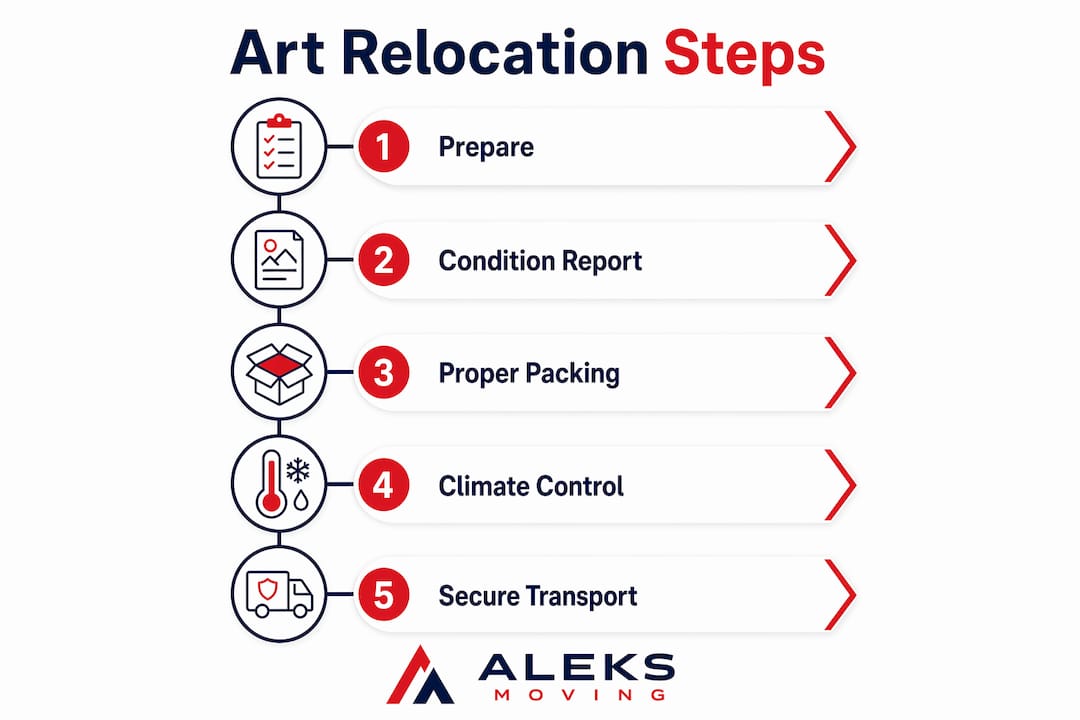
The art transportation process is a structured sequence of steps, each designed to reduce risk at a specific point in the move. Skipping any one of them increases the chance of damage significantly.
- Pre-move condition reporting. A trained handler documents artwork state before packing begins. Photographs, written notes, and measurements create a baseline that supports insurance claims if damage occurs during transit.
- Bespoke packing and crating. Each piece receives custom packaging matched to its size, material, and fragility. Climate-buffering crates act as a thermal barrier, protecting artwork from rapid temperature and humidity shifts even during customs delays or extreme weather.
- Climate-controlled transport. Vehicles used in professional art moving services are equipped with temperature and humidity regulation systems. Air-ride suspension reduces vibration and shock during transit compared to standard vans. This is a cost-effective measure when weighed against the insurance premiums saved.
- Inventory tracking throughout transit. Every piece is logged, labelled, and tracked from departure to arrival. This creates accountability and makes it easier to identify any handling issues after the fact.
- Post-move inspection and installation. On arrival, handlers conduct a second condition report and compare it to the pre-move baseline. Any discrepancies are documented immediately. Professional teams then reinstall the work according to the client’s specifications.
Pro Tip: Request copies of both the pre-move and post-move condition reports for your own records. These documents are your primary evidence if an insurance claim becomes necessary.
How is art relocation different from standard moving?
Art relocation is not simply careful moving. It is a fundamentally different service with different equipment, training, and legal protections.
The most common misconception is that any experienced mover can handle fine art. General movers are trained to protect furniture and boxes from physical damage. Art handlers are trained to protect objects from physical damage, environmental fluctuation, improper handling posture, and vibration. Those are very different skill sets.
Here is a direct comparison of the two service types:
| Factor | Standard Moving | Art Relocation |
|---|---|---|
| Vehicle type | Standard van or truck | Climate-controlled, air-ride suspension vehicle |
| Packing materials | Blankets, bubble wrap, cardboard | Bespoke crates, acid-free materials, climate-buffering packaging |
| Insurance | Basic liability coverage | Nail-to-nail insurance covering full relocation cycle |
| Condition reporting | Rarely included | Mandatory pre-move and post-move documentation |
| Staff training | General handling | Specialised art handler certification |
| Pricing model | Flat or hourly rate | Bespoke quote based on dimensions, route, and value |
The insurance difference alone is significant. Nail-to-nail coverage protects the artwork from the moment it is removed from the wall through packing, transit, unpacking, and reinstallation. Standard moving insurance typically covers only physical damage during transport. For high-value pieces, specialised insurance coverage for major international shipments can reach up to 100 million euros per shipment. That figure reflects just how seriously the industry treats risk.
Key distinctions to keep in mind:
- Art movers perform professional de-installation, not just packing
- Climate control is maintained continuously, not just during the drive
- Condition audits create a legal record that standard movers do not provide
- Pricing is always bespoke because no two art moves are identical
What are the best practices for relocating art safely?
The best practices for art relocation centre on three priorities: environmental stability, professional expertise, and thorough documentation. Cutting corners on any of these three creates real risk.
Maintain climate control at every stage. Temperature and humidity fluctuations are the leading cause of preventable art damage during moves. Keeping conditions within the recommended 18–21°C range protects canvas, wood, metal, and paper-based works from warping, cracking, and mould. This applies to storage periods as well as transit.
Hire movers with proven art handling experience. Not all moving companies that claim to handle art have the training or equipment to do it properly. When you hire fine art movers, ask specifically about their crating methods, vehicle specifications, and insurance options. A reputable provider will answer these questions without hesitation.
Use climate-buffering crates for vulnerable pieces. Vehicle climate control is reliable under normal conditions, but delays at customs or in extreme weather can push conditions outside safe ranges. Climate-buffering crates provide passive protection that vehicle systems alone cannot guarantee.
Secure appropriate insurance before the move begins. Review your existing home or business insurance policy carefully. Most standard policies do not cover art during transit. A specialist fine art insurance broker can arrange coverage that matches the appraised value of your collection.
Plan for the moments between destinations. Temporary climate-controlled storage is one of the most overlooked aspects of art relocation. When a piece cannot go directly from one location to another, it needs a secure, climate-stable holding environment. Gaps in planning at this stage are where damage most often occurs.
Pro Tip: Get your artwork professionally appraised before the move. An up-to-date appraisal gives you an accurate insurance value and strengthens any claim you may need to make.
For guidance on packing fragile items correctly, detailed techniques tailored to paintings can save you from common mistakes even when working with professionals.
What art relocation service options are available?
Art moving services range from full-service fine art logistics providers to targeted solutions for specific parts of the process. The right option depends on the value of your collection, the distance of the move, and your budget.
Full-service fine art logistics providers handle everything from initial assessment and condition reporting through packing, transport, storage, and reinstallation. Companies like Group ESI and Paragon Logistics operate at this level. This is the most thorough option and the most appropriate for high-value or large collections.
Specialised packing and crating services focus on preparing artwork for transport without necessarily providing the move itself. These services are useful when you have a trusted carrier but need expert packing. Bespoke crates are built to the exact dimensions of each piece.
Climate-controlled transport and storage rental gives you access to the right vehicles and facilities without a full-service contract. This suits collectors who want to manage the logistics themselves but need the right equipment.
Fine art insurance brokers do not move art, but they are a critical part of the process. Brokers like Chubb and AXA Art specialise in fine art coverage and can arrange policies that standard insurers cannot match.
Hybrid or consultation-based approaches work well for smaller collections or lower-value pieces. You hire a professional art handler for the most vulnerable steps, such as de-installation and crating, and use a reliable general mover for the transport itself. This reduces cost while maintaining protection where it matters most.
One important note on pricing: quotes are always bespoke in the fine art logistics industry, based on dimensions, value, route, climate requirements, and insurance. Any provider offering a flat rate without assessing your specific pieces should be approached with caution.
| Service Type | Best For | Key Consideration |
|---|---|---|
| Full-service fine art logistics | Large or high-value collections | Highest cost, most complete protection |
| Packing and crating only | Collections with existing transport | Requires separate carrier arrangement |
| Climate-controlled transport rental | Self-managed moves | Requires personal logistics knowledge |
| Fine art insurance broker | Any collection size | Should be arranged before the move |
| Hybrid professional consultation | Smaller or mid-value collections | Balances cost and protection effectively |
Key takeaways
Safe art relocation requires climate control, bespoke crating, nail-to-nail insurance, and detailed condition reporting at every stage of the process.
| Point | Details |
|---|---|
| Climate control is non-negotiable | Maintain 18–21°C and 45–55% relative humidity throughout transit and storage. |
| Condition reports protect you legally | Pre-move and post-move documentation supports insurance claims and creates accountability. |
| Nail-to-nail insurance covers the full cycle | Standard moving insurance does not cover unpacking, handling, or reinstallation. |
| Climate-buffering crates add passive protection | Bespoke crates protect artwork even when vehicle climate systems face delays or failures. |
| Pricing is always bespoke | Any flat-rate quote without a piece-by-piece assessment is a warning sign. |
What i have learned after years of moving valuable art
The single biggest mistake I see people make is treating art relocation as a premium version of regular moving. It is not. The discipline is closer to conservation than logistics. When a painting cracks because humidity spiked during a two-hour customs delay, no amount of careful driving beforehand matters.
The second mistake is leaving insurance as an afterthought. I have seen clients assume their home insurance covers transit. It rarely does, and finding that out after a loss is a painful lesson. Arrange specialist coverage before anything leaves the wall.
What has genuinely improved in recent years is the quality of climate-buffering crate technology and the availability of professional art handlers outside of major cities. You no longer need to be in Toronto or Vancouver to access proper fine art moving services. That accessibility has made a real difference for collectors across Ontario.
My honest advice: engage your moving provider at least four to six weeks before the move date. The planning stage, including condition reporting, crating specifications, and insurance arrangement, takes time. Moving faster is never worth the risk when the pieces you are moving are irreplaceable.
— Ali
Move your art with confidence using Aleksmoving
Aleksmoving has over 18 years of experience handling residential and commercial relocations across Ontario, including specialty moves for fragile and high-value items like artwork and antiques. We understand that your collection deserves more than standard moving care. Our team uses custom packing materials, climate-aware handling practices, and careful documentation to protect your pieces from the moment we arrive.
Whether you are relocating a single statement piece or an entire corporate art collection, we tailor our approach to your specific needs. Explore our trusted moving services to learn how we can support your next art relocation with the care and professionalism your collection deserves. Contact us today for a free, no-obligation quote.
FAQ
What is art relocation exactly?
Art relocation is the specialised process of transporting valuable artwork using professional handling, climate-controlled vehicles, bespoke crating, and detailed condition documentation. It is a risk-mitigation discipline, not simply careful shipping.
How do i choose the right art moving service?
Ask about vehicle specifications, crating methods, condition reporting practices, and insurance options before booking. Reputable providers like Group ESI and Paragon Logistics will answer these questions clearly and provide bespoke quotes.
What temperature and humidity levels are safe for art in transit?
The industry standard is 18–21°C and 45–55% relative humidity. These conditions prevent warping, cracking, and mould growth in canvas, wood, paper, and metal-based works.
Does regular home insurance cover art during a move?
Most standard home insurance policies do not cover artwork during transit. A specialist fine art insurance broker can arrange nail-to-nail coverage that protects your pieces through every stage of the relocation.
How far in advance should i plan an art relocation?
Plan at least four to six weeks ahead. Condition reporting, bespoke crating, insurance arrangement, and logistics coordination all require time to complete properly before the move date.