Skip to content


TL;DR:
- A step-by-step moving guide helps Ontario renters stay organized, on budget, and avoid costly mistakes.
- Key actions include giving proper notice, thorough documentation, early mover booking, and managing utilities and admin tasks.
A step by step renter moving guide is the most reliable method to keep your Ontario relocation organised, on budget, and free of costly surprises. Renters face unique pressures that homeowners do not: lease notice deadlines, security deposit disputes, landlord communications, and building logistics like elevator bookings. The right moving checklist for renters covers all of it, from reviewing your lease eight weeks out to submitting your change-of-address form on move-in day. Tools like written notice letters, date-stamped photos, and a first-night essentials box are not optional extras. They are the difference between getting your full deposit back and losing hundreds of dollars.
What are the essential steps in a renter’s moving process?
A structured apartment relocation guide starts with your lease, not your packing tape. Read your lease carefully before you do anything else. Ontario tenants are required to give written notice 30–60 days before their lease ends. Missing that window can trigger additional rent charges or forfeit your security deposit entirely.
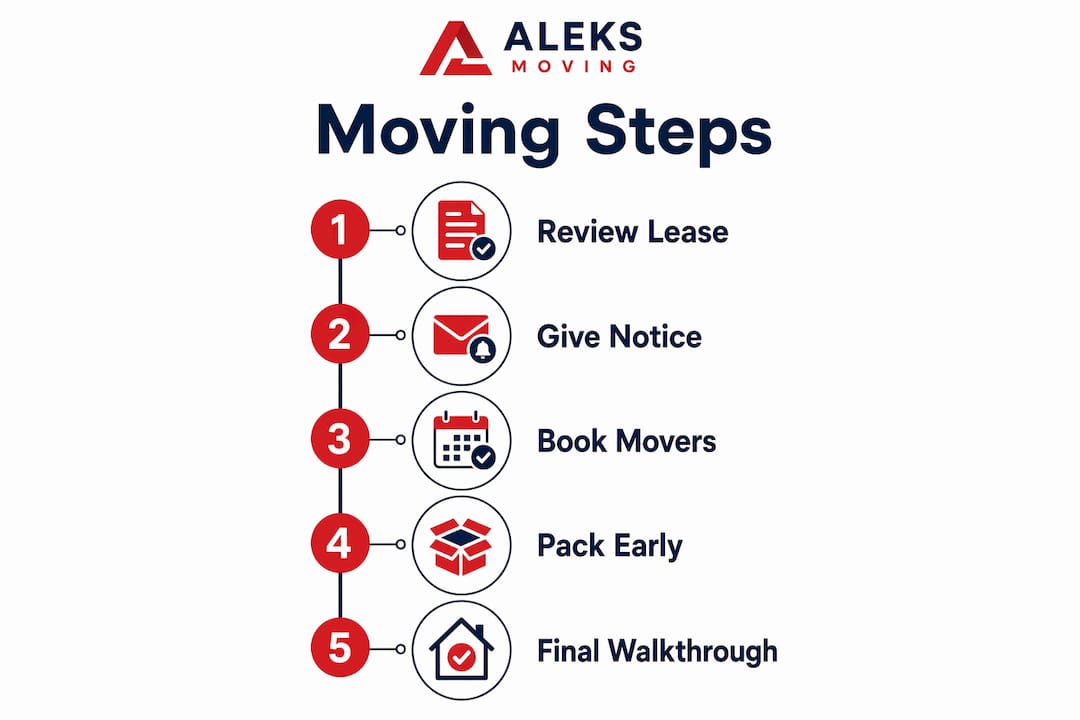
Once notice is given, your timeline opens up. Use the table below as your step-by-step moving plan:
| Timeframe | Task |
|---|---|
| 8 weeks out | Review lease, give written notice, book movers |
| 6 weeks out | Declutter, source packing supplies, notify employer |
| 4 weeks out | Begin packing non-essentials, confirm mover booking |
| 2 weeks out | Set up utilities, forward mail, pack most rooms |
| Moving week | Final walkthrough, clean unit, pack essentials box |
| Move-in day | Sign off on new unit condition, submit address changes |
Book professional movers at least one month ahead for a local Ontario move and two to three months ahead for long-distance relocations. That lead time protects you from peak-season price surges, especially during summer months when demand is highest.
Pro Tip: Start packing the rooms you use least first, such as storage areas and guest rooms. Leaving daily-use spaces until the final week reduces the stress of living out of boxes.

Decluttering before you pack is one of the most overlooked renter moving tips. Fewer items mean fewer boxes, lower moving costs, and less to unpack at the other end. Donate, sell, or discard anything you have not used in the past year before a single box gets taped shut.
How do you protect your security deposit and handle landlord communications?
Most renters lose part of their security deposit not because they caused damage, but because they skipped documentation. Date-stamped photos and videos taken within 48 hours of moving in are your strongest protection against unjustified deductions. This single step prevents disputes that can drag on for months.
Follow these steps to document your unit and communicate professionally:
- Photograph every room from multiple angles on move-in day, including floors, walls, ceilings, and appliances.
- Record a walkthrough video with audio noting any existing damage out loud.
- Email the photos and video to your landlord within 48 hours, creating a timestamped paper trail.
- Request a joint move-out inspection at least one week before your departure date.
- Provide your written notice to vacate in writing, delivered by email or registered mail, referencing your lease terms.
- Keep copies of all communications in a dedicated folder, digital or physical.
Building a professional relationship with your landlord by paying rent on time and reporting maintenance promptly leads to smoother inspections and faster deposit returns. Landlords who trust their tenants are far more likely to resolve disputes quickly and provide positive references. That goodwill costs nothing and pays off significantly at move-out.
Written communication is always preferable to verbal agreements. If your landlord agrees to overlook a minor scuff or delay a repair, get it in writing. Verbal promises are difficult to enforce under Ontario’s Residential Tenancies Act.
What packing and moving logistics should Ontario renters follow?
Packing room by room is the most efficient method for apartment tenants. Label every box with its destination room and a brief contents description. That labelling system saves hours on move-in day when you or your movers are placing boxes in the right spots without opening each one.
Key logistics to manage before moving day:
- Book your elevator. Most Ontario apartment buildings require advance elevator reservations for moves. Contact your building manager at least two weeks out.
- Arrange parking permits. Moving trucks need designated parking near your building entrance. Check with your municipality or building management for permit requirements.
- Confirm building access. Verify fob access, loading dock hours, and any restrictions on move times.
- Assemble a first-night essentials box. Pack it with toiletries, a change of clothes, phone chargers, medications, and snacks. Keep this box in your personal vehicle, not the moving truck.
- Separate valuables and documents. Passports, lease agreements, financial records, and irreplaceable items travel with you, not on the truck.
Standard tipping for movers runs $20–$50 per person, depending on the complexity of the move and the quality of service. A long-distance move with heavy furniture warrants the higher end of that range. Tipping is not mandatory, but it is a widely recognised way to acknowledge hard work.
Pro Tip: If your move spans multiple days or involves a storage stop, confirm in writing with your moving company exactly what is included in the quoted price. Flat-rate pricing, like what Aleksmoving offers, removes the risk of surprise charges.
For local versus long-distance moves in Ontario, the logistics differ significantly. Local moves are typically completed in a single day. Long-distance relocations require more planning around overnight stops, fuel costs, and timing of key handovers.
How can Ontario renters manage utilities, address changes, and post-move tasks?
Administrative tasks are the most commonly neglected part of moving preparation for tenants. Setting up utilities and internet before your move-in date prevents the frustrating first night with no power or connectivity.
Pre-move administrative tasks to complete:
- Contact your electricity, gas, and water providers at least two weeks before your move-in date to schedule service transfers.
- Book internet installation in advance. Providers in Ontario such as Rogers, Bell, and Cogeco often have installation wait times of one to two weeks.
- Submit a mail forwarding request through Canada Post at least one week before moving day.
- File a change-of-address form with Service Ontario for your driver’s licence and health card.
Post-move tasks to complete within the first week:
- Update your address with your bank, employer, and Canada Revenue Agency.
- Notify subscription services, insurance providers, and any government benefit programmes.
- Check for any packages in transit to your old address and redirect them.
- Introduce yourself to your new neighbours. A brief, friendly introduction builds goodwill and can be genuinely useful for building-specific tips.
Renters insurance is strongly recommended even when your lease does not require it. It protects your belongings against theft, water damage, and fire. Bundling renters insurance with your auto insurance policy often reduces the combined premium, making it a practical cost-saving move.
What are the most common renter moving mistakes and how do you avoid them?
The most expensive mistake Ontario renters make is missing the lease notice deadline. Missing the notice period of 30–60 days can result in financial penalties or the loss of your security deposit. Set a calendar reminder the moment you decide to move.
Other common mistakes and how to avoid them:
- Skipping move-in photos. Without date-stamped documentation, landlords can claim pre-existing damage was caused by you. Photograph everything on day one.
- Underestimating booking lead times. Booking movers early avoids peak-season price surges and scheduling conflicts. Summer weekends book up weeks in advance.
- Packing without a system. Random packing creates chaos on move-in day. Label every box clearly and pack by room.
- Ignoring renters insurance. Even a single water damage incident can cost thousands of dollars. Insurance is far cheaper than the alternative.
- Forgetting the moving checklist. A written checklist keeps every task visible and prevents things from slipping through the cracks.
“The renters who get their full deposit back are almost always the ones who documented everything, communicated in writing, and left the unit cleaner than they found it.”
If you find yourself short on time, a last-minute moving guide can help you triage tasks and focus on what matters most. That said, last-minute moves cost more and carry higher risk. Starting early is always the better path.
Key takeaways
A successful Ontario renter move requires written notice, early mover booking, thorough documentation, and completed administrative tasks before and after moving day.
| Point | Details |
|---|---|
| Give notice on time | Provide written notice 30–60 days before your lease ends to avoid financial penalties. |
| Book movers early | Reserve local movers at least one month out and long-distance movers two to three months ahead. |
| Document everything | Take date-stamped photos and videos within 48 hours of moving in to protect your security deposit. |
| Pack a first-night box | Keep essentials in your personal vehicle so you are not stranded if the moving truck is delayed. |
| Complete admin tasks early | Set up utilities and submit address changes at least two weeks before your move-in date. |
What I have learned from watching renters move across Ontario
After years of working alongside Ontario renters through hundreds of relocations, the pattern is clear. The moves that go smoothly are not the ones with the most money or the biggest crew. They are the ones where the renter started early and stayed organised.
The single most underrated step in any moving guide for apartments is the joint walkthrough with your landlord before you hand back the keys. Most renters skip it because they assume the landlord will be fair. Some are. But a walkthrough gives you the chance to address any concerns on the spot, rather than receiving a deductions letter two weeks later with no opportunity to respond.
Packing efficiently matters more than packing fast. I have seen renters throw everything into garbage bags the night before and spend three times as long unpacking at the other end. Room-by-room packing with clear labels is not just tidier. It is genuinely faster when you factor in the unpack.
One more thing: be kind to your movers. They are doing physically demanding work, often in tight stairwells and elevators. A friendly attitude, clear communication about fragile items, and a fair tip go a long way. The role movers play in rental transitions is more significant than most renters realise until they are in the middle of a complicated move.
— Ali
Aleksmoving is ready to support your Ontario move
Planning a move across Ontario does not have to be stressful. Aleksmoving has over 18 years of experience helping renters with local Ontario moves and long-distance relocations, with flat-rate pricing and no hidden fees.

Whether you need full packing support, furniture transport, or storage solutions during your transition, the Aleksmoving team handles it with care. Request a free quote today through the Aleksmoving professional moving services page and get a clear, upfront price before your move date arrives.
FAQ
How much notice do Ontario renters need to give before moving?
Ontario renters must provide written notice 30–60 days before their lease end date. Missing this deadline can result in additional rent charges or loss of the security deposit.
When should I book movers for a local Ontario move?
Book local movers at least one month in advance. For long-distance moves, book two to three months ahead to avoid peak-season pricing and scheduling conflicts.
How do I protect my security deposit when moving out?
Take date-stamped photos and videos of your unit within 48 hours of moving in and request a joint walkthrough with your landlord before vacating. Written documentation is your strongest protection.
Is renters insurance required in Ontario?
Renters insurance is not legally required in Ontario, but many landlords include it as a lease condition. Even when it is not mandatory, renters insurance protects against theft, fire, and water damage, and bundling it with auto insurance often reduces the overall cost.
What goes in a first-night essentials box?
Pack toiletries, a change of clothes, phone chargers, medications, snacks, and important documents. Keep this box in your personal vehicle so it is accessible even if the moving truck is delayed.