Skip to content


TL;DR:
- Finding flexible, secure, and climate-controlled storage options is essential for a smooth Canadian relocation. Different needs—residential, business, or specialty storage—require tailored solutions with month-to-month leases and proper environmental protections. Prioritizing adaptability and security features ensures your belongings remain protected and accessible throughout your move.
Planning a move is rarely straightforward, and finding the right storage options for relocations adds another layer of decisions to an already busy process. Whether you’re waiting on a closing date, bridging the gap between leases, or managing a large office move, the choice you make about storage affects your budget, your belongings, and your stress level. This guide walks you through the key criteria to evaluate, the most useful storage types available in Canada, and practical advice for matching those options to your specific situation.
Table of Contents
- Key takeaways
- 1. Key criteria for evaluating storage options during relocations
- 2. Self-storage units
- 3. Portable storage containers
- 4. Full-service moving and storage
- 5. Climate-controlled and specialty storage
- 6. Vehicle storage during relocations
- 7. Business storage for relocations
- 8. Comparison of storage options for relocations
- 9. Situational advice: matching storage to your needs
- My honest take on choosing storage during a relocation
- Trusted storage and relocation services from Aleksmoving
- FAQ
Key takeaways
| Point | Details |
|---|---|
| Prioritise flexibility over price | Month-to-month contracts protect you when move dates shift unexpectedly. |
| Climate control matters more than you think | Temperature and humidity swings can damage furniture, electronics, and documents even in short periods. |
| Security features are non-negotiable | Look for 24/7 video surveillance and electronic gate access at any facility you consider. |
| Match the option to your scenario | Students, businesses, snowbirds, and large-scale movers all have different storage needs. |
| Technology is now part of the package | Digital apps for remote access and payments make managing storage during a move significantly easier. |
1. Key criteria for evaluating storage options during relocations
Before you compare prices, you need a decision framework. Not all storage facilities are built for relocation scenarios, and choosing one without the right features can cost you more in the long run.
Here are the criteria that matter most:
- Lease flexibility. Long-term lock-in contracts cause serious problems for relocators with uncertain move dates. Month-to-month agreements give you room to adjust without penalty.
- Security features. 24/7 video surveillance and electronic gate access are the baseline. Facilities with on-site staff and extended access hours offer even more peace of mind.
- Climate control. Temperature and humidity swings cause warping, cracking, rust, and mould, even over short storage periods. If you’re storing wood furniture, electronics, or documents, this is not optional.
- Access hours. Can you get to your unit on weekends or evenings? Restricted hours create problems when moving timelines shift.
- Technology integration. Digital management apps that allow remote gate access and online payments make the whole experience easier when you’re juggling a move.
- Location. A facility that’s far from your old or new home adds unnecessary trips and cost. Convenience counts when you’re already stretched thin.
- Reputation and customer service. Read reviews. A facility with responsive staff is worth more than one that’s slightly cheaper but hard to reach.
Pro Tip: Never sign a storage contract longer than 30 days when you don’t have a confirmed move-in date. Moving timelines change constantly, and locking yourself into three months of rent on a unit you no longer need is an avoidable expense.
2. Self-storage units
Self-storage is the most familiar option for most people, and for good reason. It offers genuine flexibility, decent security, and a range of unit sizes. You can learn more about renting a storage unit to understand how it fits into a local move specifically.
Pros:
- Month-to-month leasing is widely available, which suits the unpredictable nature of relocations
- Many facilities offer electronic gate access and 24/7 surveillance
- Climate-controlled units are available at most reputable facilities
- Wide range of unit sizes, from small lockers to large garage-sized spaces
Cons:
- You are responsible for loading, unloading, and transporting your items
- Not all facilities offer climate control, so you need to ask explicitly
- Cheaper facilities often skimp on security or access hours
Self-storage works best for individuals and small businesses with a defined list of items to store and reliable access to a vehicle or moving truck.
3. Portable storage containers
Portable containers bring the storage to you. A company drops a container at your home, you pack it at your own pace, and they transport it either to your new location or to a storage facility.
Pros:
- Portable containers are ideal for large moves, letting you pack on-site without rushing
- Combines moving and storage in a single solution, which cuts down on handling
- Flexible scheduling for pickup and delivery
Cons:
- Requires sufficient space at your property for the container to sit during loading
- Weather-sensitive items need additional wrapping since containers are not climate-controlled
- Cost can be higher than a standard self-storage unit for longer periods
This option suits families doing large residential moves or anyone who wants to avoid multiple trips to a storage facility.
4. Full-service moving and storage
Full-service movers handle packing, transport, and secure short-term storage together. You hand over the details and let professionals manage the process.
Pros:
- Genuinely hands-off experience, which reduces stress during complex relocations
- Items are professionally packed and handled, reducing risk of damage
- Storage is integrated with the move, so you’re not coordinating multiple providers
Cons:
- Higher cost compared to self-managed options
- Less direct control over when and how your items are accessed
- Quality varies significantly between providers, so reputation matters
Full-service storage is the right fit when you’re doing a long-distance relocation, managing a business move, or simply don’t have the time or capacity to handle the logistics yourself. Aleksmoving offers this kind of integrated moving and storage service across Ontario.
5. Climate-controlled and specialty storage
Not everything can survive a Canadian winter in an unheated metal unit. High-value furniture, antiques, artwork, electronics, and important documents all need regulated environments.
Humidity control is as vital as temperature control to prevent wood warping and mould growth. Many people only think about temperature, but relative humidity in an uncontrolled unit can swing dramatically between seasons in Ontario.
Pros:
- Protects irreplaceable or high-value items from environmental damage
- Gives you confidence during longer storage periods
- Often paired with higher-tier security features
Cons:
- More expensive than standard units, typically 25 to 50% higher in monthly cost
- Not all facilities offer true humidity control alongside temperature regulation
Pro Tip: Before booking a climate-controlled unit, ask the facility specifically whether it controls both temperature and humidity. Temperature-only control is common but may still leave your belongings at risk from moisture.
If you’re storing furniture during your relocation, the furniture storage guide from Aleksmoving outlines exactly what conditions to look for.
6. Vehicle storage during relocations
Snowbirds, military families, and people relocating abroad often need somewhere to keep their vehicle during the transition. Not all storage facilities accommodate this, and the options vary significantly.
Pros:
- Covered and enclosed facilities protect vehicles from weather and theft
- Monthly rates for vehicle storage are often lower than people expect
- Some facilities offer battery maintenance or basic monitoring services
Cons:
- Outdoor vehicle storage offers limited weather protection
- Availability of covered or indoor vehicle storage is limited in some areas
- Insurance requirements can add to the overall cost
If you’re leaving Canada temporarily or arriving somewhere new and not yet ready for your vehicle, ask specifically about enclosed facilities rather than simple lot parking.
7. Business storage for relocations
Commercial relocations come with different storage needs entirely. IT equipment, inventory, confidential documents, and sensitive files all require controlled, secure environments. You can explore the range of business storage solutions in more detail to match your company’s specific requirements.
Pros:
- Commercial-grade facilities often offer 24/7 access, which suits operational needs
- Scalable unit sizes allow businesses to store varying amounts of inventory
- Some providers offer dedicated account management for business clients
Cons:
- Cost is higher than residential storage
- Not all providers understand the sensitivity around document or IT equipment storage
Businesses should prioritise facilities that can provide documented security protocols and proof of insurance coverage, not just verbal assurances.
8. Comparison of storage options for relocations
| Storage type | Lease flexibility | Climate control | Security | Convenience | Typical cost |
|---|---|---|---|---|---|
| Self-storage unit | Month-to-month | Available at most facilities | Strong (gate access, CCTV) | Moderate (self-managed) | Low to medium |
| Portable container | Flexible delivery | Not standard | Moderate | High (on-site loading) | Medium |
| Full-service storage | Varies by provider | Often included | Strong | Very high (hands-off) | High |
| Climate-controlled specialty | Month-to-month | Yes (temperature and humidity) | Strong | Moderate | Medium to high |
| Vehicle storage | Monthly | Not applicable | Variable | Moderate | Low to medium |
| Business storage | Monthly or long-term | Often available | Very strong | High (extended access) | Medium to high |
Pro Tip: If your move date is uncertain by more than two weeks, choose the most flexible option available, even if it costs a little more per month. The savings from avoiding early termination fees or double-paying storage and rent far outweigh a slightly higher monthly rate.
9. Situational advice: matching storage to your needs
Different relocation scenarios call for different approaches. Here’s how to think through it based on your actual situation:
- Students and short-term renters: Short-term storage options with month-to-month leasing work well here. You want low commitment and easy access. Self-storage close to your new neighbourhood is usually the most cost-effective choice.
- Military families and contractors: Flexibility is everything when deployment or contract dates can change. Avoid any facility that doesn’t offer month-to-month terms with reasonable cancellation terms.
- Large family moves: Portable containers simplify the process by keeping your items accessible during the packing phase. If you’re moving across provinces, full-service storage integrated with your mover makes more sense.
- Businesses relocating offices: Prioritise climate control and documented security. Your IT equipment and confidential records need more than a standard unit. Ask providers directly about their protocols.
- Snowbirds: You likely need both vehicle storage and home item storage. Some facilities handle both, which simplifies the logistics considerably.
- Budget-conscious movers: Standard self-storage without climate control can work for non-sensitive items. Protect what matters most and save on what doesn’t need premium conditions.
You can combine options if needed. Storing everyday items in a standard unit while keeping antiques or electronics in a climate-controlled space is a practical and often cost-effective approach.
My honest take on choosing storage during a relocation
I’ve seen a consistent pattern across countless relocations. People focus almost entirely on monthly cost when choosing storage, and they end up paying for it in other ways.
The single biggest mistake I see is ignoring climate control until it’s too late. A client once stored a mid-century dining set in an unheated unit through a Toronto winter. By spring, two legs had cracked and the veneer had lifted. Even brief storage periods can cause irreversible damage without proper conditions. The “savings” on the cheaper unit cost more than the unit itself in repairs.
The second thing I’d stress is flexibility over cost, every time. Month-to-month agreements are vital for anyone whose move date isn’t locked in stone, which is most people. I’ve watched families pay two months of unused storage because they signed a quarterly contract and their closing got pushed back.
Technology is genuinely changing this space. Facilities with apps for gate access and remote payments make the experience far less stressful. When you’re coordinating a move, the last thing you need is to drive across town just to sign something or pay a bill. Ask any facility you’re considering whether they offer digital management before you commit.
Ask facilities the questions that matter: What are the actual climate controls? Who has access? What happens if I need to leave early? Good providers answer these without hesitation. The ones who dodge them are telling you something.
— Ali
Trusted storage and relocation services from Aleksmoving
At Aleksmoving, we know that storage isn’t an afterthought. It’s a critical part of getting your relocation right. Whether you need a short-term unit while you wait on your closing date or a fully integrated moving and storage package for a cross-province business move, we have options designed around your timeline, not ours.
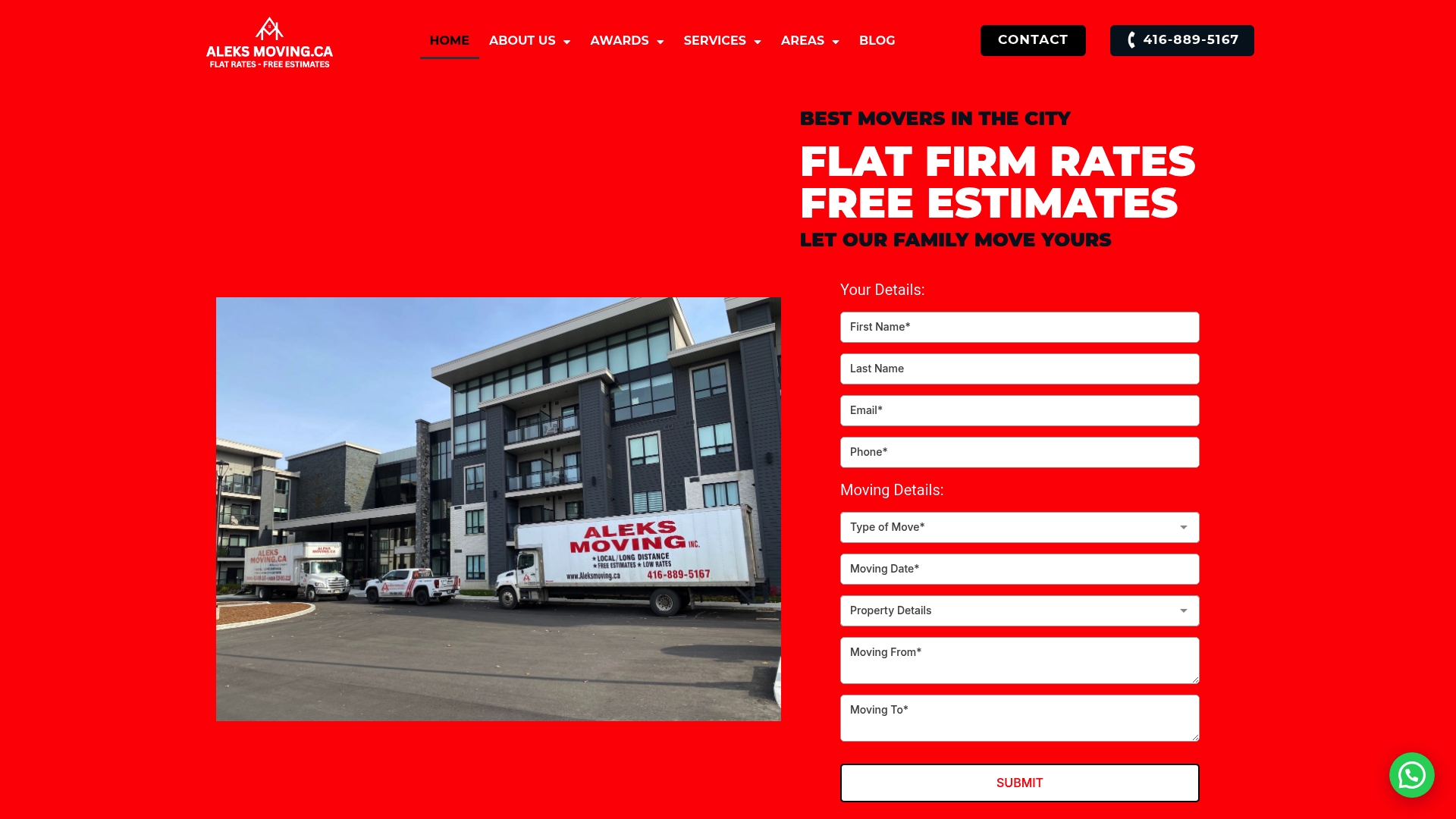
Our storage and moving services include month-to-month flexibility, climate-controlled units, 24/7 security monitoring, and electronic gate access. We offer seamless coordination between your move date and your storage needs, so you’re never left scrambling. With over 18 years of experience serving Ontario and beyond, Aleksmoving brings the reliability and care your belongings deserve. Explore our full range of storage solutions or contact us today for a free, no-obligation quote with flat-rate pricing and no hidden fees.
FAQ
What are the best storage options during a relocation?
The best storage options for relocations depend on your timeline, budget, and the types of items you’re storing. Self-storage units with month-to-month leasing and climate control suit most individual movers, while full-service moving and storage works best for those wanting a hands-off experience.
Do I need climate-controlled storage when moving?
If you’re storing wood furniture, electronics, documents, or antiques, climate-controlled storage is strongly recommended. Temperature and humidity fluctuations, particularly in Canadian winters, can cause warping, cracking, and mould even over short storage periods.
How do I store belongings while moving if my dates are uncertain?
Choose a storage facility offering month-to-month leasing with no long-term lock-in. This gives you the flexibility to extend or cancel your rental without penalty as your moving timeline shifts.
What are the most cost-effective storage options for relocations?
Standard self-storage units without climate control are the lowest-cost option for non-sensitive items. For better value overall, prioritise facilities with good security, accessible hours, and flexible lease terms rather than simply the lowest monthly rate.
Can businesses use short-term storage options during office relocations?
Yes. Many storage facilities offer commercial-grade units with 24/7 access, scalable sizing, and climate control suitable for IT equipment, inventory, and documents. Businesses should confirm security protocols and insurance options before committing to a provider.