Skip to content


TL;DR:
- Effective move-in logistics involve coordinated planning of services, packing, and utility setup to ensure a smooth transition. Proper preparation reduces costs, delays, and move-related stress by enabling timely vendor bookings, clear communication, and prioritized tasks. Families who organize and confirm all details early achieve a functional home within 72 hours, fostering well-being and a successful relocation experience.
Move-in logistics is the coordinated planning and execution of every task required to settle into a new home, covering everything from scheduling furniture assembly and utility setup to confirming truck access and assigning boxes to rooms. Families and individuals who treat this as a structured process, rather than a series of last-minute decisions, consistently experience fewer delays, lower costs, and far less stress on moving day. For Ontario residents navigating a competitive moving season, understanding why consider move-in logistics is the difference between a chaotic first week and a functional home within 72 hours. The financial and emotional stakes are real, and the planning decisions you make weeks before move day determine the outcome.
Why consider move-in logistics as part of your move plan
Move-in logistics, known in the relocation industry as move-in coordination, covers the full sequence of services, scheduling, and communication that must align before, during, and after your moving truck arrives. Without this coordination, individual tasks collide. Your furniture arrives before the floors are cleaned. Your internet technician shows up while the movers are still blocking the entrance. These are not rare scenarios. They are the predictable result of treating each service as a separate booking rather than part of one connected plan.
The core benefits of move-in planning are straightforward: reduced stress, lower costs, and faster return to normal daily life. When you pre-assign labelled boxes to specific rooms, experienced movers can place items directly where they belong, eliminating double handling and physical strain. When you confirm utility activation before move day, your family sleeps in a functioning home that first night rather than waiting days for hydro or internet connections.
Three named elements define effective move-in coordination: professional moving services, furniture assembly scheduling, and utility setup sequencing. Each one affects the others. Getting all three right, in the right order, is what separates a smooth transition from weeks of living out of boxes.
What are the key components of effective move-in logistics?
Effective move-in coordination breaks down into four interconnected areas. Each one requires attention before moving day arrives.
- Scheduling and booking services. Furniture assembly, professional cleaning, utility activation, and internet installation all need confirmed dates before your truck is loaded. Leaving any of these open creates gaps that compound on moving day.
- Coordinated vendor and mover communication. Your moving crew, building superintendent, and any third-party service providers need to know each other’s timelines. A 30-minute overlap between a cleaning crew and an arriving truck can cost you hours.
- Inventory management and room assignment. Inventory management in relocation is one of the most underestimated planning tools. Labelling boxes by room and creating a simple floor plan before arrival means movers place items correctly on the first pass, not the second.
- Task sequencing for efficient setup. Assemble beds and set up the kitchen before unpacking decorative items. Prioritise the rooms your family uses first. This sequencing approach, sometimes called anchor room planning, lets you design faster and stabilise your living environment within the first 48 hours.
Pro Tip: Create a single shared document or group chat with every vendor involved in your move. Include arrival windows, contact names, and access instructions. This one step eliminates most day-of communication failures.
Smooth coordination also depends on confirming building-specific details early. Elevator booking windows, loading dock hours, and parking restrictions vary by property across Ontario. Discovering these constraints on moving day, rather than two weeks before, is one of the most common and avoidable disruptions families face.
How does move-in logistics affect costs and delays?
Poor move-in coordination carries a direct financial cost, and the numbers are specific. Lost rent per unit for every three extra days of delay ranges between $127 and $255, with annualised losses reaching $10,160 to $20,400 across a 200-unit portfolio. For individual families, the equivalent cost shows up as repeated service calls, rescheduling fees, and the expense of temporary accommodation when a move drags past its planned timeline.
Last-minute service bookings carry their own premium. Booking move-in services two to four weeks in advance prevents surge pricing and unavailability, particularly during Ontario’s peak moving season from May to September. Last-minute bookings can cost 50% more or be unavailable entirely. That premium is entirely avoidable with early planning.
| Cost driver | Impact without planning |
|---|---|
| Delayed utility activation | Extra nights in temporary accommodation or hotels |
| Last-minute mover booking | Up to 50% higher service cost during peak season |
| Rescheduled vendor visits | Repeated service fees and lost work time |
| Poor truck access confirmation | Full moving day disruption, even with a professional crew |
Structured scheduling also reduces the total time spent on move-in tasks. Event-driven automation reduces turn times by 1.4 additional days compared to batch processing in property management contexts. For families, the equivalent gain comes from pre-planning: tasks completed in the right order take less total time than tasks completed reactively.
Why do move-in logistics matter for family well-being?
The emotional cost of a disorganised move is real and measurable. Decision fatigue is identified by relocation experts as a major source of move-related stress, and it is directly reduced by front-loading key choices before moving day. When you have already decided where the sofa goes, which room gets set up first, and who is responsible for collecting the keys, you arrive at your new home with mental energy intact rather than depleted.
“Functional home setup within 72 hours prevents weeks of living in disarray.” — Move-In Services Guide
This 72-hour benchmark matters because the longer a home remains in a half-unpacked state, the harder it becomes to complete the process. Children lose sleep in unfamiliar rooms without their familiar surroundings. Adults struggle to cook, work, or rest when the kitchen and bedroom are still in boxes. The “box fort” scenario, where stacked boxes dominate every room for weeks, is not just inconvenient. It actively delays the psychological transition from “moving” to “living.”
75% of residents report move-in challenges such as utility setup difficulties and poor coordination. Residents who experience a smooth move-in are 71% more likely to renew their lease and five times more likely to recommend their property manager. The satisfaction benefit extends well beyond the first day.
Pro Tip: Set up the master bedroom and one bathroom completely before unpacking anything else. Your family needs a functional retreat on night one, regardless of how much remains in boxes.
What practical steps can families take to plan move-in logistics?
These steps apply directly to Ontario moves and are sequenced to build on each other. Follow them in order for the best result.
- Book major services two to four weeks in advance. During peak season (May to September), advance booking is the single most effective way to avoid premium pricing and unavailability. This includes your moving company, furniture assembly service, and any professional cleaning.
- Confirm truck access and parking restrictions early. Undiscovered truck access issues can derail a move even with a professional crew on site. Contact your building superintendent or property manager at least two weeks before move day to confirm loading dock availability, elevator booking windows, and any street parking permits required.
- Assign labelled boxes to rooms before move day. Every box should carry a room label and a brief contents note. This allows movers to place items directly in their destination room, which eliminates double handling and speeds up the entire unloading process. Pair this with a simple floor plan sketch shared with your moving crew in advance.
- Prioritise high-stakes tasks immediately upon arrival. Key handoff, smoke alarm verification, and a move-in inspection must happen before any unpacking begins. These tasks carry financial and legal weight. Decorating and organising closets can wait days or weeks without consequence.
- Activate utilities and internet before move-in day. Contact Ontario utility providers (Hydro One, Enbridge Gas, or your local municipal utility) and your internet service provider at least two weeks before your move date. Confirm activation dates in writing. Arriving to a home without heat, water, or internet is a preventable disruption that affects the entire family.
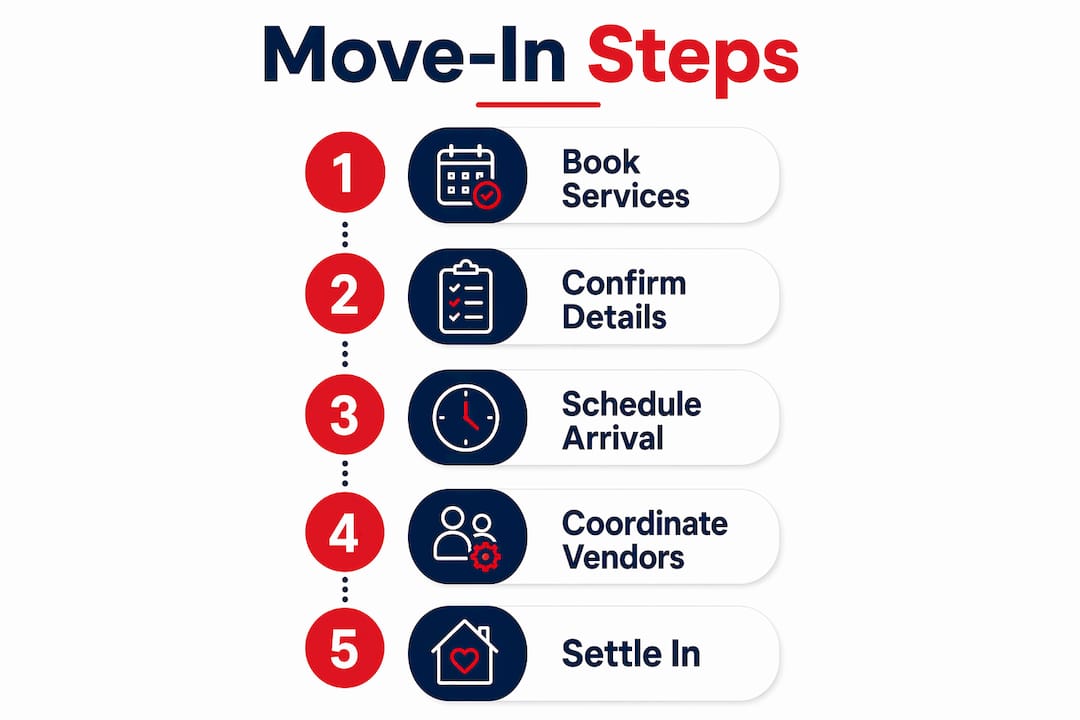
A well-executed moving day logistics plan ties all five steps together into a single timeline. When each task has a confirmed date and a responsible person, the day itself becomes manageable rather than overwhelming.
Key takeaways
Effective move-in logistics reduce costs, protect family well-being, and prevent the delays that turn a planned move into a weeks-long disruption.
| Point | Details |
|---|---|
| Book services early | Advance booking two to four weeks out prevents 50% cost premiums during peak season. |
| Sequence tasks by priority | Complete high-stakes tasks (keys, safety checks, utility activation) before unpacking begins. |
| Label and assign boxes | Room-labelled boxes placed directly on arrival eliminate double handling and save hours. |
| Confirm site access early | Truck access and parking restrictions must be verified weeks before move day to avoid disruptions. |
| Front-load decisions | Deciding room layouts and vendor timelines before arrival preserves mental energy on moving day. |
What I have learned from watching families move without a plan
After years of working with Ontario families through Aleksmoving, the pattern I see most often is this: people invest significant time choosing their new home and almost no time planning how they will actually get settled into it. The move itself gets treated as a single event rather than a coordinated process, and the cost of that assumption shows up in the first two weeks.
The families who arrive with a labelled inventory, confirmed utility dates, and a sequenced task list are noticeably calmer on moving day. Not because nothing goes wrong, but because they have the mental space to handle the unexpected. When you have already made the big decisions, a delayed elevator or a rescheduled technician is a minor inconvenience rather than a crisis.
The one thing I would tell every family planning a move in Ontario right now: treat your move-in plan as seriously as you treated your home search. The hours you spend planning before move day return to you many times over in the first month. A functional home within 72 hours is not a luxury. It is the direct result of decisions made weeks earlier.
— Ali
How Aleksmoving supports your move-in logistics in Ontario

Aleksmoving has supported Ontario families and individuals through residential relocations for over 18 years, with flat-rate pricing and no hidden fees. Our team coordinates directly with building superintendents, confirms truck access in advance, and places labelled boxes in their assigned rooms on arrival, so your first day in your new home starts with order rather than chaos. Booking early with Aleksmoving during peak season (May to September) protects you from last-minute premiums and guarantees crew availability on your chosen date. Explore our residential moving services or request a free upfront quote to start planning your move today.
FAQ
What does move-in logistics mean for a family move?
Move-in logistics refers to the coordinated planning of all tasks and services needed to settle into a new home, including scheduling movers, activating utilities, and sequencing unpacking by room priority.
How far in advance should I book moving services in Ontario?
Book major moving services two to four weeks before your move date. During peak season from May to September, last-minute bookings can cost 50% more or be unavailable entirely.
What are the first tasks to complete on move-in day?
Prioritise key handoff, smoke alarm verification, and a move-in inspection before any unpacking. High-stakes tasks completed immediately prevent financial and legal complications that lower-priority tasks cannot cause.
Why does move-in planning reduce stress for families?
Front-loading decisions about room layouts and vendor schedules reduces decision fatigue on moving day. Relocation experts identify this fatigue as a primary source of move-related stress, and early planning directly addresses it.
How do I confirm truck access for my Ontario move?
Contact your building superintendent or property manager at least two weeks before move day to confirm loading dock hours, elevator booking windows, and any street parking permits. Undiscovered access issues can disrupt even a well-staffed professional move.