

TL;DR:
- Tenant turnover costs in Ontario include vacancy, cleaning, repairs, and re-listing, totaling thousands of dollars.
- Professional moving companies reduce turnover time and damage risk, saving money and speeding up unit availability.
- Building partnerships with movers benefits property managers through smoother transitions, reduced vacancy, and improved tenant satisfaction.
Tenant turnover is one of the most expensive and time-sensitive challenges in Ontario’s rental market. Turnover costs can quietly eat into a property manager’s annual revenue, and tenants often face unexpected stress and expenses during a move. What many people overlook is how much a professional moving company can change that equation. This guide breaks down the real costs of tenant turnover, shows how professional movers reduce those costs, and explains how both landlords and tenants can benefit from smarter moving partnerships in Ontario.
Table of Contents
- Understanding tenant turnover in Ontario
- How moving companies reduce turnover costs and risks
- Partnership models: How property managers use moving services
- What tenants need to know: Rights, costs, and moving assistance
- What most landlords and tenants miss about professional movers
- Simplify your next turnover with professional moving support
- Frequently asked questions
Key Takeaways
| Point | Details |
|---|---|
| Turnover costs add up | Hidden costs during tenant turnover can equal several months’ rent for property managers. |
| Pros save time and money | Professional movers consistently reduce relocation time and damage, making turnovers smoother and less expensive. |
| Partnerships benefit landlords | Partnering with reputable movers helps managers reduce vacancy and maximise unit value. |
| Tenants may recover costs | Ontario tenants can claim moving costs from landlords in some eviction scenarios. |
Understanding tenant turnover in Ontario
Tenant turnover simply means the process of one tenant leaving a rental unit and a new one moving in. It sounds straightforward, but the reality is far more involved. Between cleaning, repairs, re-listing, screening, and the actual move, a single turnover can take weeks and cost thousands of dollars.
In Ontario, the average turnover timeline ranges from two to six weeks depending on the condition of the unit and how quickly a new tenant is found. Every day the unit sits vacant is lost income. Turnover costs can equal several months’ rent when you factor in vacancy loss, cleaning, repairs, and re-listing fees. That adds up fast, especially in markets like Toronto, Ottawa, or Hamilton where rents are high and competition is fierce.
Here is a breakdown of the most common costs involved:
Direct costs for property managers:
- Vacancy loss during the gap between tenants
- Professional cleaning and carpet treatment
- Paint touch-ups or full repaints
- Minor repairs to walls, fixtures, and appliances
- Re-listing fees and marketing expenses
- Tenant screening and administrative time
Hidden costs often overlooked:
- Damage caused by uncoordinated DIY moves (scratched floors, dented walls)
- Delays from tenants who are not ready to vacate on time
- Emergency contractor fees for last-minute repairs
- Stress and time spent managing logistics without support
The table below gives a realistic snapshot of what turnover looks like in Ontario:
| Cost category | Estimated range (CAD) | Typical timeline |
|---|---|---|
| Vacancy loss (per week) | $400 to $1,200 | 2 to 6 weeks |
| Cleaning and sanitising | $200 to $600 | 1 to 3 days |
| Repairs and touch-ups | $300 to $1,500 | 2 to 7 days |
| Re-listing and screening | $150 to $400 | 1 to 3 weeks |
| Move-related property damage | $200 to $1,000 | During move day |
“The true cost of tenant turnover goes well beyond lost rent. When you account for every expense in the cycle, many landlords are surprised by how quickly the total climbs.”
With the costs and logistics of tenant turnover clearly on the table, we can now explore how moving companies fundamentally change this equation.
How moving companies reduce turnover costs and risks
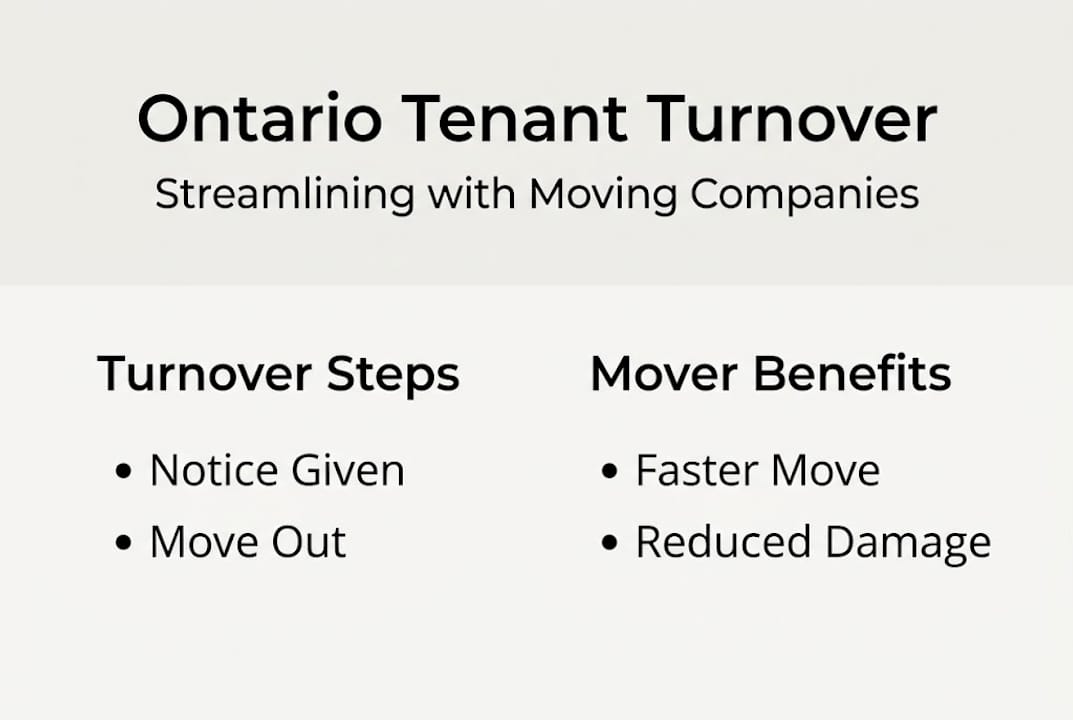
Not all moves are created equal. A tenant who rents a van and recruits a few friends might seem like the budget-friendly option, but the numbers tell a different story. Professional movers reduce relocation time by 30% and damage risk by 40% compared to unassisted moves. That is a meaningful difference when a property manager is trying to turn a unit around quickly.
The contrast between DIY vs professional moving becomes even clearer when you look at the full picture:
| Factor | Professional movers | DIY move |
|---|---|---|
| Time to complete move | Faster by up to 30% | Longer, often unpredictable |
| Risk of property damage | Reduced by up to 40% | Significantly higher |
| Overall cost (including damage) | Lower total cost | 15 to 20% more costly |
| Insurance coverage | Included | Rarely covered |
| Stress level | Managed by experts | High, especially for tenants |
Consider a real-world scenario. A tenant in Mississauga has a 30-day notice period. They attempt a DIY move over a weekend with borrowed equipment. The couch scrapes the hallway wall, a door frame gets chipped, and the move takes two full days instead of one. The property manager now needs to repair damage before showing the unit, adding three extra days of vacancy. With a professional moving team, that same move is completed in a single day, the unit is left in good condition, and the manager can begin cleaning and re-listing immediately.
The moving company benefits extend beyond speed. Licensed movers carry liability insurance, use proper equipment like furniture pads and dollies, and know how to navigate tight stairwells and elevator bookings in apartment buildings. These are not small details. They directly affect how quickly a unit is ready for the next tenant.
Pro Tip: Property managers who recommend vetted moving companies to outgoing tenants often see fewer move-day incidents, less damage to common areas, and smoother handovers overall. It is a simple step that pays for itself.
Recognising the substantial advantages of professional movers, it is essential to see how these benefits apply on the ground for both landlords and renters.
Partnership models: How property managers use moving services
Some of the most forward-thinking property managers in Ontario are not just recommending movers. They are building formal partnerships with moving companies to create a more seamless experience for everyone involved. These arrangements can take several forms, and each one addresses a specific pain point in the turnover process.
Here are the most common partnership approaches:
- Referral agreements: The property manager refers outgoing and incoming tenants to a trusted moving company. In return, they may receive a referral fee or priority scheduling for their tenants.
- Full-service move-out and move-in coordination: The moving company handles the logistics of both the departing and arriving tenant’s move, often on the same day. This dramatically reduces the gap between tenancies.
- Concierge move-in support: New tenants receive guided assistance with their move, including help with elevator bookings, parking permits, and placement of furniture. This creates a positive first impression and reduces early complaints.
- Insurance and special item handling: Moving partners who are insured and trained to handle fragile or high-value items protect the manager from liability and the tenant from loss.
Property managers can partner with moving companies for referral programmes, turn coordination, and concierge services that directly reduce make-ready time and vacancy loss. When a unit is turned around in days rather than weeks, the financial impact is immediate.
For tenants moving into or out of apartment buildings, apartment relocation safety is a genuine concern. Professional movers who regularly work in multi-unit buildings understand building rules, loading dock access, and how to protect common areas during a move.
“When property managers integrate moving support into their turnover process, they are not just saving time. They are investing in the condition of their asset and the satisfaction of their tenants.”
Pro Tip: Using vetted moving partners means you are not scrambling to find reliable help at the last minute. A pre-established relationship with a trusted mover gives you consistency and accountability every time.
Once managers see the operational value, many want to know how these partnerships affect tenants directly.
What tenants need to know: Rights, costs, and moving assistance
Tenants in Ontario have more options and protections than many realise when it comes to moving costs. Understanding your rights and knowing where to find reliable help can save you significant time and money.
Under Ontario’s Residential Tenancies Act, tenants who are asked to leave through no fault of their own, such as in a no-fault eviction or a landlord’s own use situation, may have the right to compensation. Tenants may claim professional mover fees and other reasonable moving costs from landlords through the Landlord and Tenant Board. This is an important protection that many tenants do not know about until it is too late.
Here is what tenants should keep in mind when planning a local move in Ontario:
Typical moving expenses for a local Ontario move:
- Professional movers: $400 to $1,500 depending on unit size and distance
- Packing materials: $50 to $200
- Storage (if needed between tenancies): $100 to $300 per month
- Utility transfers and address changes: minimal but time-consuming
How to find and evaluate a reliable mover:
- Check for licensing and insurance before booking
- Read verified reviews on Google or the Better Business Bureau
- Ask for a written estimate that clearly outlines all services
- Confirm whether packing, disassembly, and storage are included
Understanding professional mover costs ahead of time helps you budget accurately and avoid surprises. Reviewing transparent moving estimates is one of the best ways to compare options and ensure you are getting fair value.
Pro Tip: Always ask for a written estimate and confirm exactly what is included. Some quotes cover only labour, while others include packing materials, furniture disassembly, and storage. Knowing the difference protects you from unexpected charges on move day.
With an understanding of both property managers’ strategies and tenants’ concerns, let us consider the broader lessons and sometimes-overlooked truths behind moving companies’ roles in turnover.
What most landlords and tenants miss about professional movers
Here is something we see repeatedly in Ontario’s rental market: both landlords and tenants overestimate how much they save by going the DIY route. They focus on the upfront cost of hiring movers and forget to account for everything else. Damaged walls, delayed timelines, missed work days, and stressed relationships all carry real costs that never appear on a quote.
The DIY vs professional debate often comes down to perceived control versus actual efficiency. DIY feels controllable, but in practice it introduces more variables and more risk. In Ontario’s competitive rental market, where a vacant unit can cost a landlord hundreds of dollars per day, speed and reliability are not luxuries. They are necessities.
We believe efficiency is an investment, not a cost. When you look at Ontario mover efficiency data, the case for professional movers is not just about convenience. It is about protecting property value, reducing vacancy, and giving tenants a better experience from day one. The landlords and tenants who understand this consistently come out ahead.
Simplify your next turnover with professional moving support
Whether you manage a single rental unit or a portfolio of properties across Ontario, the right moving partner makes every turnover faster, cleaner, and less stressful. At Aleks Moving, we work with both tenants and property managers to provide dependable, flat-rate moving services with no hidden fees.

Our team brings over 18 years of experience to every move, handling everything from furniture and packing to storage and special items. Explore our trusted Ontario moving services to see how we can support your next transition. Ready to get started? Get a moving estimate today and take the first step toward a smoother, more efficient turnover.
Frequently asked questions
How much downtime can professional movers save during tenant turnover?
Professional movers reduce relocation time by up to 30%, allowing property managers to re-list units sooner and reduce costly vacancy periods.
Who pays for moving costs after eviction in Ontario?
Tenants may claim reasonable moving expenses, including professional mover fees, from landlords following an eviction through the Landlord and Tenant Board.
Is it really cheaper to move without hiring professionals?
DIY moves cost 15 to 20% more overall due to higher damage risk and lost time, making professional movers the more cost-effective choice in most situations.
What services do moving companies offer to property managers?
Property managers can access referral programmes, turn coordination, and move-in concierge services through professional moving companies, reducing vacancy and improving tenant experience.
Recommended
- Role of movers in Ontario relocation: 30% faster, 40% less damage
- How to prepare for a move: Ontario’s essential guide
- Residential Moving Process: What Ontarians Need to Know
- 7 Key Advantages of Flat-Rate Movers for Ontario Homeowners
- Essential residential moving checklist: streamline your move